Oman’s Rapid Space Economy Development: What It Means for Investors and Entrepreneurs
Over the past three years, the Sultanate of Oman has announced a series of significant and unprecedented space initiatives. These projects include the creation of Etlaq, the first commercial spaceport in the MENA region, as well as Zone 88, a comprehensive space economic zone in Al Duqm featuring a space settlement center and advanced technological facilities. Additionally, Spazers, a multinational satellite manufacturing venture, aims to localize the production of small satellites and other space technologies in Oman. This trajectory illustrates Oman’s robust and persistent progress in the space sector.
Remarkably, this advancement has been achieved in a short time frame. Since the introduction of Oman’s Space Policy in 2023, the country has moved from foundational development to establishing a vibrant space market.
Earlier this year, government officials reported that investments in Oman’s space sector are projected to reach 20 مليون ريال عماني between 2023 and 2024, marking a 200% increase. This growth has resulted in approximately 400 direct and indirect jobs being created, with the number of active companies in the sector rising by 127% to 25 by the end of 2025.
So, how has Oman managed this transformation in such a brief period? The answer lies in comprehensive strategic planning, positioning space initiatives as integral to the nation’s broader economic transformation.
The turning point can be traced back to 2021, following the ascension of His Majesty Sultan Haitham bin Tarik. Under رؤية عُمان 2040, the National Programme for Digital Economy was launched to diversify the economy, aiming to increase the digital economy’s contribution to local GDP from 2% ل 5% بحلول عام 2030 و 10% by 2040. This program facilitated the introduction of a national space plan.
In 2023, the government, through the Ministry of Transport, Communications, and Information Technology, launched the National Space Policy and Executive Programme, a comprehensive 10-year framework aimed at fostering a competitive Omani space sector. The policy articulated a clear vision for Oman to serve as a regional hub for space applications, thus promoting economic diversification and unlocking future opportunities.
The framework centers around four key pillars: economic diversification, capacity building, national security, and environment and natural resources, identifying areas where Oman can excel. It capitalizes on the country’s strategic geography, diplomatic openness, and regulatory advantages, prioritizing investments in the downstream segment of the space sector as the entry point into the global market. The downstream sector, which encompasses terrestrial operations and services including Earth observation and satellite communications, represents about 90% of the global space market, contributing $303.3 billion in 2021 and projected to grow at a 6% CAGR over the next decade.
In contrast, the upstream sector, which relates to manufacturing and launching space systems, comprises only 10% of the market. Oman’s focus on the downstream sector is also supported by its existing market strengths. Prior to the policy’s launch, 95% of Oman’s space sector was concentrated in satellite communication and navigation services, contributing 0.05% to the GDP with a market value of $155 مليون في عام 2021.
The framework identified 14 investment opportunities, primarily aimed at downstream activities, aligning with the four essential pillars of the program. These opportunities are intended not only to initiate projects but also to nurture a broader local space ecosystem. The strategy emphasizes creating a supportive environment for private sector growth while attracting Foreign Direct Investment (FDI) to bolster the national space sector through long-term partnerships that facilitate technology transfer and expertise development.
Projects were categorized into core و non-core, with eight designated as quick wins. Core projects are deemed essential for advancing the Omani space sector, while non-core initiatives are intended to expedite growth.
The framework is not being implemented in isolation but is structured around a three-phase roadmap aimed at gradually enhancing domestic capabilities—starting with downstream activities and progressively advancing upstream in the future.
The first phase, “Ignition,” spans from 2023 to 2026, focused on capacity building, legal frameworks, and infrastructure development, while fostering a national ecosystem of service providers. This phase includes several initiatives, such as the end-user applications booster program and a national CubeSat program.
The second phase, “Lift-Off,” set for 2026 to 2030, will develop the necessary infrastructure to support Oman’s expanding space capabilities. Projects during this phase include the national satellite communication initiative and the establishment of a national space observatory.
The final phase, “Orbiting,” scheduled for 2030 to 2033, will prepare the sector for its next developmental cycle by initiating investments in more complex systems and capabilities, including advanced satellite R&D programs.
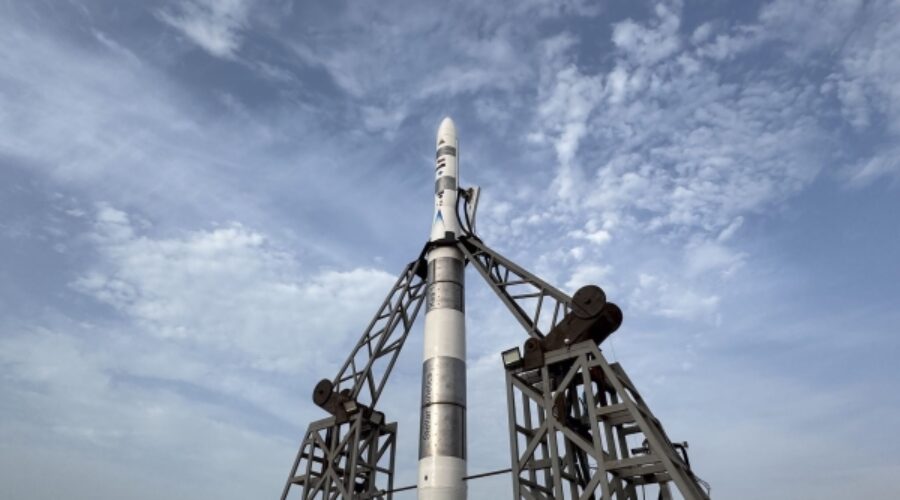
Several projects are already underway. Etlaq is expected to commence full-scale commercial operations by the end of 2027, a pivotal move towards enabling launch capabilities within Oman. The country’s first satellite, Aman-1, is actively monitoring and tracking gas networks managed by OQ Gas Networks. Additionally, Oman Lens has launched OL-1, an AI-powered Earth observation satellite, with plans for another advanced satellite to be unveiled in 2026.
Construction of Zone 88 in Al Duqm is also progressing, further reinforcing Oman’s ambition of developing a comprehensive economic space zone. The Sultanate has hosted the Middle East Space Conference twice, establishing Muscat as a regional platform for dialogue and investment in the sector.
Oman’s commitment to international cooperation is further highlighted by its signing of the اتفاقيات أرتميس with the United States during the second Middle East Space Conference, paving the way for enhanced collaboration in civil space exploration.
Concurrently, Oman is establishing the legal and regulatory frameworks to support its emerging space market. This process began in 2024 when Oman Lens became the first company to obtain a Telecommunications Regulatory Authority license for a satellite ground station. In 2025, the regulatory landscape evolved with the Civil Aviation Authority launching Civil Aviation Directive (CAD 5-01), which outlines the approval process for launch activities. A forthcoming Omani Space Law, expected in 2026, is anticipated to further strengthen the sector’s regulatory framework.
Overall, these initiatives demonstrate that Oman’s space economy is being developed through a well-considered and methodical strategy, rather than through isolated announcements. This phased approach elucidates how Oman has experienced rapid growth within a short timeframe.
As the program transitions from the “Ignition” phase to “Lift-Off,” the coming years will reveal how this initial momentum can translate into commercial success. Nonetheless, it is evident that Oman is entering a transformative period in its space economy—an evolution significant not only for the Sultanate but also for the broader region and the global space industry.
تحليل خاص من عمانت | تصفح سوق عُمان
Oman’s rapid advancement in the قطاع الفضاء يقدم أهمية كبيرة فرص للشركات looking to enter emerging technologies, particularly in downstream applications like Earth observation and satellite communications. This strategic positioning not only enhances the potential for الاستثمار الأجنبي but also paves the way for sustainable economic diversification, reducing reliance on hydrocarbons. المستثمرون ورجال الأعمال should focus on collaborations that foster نقل التكنولوجيا and local expertise, as the upcoming development phases promise increased commercial prospects and a robust ecosystem in the years ahead.