Travel Industry Faces Major Setbacks: Short-Notice Cancellations Impacting Business Stability in Oman
المسكات عنب طيب الشذا: The ongoing conflict in the Gulf region involving the United States, Israel, and Iran has significantly disrupted air travel due to soaring aviation fuel prices and potential airspace closures.
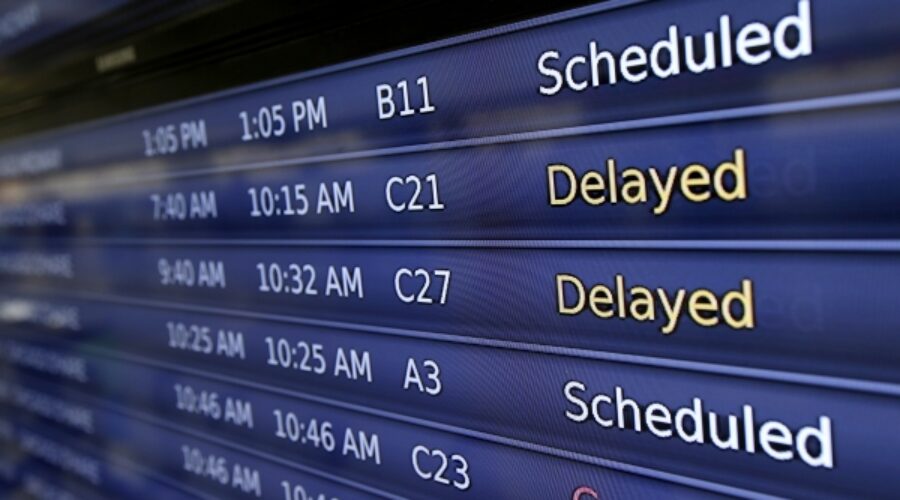
Monica Eaton, Founder and CEO of Chargebacks911, commented on the situation, stating, “The conditions for widespread last-minute cancellations are already present. Airlines across Europe and the US have cut approximately 13,000 flights from their May schedules, while the fuel supply remains unstable. Spirit Airlines has ceased operations entirely, canceling all remaining flights; Lufthansa has also cancelled around 20,000 flights.”
Several airlines, including Turkish Airlines and KLM, have suspended various routes. With the summer peak approaching, passengers who have already made reservations are understandably concerned about their options if their flights are cancelled unexpectedly.
Eaton explained, “Consumers are protected under EU and UK regulations, allowing them to receive a full cash refund for cancelled flights. In the US, the Department of Transportation mandates that airlines issue prompt refunds for cancellations.”
However, Eaton cautioned that airlines under financial stress may process these refunds slowly, prompting consumers to consider filing chargebacks through their banks as an alternative. “This summer, we anticipate a significant increase in chargeback requests,” she noted.
Eaton highlighted the dual challenges that hotels face. On one hand, guests whose flights have been cancelled frequently cancel their hotel bookings at the last minute, often demanding full refunds regardless of the hotel’s cancellation policy. On the other hand, guests unhappy with airline responses may dispute their hotel charges, even if the hotel fulfilled its obligations, simply because their trip was disrupted.
“This creates chargeback risks for hotels that are not responsible for the original disruption,” she added. “To mitigate this risk, hotels must maintain clear, documented communication with all guests, including confirmation of bookings and the stated cancellation policy.” A hotel that can demonstrate effective communication and prompt responses will be in a stronger position to contest chargebacks.
For guests, the recommended course of action is straightforward: contact the hotel directly before initiating a chargeback. Most hotels prefer to resolve disputes amicably rather than engage in the costly and time-consuming chargeback process.
Eaton noted, “Banks are equipped to handle chargeback requests, but the question remains whether they can manage a significant increase in volume without delays. If summer disruptions lead to a spike in disputes, processing times at banks could extend, causing longer wait times for consumers.”
Travel agencies and online travel agencies (OTAs) find themselves in a more complex situation. When a flight booked through a third-party platform is cancelled, the OTA acts as an intermediary between the airline and the consumer, complicating refund responsibilities and timelines. Many OTAs have their own refund policies, which may not align with the airline’s, leaving consumers unaware of the complexities until issues arise.
Eaton advises consumers to clarify whether they booked directly with the airline or through an intermediary, as this determines the appropriate point of contact for refunds.
Chargeback System
The chargeback system delineates specific roles and responsibilities, even if the consumer experience may sometimes suggest otherwise. When a consumer disputes a charge, their bank, or card issuer, is the first point of contact and must investigate the claim. The bank subsequently informs the merchant’s bank, which then contacts the merchant to provide evidence that the charge was legitimate.
In a travel dispute, the merchant is identified as the entity that processed the payment. If the consumer paid directly to the airline, the airline is the merchant. Conversely, if they paid an OTA, that agency is deemed the merchant. Hotels, car rental companies, and tour operators are considered separate merchants and will only be involved if a consumer files additional claims against them.
Ultimately, the card issuer is accountable to the consumer, obligated to investigate and reach a conclusion. However, merchants retain the right to dispute chargebacks they perceive as unjustified. While the system aims to balance fairness for both parties, it tends to favor consumers when merchants cannot provide adequate evidence.
The integrity of documentation at the point of transaction is crucial in this context.
A chargeback is essentially a transaction reversal initiated by a consumer’s bank on their behalf. Here’s a simplified breakdown of the process:
- A consumer purchases a service using a credit or debit card.
- If issues arise—such as a flight cancellation or failure of a hotel to deliver promised services—the consumer disputes the charge with their bank.
- The bank assesses the claim and, if deemed valid, temporarily reverses the payment, refunding the consumer while the investigation proceeds.
- The bank notifies the merchant’s bank through the card network and requests evidence of the charge’s legitimacy from the merchant.
If the merchant can substantiate that the transaction was valid and properly executed, they may win the dispute and reclaim the funds. If they fail, the reversal stands, and the merchant incurs the loss along with a chargeback fee, typically ranging from $20 to $100 per dispute.
This system is designed to protect consumers from fraud and merchants who do not fulfill their promises. However, it is increasingly exploited in situations where consumers received the promised service but simply changed their minds—which is often termed “friendly fraud.”
Such misuse is costly for merchants, particularly in the travel industry, where transactions are considerable and disruption may offer consumers plausible grounds for disputing legitimate charges.
تحليل خاص من عمانت | تصفح سوق عُمان
الجاري Gulf conflict يشكل أهمية كبيرة المخاطر التي تواجه الشركات في عُمان, particularly in the travel and hospitality sectors, as airline cancellations increase and fuel prices soar. This environment opens opportunities for strategic communication and robust documentation practices, allowing hotels to mitigate chargeback risks linked to disruptions. المستثمرون الأذكياء should now prioritize customer relations and transparency, positioning themselves to withstand potential demand fluctuations and capitalize on a rebound in travel as the situation stabilizes.