
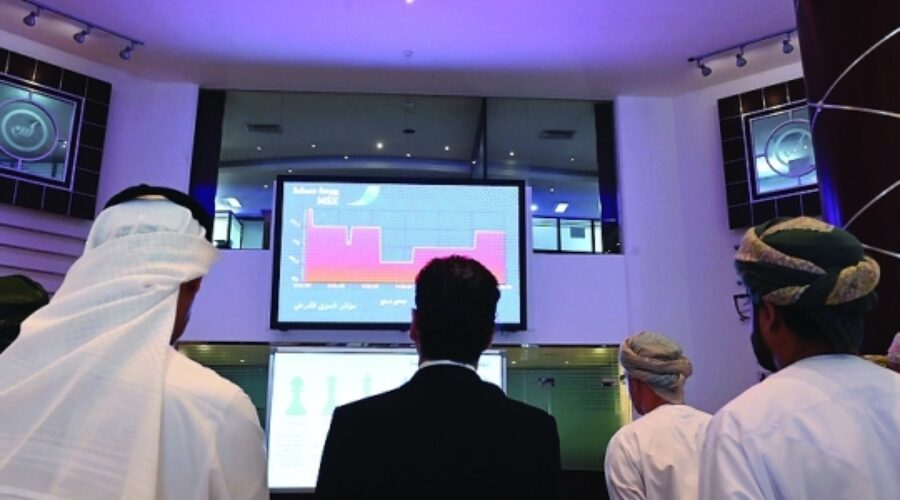
Market Depth Tested as MSX Pullback Signals Caution for Investors Following Strong Rally
المسكات عنب طيب الشذا: A recent slide on the Muscat Stock Exchange (MSX) has raised concerns regarding market depth, liquidity, and investor confidence, despite ongoing improvements in Oman’s overall fiscal and economic indicators.
The benchmark MSX index has seen a significant drop, declining from over 8,300 points to approximately 7,500 points in recent trading sessions, with losses occurring across multiple sectors and many listed companies.
This correction follows an impressive rally earlier this year that brought the market to record highs, driven by enhanced liquidity, improved corporate earnings, and increased investment activity.
The current downturn underscores a growing disparity between Oman’s positive macroeconomic landscape and prevailing short-term equity-market sentiment. This has led to questions about liquidity depth and the level of institutional participation in the local market.
Market analysts indicate that the decline seems to stem from a combination of profit-taking, liquidity pressures, and diminishing investor sentiment, rather than a downturn in Oman’s fundamental economic conditions.
Notably, several leading stocks remain above their values prior to last year’s rally, indicating that the current decline may partly reflect necessary valuation adjustments following significant gains in recent months.
The market sell-off has sparked renewed discussion regarding the susceptibility of smaller regional exchanges to fluctuations in liquidity and market sentiment, especially during periods of heightened volatility.
While market corrections are a typical aspect of financial cycles, prolonged and widespread declines can adversely affect confidence if volatility and liquidity continue to weaken.
Some analysts suggest that lower valuations could present new opportunities for long-term investors seeking to enter the market following earlier strong performance.
This dialogue has also highlighted how institutional mechanisms could potentially stabilize the market during sharp corrections. Observers propose that emergency investment strategies or long-term stabilization funds might alleviate market tensions through targeted liquidity injections during severe downturns, complementing the roles of existing market makers and liquidity providers.
This discussion occurs as Oman strives to enhance its capital markets in line with Oman Vision 2040 through regulatory reforms, new investment instruments, ESG frameworks, and broader engagement with foreign investors.
For Oman, the challenge extends beyond merely attracting investment flows; it also involves ensuring that its capital market is robust and resilient enough to handle volatility without compromising investor confidence as the nation advances in financial market development.
تحليل خاص من عمانت | تصفح سوق عُمان
الأخيرة sharp pullback on the Muscat Stock Exchange signals heightened caution for businesses in Oman as it exposes vulnerabilities in market liquidity and investor confidence. This presents both an opportunity and a risk; savvy investors may find lower valuations attractive for long-term gains, while businesses must prepare for potential market volatility that could affect capital accessibility. As Oman seeks to strengthen its capital markets under رؤية 2040, entrepreneurs should advocate for regulatory reforms that bolster institutional support to navigate future market corrections effectively.