Track Installation Begins on Hafeet Rail Project: Key Implications for Business Growth in Oman
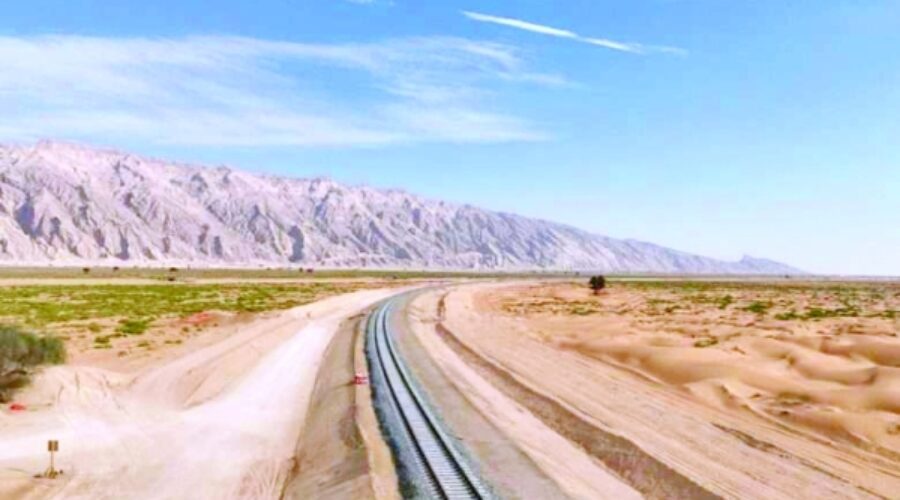
MUSCAT, JUNE 6 — The Hafeet Rail project, a key infrastructure initiative linking the Sultanate of Oman with the United Arab Emirates, has commenced its track laying and installation phase, marking a significant advancement from excavation and civil construction efforts, according to key officials.
In partnership with Etihad Rail, the project aims to design, develop, and operate a railway network that will connect Sohar Port with the UAE’s national rail system. This development is expected to significantly improve supply chain efficiency and promote regional trade, while also laying the groundwork for future passenger transport services.
As of April 2026, data from Hafeet Rail indicated that the project was approximately 40% complete, covering a 238-kilometer route that links Oman and the UAE through the Al Ain, Al Buraimi, Wadi Al Jizzi, and Suhar areas. Significant excavation and backfilling work have been executed, amounting to around 27 million cubic meters, alongside the completion of over 100,000 cubic meters of concrete. Construction efforts have also included progress on tunnels, bridges, and necessary engineering structures.
Remarkably, the project has achieved more than 10 million work hours without any serious injuries, underscoring its commitment to safety and quality standards. It features the construction of 60 bridges—some as high as 34 meters—and approximately 2.5 kilometers of tunnels, all designed to efficiently transport heavy goods.
Economically, Sohar Port and its surrounding industrial area are set to gain substantially from the project. The rail link is anticipated to reduce transportation times for goods heading to Gulf markets, enhancing the port’s position as a regional logistics hub. Additionally, it is expected to attract new industrial investments in Al Buraimi and Suhar, particularly in heavy and light industries, as well as storage and distribution centers.
The project is likely to stimulate investments across construction, engineering, and logistics sectors, supporting small and medium-sized enterprises (SMEs) by providing new opportunities within the project’s supply chains. It will also bolster the competitiveness of local products by streamlining import, export, and distribution processes, enhancing Omani firms’ presence in both regional and global markets.
In related developments, transport officials at a recent workshop on “Enhancing Competitiveness in the Transport and Logistics Sector” stated that the Muscat Metro project remains in the study and planning stages, with no implementation initiated yet. Planned features of the metro include a 55-kilometer track with 42 stations—such as Ruwi, Qurum, and Al Seeb—two maintenance depots, and three parking facilities.
By 2040, the metro is projected to serve over 400,000 passengers daily, aligning with the Greater Muscat initiative aimed at creating an integrated urban transport system. Future plans envision the metro being part of a multimodal transport network that includes bus rapid transit and maritime transport, connecting to major urban developments like Sultan Haitham City. This initiative aims to alleviate congestion and shift Muscat towards a public transport-centric model.
تحليل خاص من عمانت | تصفح سوق عُمان
ال Hafeet Rail project marks a significant infrastructure advancement, promising to تحسين كفاءة سلسلة التوريد and positioning Oman as a pivotal مركز لوجستي in the region. For businesses, this creates فرص for industrial investments, particularly in heavy and light industries, as well as logistics, while attracting SMEs to benefit from expanded supply chains. Smart investors should consider the المزايا التنافسية that improved transportation infrastructure will bring to Omani companies, influencing future economic dynamism in the Sultanate.