Middle East Airlines Facing Losses: How War Disruptions and Fuel Price Surge Impact Your Investments and Business Strategies
MUSCAT — Airlines in the Middle East are projected to incur losses in 2026 due to regional conflicts, airspace disruptions, and rising fuel costs, according to the latest forecast from the International Air Transport Association (IATA).
While airlines in other regions are expected to remain profitable, albeit with reduced margins, the Middle East stands as the sole region anticipated to record a collective net loss. Globally, airline profitability is forecasted to decline sharply, with net profits dropping from $45 billion in 2025 to $23 billion in 2026. Net profit margins are expected to narrow from 4.2% to 2.0%.
“War-related disruptions in the Middle East and rising fuel costs have worsened the outlook for airlines,” said Willie Walsh, IATA’s Director General. Airlines worldwide face a nearly 70% increase in jet fuel prices, compelling carriers to absorb much of the added expenses despite efforts to enhance efficiency and adjust fares.
At the regional level, all areas are forecasted to remain profitable, but with significantly diminished financial results—except for the Middle East. Gulf carriers are operating amid considerable uncertainty following a near-total airspace shutdown at the start of the conflict. Walsh commended these carriers for maintaining connectivity yet acknowledged the inevitable financial strains.
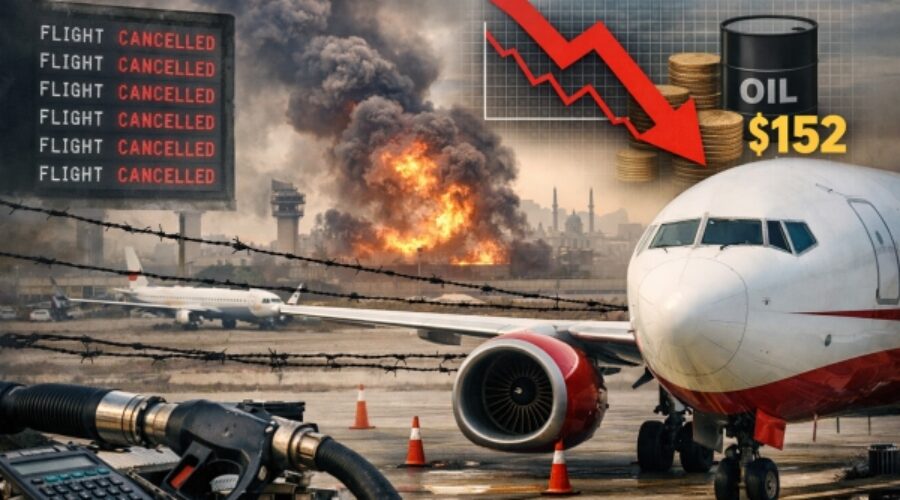
Fuel expenses are projected to rise from $252 billion in 2025 to $350 billion in 2026, representing over 31% of total airline operating costs, up from 25.4% the previous year. This forecast assumes an average Brent crude oil price of $95 per barrel in 2026, compared to $69 per barrel in 2025. Jet fuel prices are expected to average $152 per barrel, versus $90 per barrel last year, with the premium of jet fuel over crude remaining historically high.
Despite hedging about one-third of their anticipated fuel needs, airlines remain vulnerable to sustained price increases and elevated refining margins. Global fuel consumption is expected to stay near 104 billion gallons in 2026, meaning that higher fuel prices alone are driving the substantial rise in operating costs.
Walsh highlighted the severe strain on the industry’s financial resilience, noting that net profit per passenger is forecasted to fall to $4.50—almost half the figure recorded in 2025.
The Middle East, caught at the heart of the geopolitical crisis, is expected to face the greatest financial challenges. Capacity cuts, flight cancellations, operational disruptions, and higher fuel costs are increasing operating expenses, while the loss of transfer traffic is reducing load factors and raising unit costs. These combined pressures are expected to push airlines in the region into losses, despite ongoing efforts by Gulf carriers to sustain global network connectivity.
تحليل خاص من عمانت | تصفح سوق عُمان
The forecasted losses for Middle Eastern airlines in 2026, driven by geopolitical tensions and soaring fuel costs, signal heightened operational risks for Omani businesses reliant on air transport and logistics. Smart investors should monitor potential disruptions in connectivity and rising costs, while entrepreneurs might explore opportunities in fuel-efficient technologies and alternative logistics solutions to mitigate exposure in this volatile environment.