Gas Deal Emerges as Critical Test for OMIFCO’s IPO: What Investors Need to Know
Muscat: As Oman India Fertiliser Company (OMIFCO) prepares to launch its initial public offering (IPO), a critical factor underpinning the company’s profitability lies in its long-term natural gas supply agreement with the Government of Oman.
Signed in September 2025 and effective from July 15, 2025, this agreement will significantly influence OMIFCO’s cost structure, competitiveness, and potential for expansion over the next decade. The contract commits OMIFCO to a minimum gas purchase obligation valued at approximately $3.9 billion over ten years, emphasizing the vital role of feedstock pricing in the company’s investment appeal.
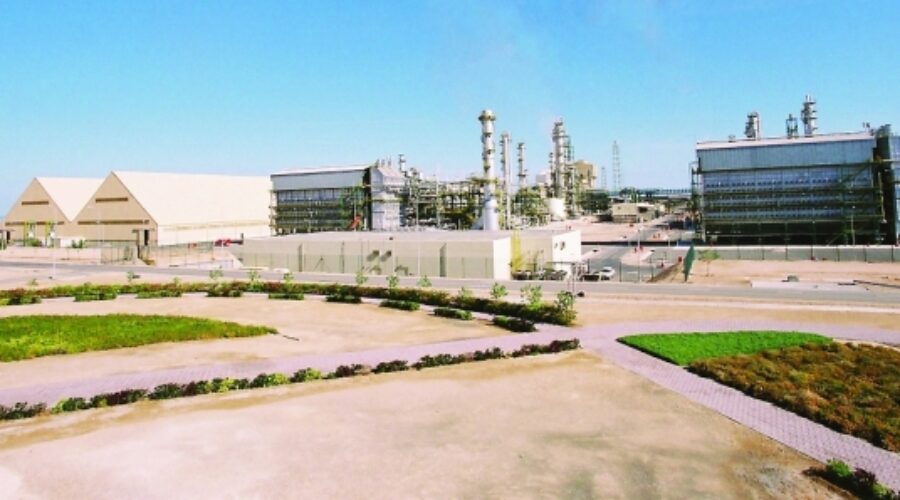
Natural gas is the cornerstone of OMIFCO’s operations, used primarily to produce ammonia, which supports its urea production at the industrial complex in Qalhat, Sur. In 2025, OMIFCO reported revenues of RO 308.9 million (around $802 million).
Under the new Natural Gas Supply Agreement, OMIFCO sources gas from Integrated Gas Company SAOC (IGC), a government-owned entity, with gas transported via pipelines managed by OQ Gas Networks, part of the OQ Group. The contract extends until July 15, 2035, stipulating an annual contract quantity of 58.765 million MMBtu. The base gas price is set at $5.25 per MMBtu (gross heating value basis), with a 3% compounded annual increase, resulting in a 2026 price of $5.41 per MMBtu.
The agreement also includes a take-or-pay clause requiring OMIFCO to pay for at least 92% of the contracted gas volume annually, regardless of market fluctuations or production changes.
Replacing a gas supply contract from 2002, the new agreement’s higher pricing has already impacted OMIFCO’s costs, with annual gas expenses rising from RO 83.3 million in 2024 to RO 101.2 million in 2025—an increase of about 22%.
Despite this rise, OMIFCO retains a significant feedstock cost advantage over many global fertilizer producers, notably those in India and Europe, where LNG-linked or market-based gas prices are often higher. This positions OMIFCO favorably in the global urea market, especially while gas prices remain elevated in importing regions.
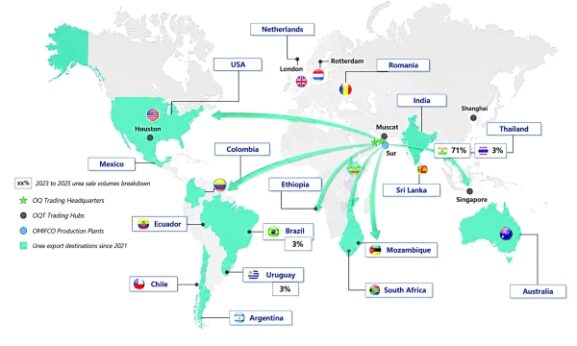
India remains a critical market for OMIFCO, accounting for a substantial share of its urea exports. Access to competitively priced pipeline gas supports OMIFCO’s ability to maintain margins while serving this key market.
Natural gas represents approximately 94-95% of OMIFCO’s total raw material costs, making gas pricing the most influential cost factor for the company and a crucial consideration for potential investors.
A distinctive feature of the new gas agreement is a decarbonization-linked payment mechanism. When OMIFCO’s urea selling price surpasses contractually defined thresholds, a portion of the incremental revenue is allocated to a dedicated decarbonization account held in escrow at Bank Muscat.
This mechanism has been activated twice—during the third quarter of 2025 and the first quarter of 2026—following higher urea prices. As of March 31, 2026, RO 277,000 (approximately $719,000) had accrued in this account. The arrangement channels some benefits of high urea prices towards Oman’s decarbonization initiatives, which investors should note as it means that elevated commodity prices may not fully translate into shareholder returns.
The gas agreement also enforces in-country value (ICV) commitments, requiring OMIFCO to maintain at least an 80% Omanisation rate, source at least 30% of raw materials from Omani manufacturers, and allocate at least 1% of net profits to corporate social responsibility activities. According to the IPO prospectus, OMIFCO has consistently met these obligations since its plants began operation. These ICV conditions remain vital as future gas allocations are critical for the company’s expansion plans.
OMIFCO is conducting a feasibility study for a potential third production train, which could add around 3,500 tonnes per day of ammonia capacity and 6,212 tonnes per day of urea capacity, representing a significant increase in production.
This project is estimated to cost about $2.9 billion (with a 50% accuracy range) and would require an additional 2.7 million metric standard cubic meters per day of natural gas under a minimum nine-year supply contract.
OMIFCO has formally requested this additional gas allocation from IGC but has not yet received confirmation or made a final investment decision. The feasibility study assumes a gas price of $7.1 per MMBtu for the new production train, although the company hopes that the project’s economic and decarbonization benefits could support negotiations for a lower ICV-linked gas price, discussions which have not yet commenced.
Gas availability thus remains the key condition for OMIFCO’s growth, tying the company’s expansion prospects closely to Oman’s national gas allocation policies and broader industrial strategy.
The Financial Services Authority approved OMIFCO’s IPO prospectus on June 11, 2026. Subscription for the IPO will open on June 16 and close on June 25. Shares are expected to begin trading on the Muscat Stock Exchange under the ticker symbol “OMIF” on or around July 8.
تحليل خاص من عمانت | تصفح سوق عُمان
OMIFCO’s long-term natural gas supply agreement at a competitive fixed price secures a structural cost advantage, enhancing its profitability and export potential, especially to India’s large market. However, gas supply availability and pricing remain key risks that could constrain its planned $2.9 billion expansion. Smart investors and entrepreneurs should closely monitor Oman’s gas allocation policies and OMIFCO’s decarbonisation-linked mechanisms, which reflect evolving regulatory and sustainability priorities affecting returns.