Asyad’s Revenue Surges to RO 713 Million: What This Means for Investors and Businesses in Oman
المسكات عنب طيب الشذا: Asyad Group has experienced remarkable growth over the past decade, with its revenue increasing nearly sixfold. This expansion underscores its role as Oman’s leading logistics provider and its efforts to bolster the country’s ambition of becoming a regional trade and transport hub.
Celebrating its 10th anniversary this year under the theme “A Decade of Reliability Driving Global Connectivity,” Asyad Group has seen its revenues soar from RO 123.4 million in 2016 to approximately RO 713 million in 2026.
Dr. Musallam bin Mahad Qatan, Chairman of Asyad Group, noted that this growth is a testament to the effectiveness of the long-term strategy aimed at creating an integrated logistics ecosystem that connects Oman with both regional and international markets.
Established in 2016, Asyad was formed to unify Oman’s logistics assets and capitalize on the nation’s strategic location along key international shipping routes. Over the last decade, the company has transformed from a primarily domestic operation into a global logistics powerhouse, operating in 76 cities across 24 countries.
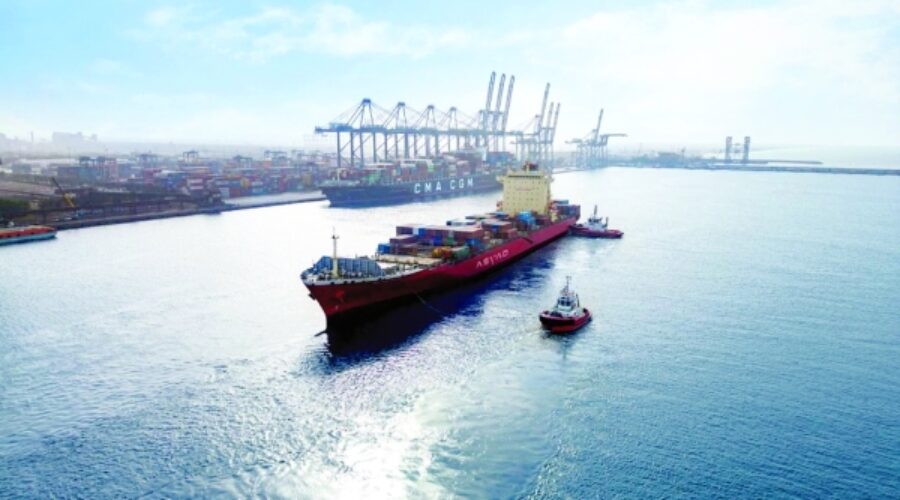
The group’s shipping fleet has expanded significantly, growing from 51 vessels in 2016 to over 100 today. Additionally, Asyad has diversified its portfolio to include six ports and terminals, witnessing increased operational activity across various business sectors. Notably, Duqm Drydock has seen the annual number of projects rise from 62 in 2016 to 258 in 2026.
The express delivery segment has also seen impressive growth, with average daily shipments jumping from 1,035 parcels in 2020 to 9,667 in 2026, reflecting the rapid growth in e-commerce and logistics services.
Qatan highlighted that recent growth has been bolstered by strategic acquisitions, partnerships, and investments aimed at enhancing integration within the logistics network. Currently, Asyad provides services to over 90 global destinations and connects more than 200 commercial ports through a comprehensive network that encompasses shipping, ports, warehousing, freight forwarding, and logistics services.
The company has established 12 cargo consolidation centers in China and India, allowing shipments from various suppliers to be combined before export to Oman and other markets. This strategy aims to increase supply chain efficiency, lower costs, and improve the availability of goods for businesses in Oman.
A significant milestone for Asyad was its public listing on the Muscat Stock Exchange, which enhanced governance, transparency, and access to capital. Furthermore, the company is actively participating in one of the region’s largest transport infrastructure initiatives—the Oman-UAE railway. According to Qatan, construction is approximately 40 percent complete, surpassing planned milestones.
Upon completion, the railway is expected to facilitate cargo movement, strengthen regional trade connections, and link ports, industrial zones, and markets through a more efficient and sustainable transportation network.
In addition to operational growth, Asyad has increased its investment in local content development, raising expenditures from RO 40 million in 2018 to nearly RO 85 million in 2026. Initiatives like the Asyad Accelerator and Supplier Development Programme aim to support small and medium-sized enterprises (SMEs) and further integrate Omani companies into logistics value chains.
As Oman looks to enhance the logistics sector’s contribution to national economic output, Asyad’s growth over the past decade illustrates the sector’s expanding role in trade facilitation, supply chain development, and economic diversification. — ONA
تحليل خاص من عمانت | تصفح سوق عُمان
ال dramatic revenue increase at Asyad Group signifies a robust trajectory for Oman’s logistics sector, presenting فرص كبيرة للشركات aiming to enhance connectivity and efficiency. This growth not only underscores the potential for investors to capitalize on Oman’s strategic position as a regional trade hub but also signals a need for entrepreneurs to engage with emerging logistics innovations. However, companies must remain agile to navigate the increasing competition and evolving market dynamics in this rapidly expanding sector.