Oman Plans Integrated Green Industrial Park: What This Means for Sustainable Investment Opportunities in Oman
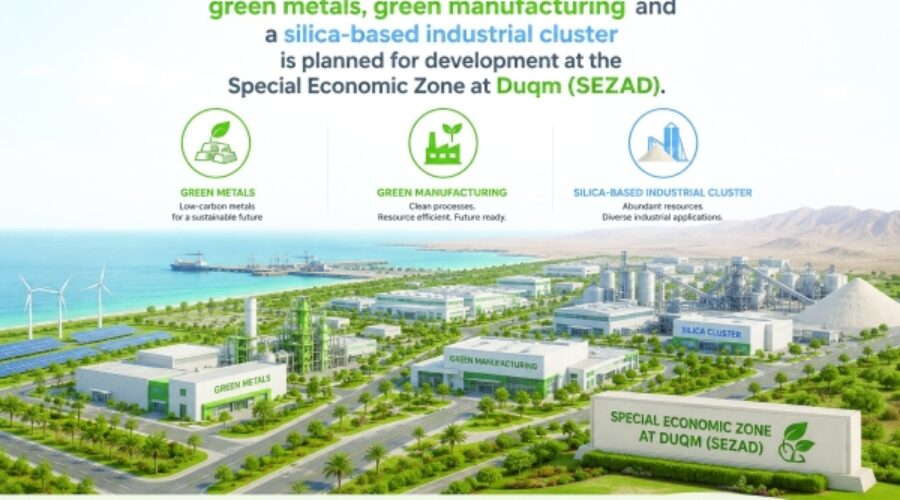
MUSCAT, JUNE 27 – A major development project, the Green Park, is set to be established at the Special Economic Zone at Duqm (SEZAD), integrating green metals, green manufacturing, and a silica-based industrial cluster.
The initiative, led by the Public Authority for Special Economic Zones and Free Zones (OPAZ), aims to create a co-located industrial ecosystem that connects mineral extraction, processing, low-carbon metals production, and downstream manufacturing. This approach focuses on maximizing value addition while minimizing emissions and reducing logistics costs.
Currently, leading international consultants are competing to secure a contract to develop a detailed master plan for this integrated project. Bids are due by July 14, 2026. The chosen consultant will conduct commercial and feasibility studies, market assessments, and develop strategies to attract investment. Additionally, they will prepare regulatory frameworks and evaluation methodologies to support decision-making. The scope also includes creating a comprehensive master plan and advanced engineering designs, along with integrated infrastructure, utilities, logistics, and environmental plans, producing a fully implementation-ready roadmap.
At the heart of the project is the Green Metals Zone, which will focus on producing low-carbon iron, steel, and aluminium using renewable energy and green hydrogen. Notable ventures include Jindal Steel’s planned 5 million-tonne-per-annum hydrogen-ready direct reduced iron (DRI)/hot briquetted iron (HBI) complex and Meranti Green Steel’s proposed green iron project, alongside several green aluminium initiatives under consideration.
Together, these projects will form a vertically integrated ecosystem encompassing green hydrogen production, iron ore processing, DRI, HBI, steelmaking, aluminium smelting and casting, as well as downstream metal products for export, primarily targeting markets in Europe and Asia. This cluster aims to establish Al Duqm as a leading regional hub for low-carbon metals manufacturing.
The Green Manufacturing Zone will build upon the outputs of the metals and hydrogen sectors to support diverse value-added industries powered by renewable energy. Potential activities include fabricating steel and aluminium products, manufacturing renewable energy system components, industrial equipment, automotive and transport-related goods, green chemicals, hydrogen-derived products, and export-focused assembly operations.
This zone will capitalize on Al Duqm’s expanding green hydrogen ecosystem—which includes initiatives by ACME, Hyport Duqm, and others—combined with world-class port and logistics infrastructure, to attract industries seeking low-carbon supply chains and global market access.
The Silica Zone will concentrate on processing Oman’s high-quality silica resources, prioritizing the production of higher-value products rather than exporting raw silica sand. Key outputs will include solar glass, float glass, specialty glass, fibreglass, ferrosilicon, silicon-based materials, and potentially solar-grade silicon feedstock.
By leveraging Oman’s abundant high-purity silica reserves, this cluster supports national industrial diversification strategies by transforming raw minerals into advanced products for the construction, automotive, renewable energy, and metallurgical industries. The focus on solar glass and photovoltaic components may further position Oman within the global clean technology supply chain.
In summary, the Green Park is envisioned as a vertically integrated industrial city combining minerals processing, energy transition technologies, and advanced manufacturing within a unified, export-driven ecosystem.
تحليل خاص من عمانت | تصفح سوق عُمان
The development of the Green Park at SEZAD represents a transformative opportunity for Oman’s industrial sector, positioning the country as a regional leader in low-carbon metals and green manufacturing. For businesses, this creates potential to tap into emerging renewable energy-driven supply chains and high-value mineral processing, while investors should strategically consider the integration of green hydrogen, sustainable metals production, and advanced manufacturing as key growth areas. This initiative also signals a bold push toward industrial diversification with strong export potential, reducing reliance on raw materials exports and boosting Oman’s role in global clean-tech markets.