Emerging Demand in Cable Manufacturing: How Grid Ambitions Could Boost Business Opportunities in Oman
MUSCAT, July 1 – Oman is making significant strides toward renewable energy, electrification, and the development of digital infrastructure, creating greater opportunities for local manufacturers. At the same time, concerns are emerging regarding grid readiness, supply chain resilience, and the capacity of domestic industries to compete effectively in terms of quality, cost, and delivery.
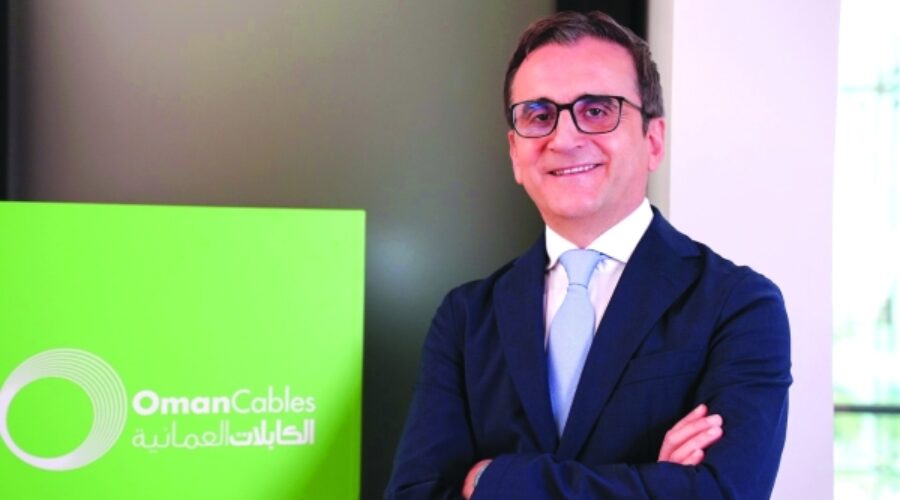
Erkan Aydoğdu, CEO of Oman Cables, highlighted that the company is bracing for increased demand from renewable energy initiatives, power networks, industrial growth, and digital infrastructure, given the central role electricity plays in economic activities.
“Oman Cables has a robust industrial foundation, deep local roots, and a firmly established market presence,” Aydoğdu stated. “However, the energy and infrastructure landscape is evolving rapidly.”
Oman’s policy vision is clear: the nation aims to produce 30% of its electricity from renewable sources by 2030. Achieving this target will require advancements beyond solar and wind projects; it will also depend on enhancing grid connections and developing transmission and distribution networks capable of managing more complex power flows.
This shift alters the demand landscape for cable manufacturers. Clients are now prioritizing technical reliability, safety, lifecycle performance, sustainability standards, and delivery timelines over merely acquiring basic supplies.
Aydoğdu expressed that Oman Cables views this transition as an opportunity to evolve from traditional supply roles to more specialized energy and infrastructure solutions. “The market is transitioning toward more integrated solutions,” he noted. “Customers are increasingly seeking reliability, performance, sustainability, and systems tailored for specific applications.”
However, this opportunity is not guaranteed. It hinges on the pace of renewable project awards, industrial investments, grid enhancements, and the ability of local manufacturers to compete with both regional and international suppliers. Challenges such as pricing pressures, technical certification, and supply chain capacity will remain critical hurdles.
With over 40 years of operation, Oman Cables is focusing on boosting its capacity and technical competencies. The company’s investment in Plant 3 aims to enhance medium-voltage capacity, while its Renewable Excellence Centre is designed to support applications pertinent to renewable energy projects.
Oman Cables’ broader industrial platform includes operations like Oman Aluminium Processing Industries SPC in Sohar and Associated Cables Private Limited in India, which contribute to the group’s value chain from aluminium rod and conductor production to specialized cable solutions.
As countries seek more secure supply chains for critical infrastructure, such integration may prove increasingly vital. However, local manufacturers must demonstrate their ability to meet international performance standards while remaining competitively priced.
Digital infrastructure is emerging as another key driver of demand. Technologies such as data centres, cloud services, artificial intelligence, and industrial automation require stable and high-performance power systems. Aydoğdu noted that this presents new demands for cable design, testing, and reliability.
“The market is shifting towards more integrated and technology-driven infrastructure systems,” he remarked. “We are committed to being prepared for this transformation with strong local capabilities and adherence to global standards.”
Oman Cables’ partnership with Prysmian has also strengthened its position. Aydoğdu referred to Prysmian as a strategic and technological ally, providing access to international expertise, quality standards, and research and development capabilities. Moreover, Oman Cables serves as Prysmian’s regional headquarters for the Middle East, Africa, Russia, and Turkey, reinforcing its operational base in Oman.
Beyond commercial growth, Aydoğdu emphasized that local value creation remains crucial for the company’s role in Oman. With Omanisation exceeding 53% across the organization, well above the 35% manufacturing requirement mandated by the Ministry of Labour, he insisted that localisation should focus on skills and leadership development rather than mere statistics.
“Omanisation should not be viewed solely as a percentage,” he stated. “The true measure is whether companies are successfully nurturing Omani talent for technical and leadership roles.”
The company implements over ten development programs annually, encompassing technical skills, leadership training, career progression, and cross-functional learning. Additionally, it supports educational initiatives aimed at sparking interest in science, technology, and engineering.
For Oman, the broader challenge lies in whether industrial enterprises can bolster local supply chains while the nation pursues economic diversification as outlined in Oman Vision 2040. Growth in renewable energy, grid modernization, advanced data infrastructure, and industrial expansion necessitates a stronger technical foundation.
Aydoğdu concluded by framing local value creation in this expansive context. “Local value creation encompasses more than our production activities,” he said. “It involves the ecosystem we foster around the business—developing people, skills, knowledge, and achieving long-term industrial resilience.”
As Oman progresses in expanding its renewable energy initiatives and transitions to a more electricity-reliant economy, companies like Oman Cables are poised to encounter both opportunities and challenges. The future will reveal whether domestic manufacturers can transform national infrastructure needs into competitive industrial growth.
تحليل خاص من عمانت | تصفح سوق عُمان
Oman’s transition to renewable energy and digital infrastructure presents significant opportunities for local manufacturers, especially in terms of increased demand for technologically advanced and reliable products. However, this shift also carries المخاطر, particularly regarding grid readiness and competition with international suppliers. المستثمرون ورجال الأعمال should prioritize مرونة سلسلة التوريد and focus on cultivating المواهب المحلية to meet evolving market demands, ensuring that they are not just participants but leaders in this transformative landscape.