Market Volatility Amid Mideast Conflict: What Investors and Businesses in Oman Need to Know
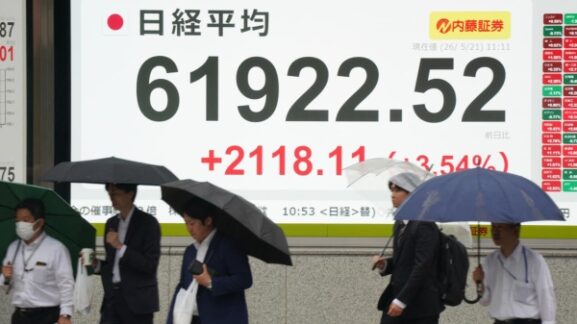
Stocks fell sharply while oil prices surged on Friday, concluding a volatile week marked by attacks on Gulf energy infrastructure that unsettled global markets and raised fears of a worldwide economic slowdown.
Brent crude, the international benchmark, climbed 3.3 percent to nearly $112.19 per barrel. Meanwhile, West Texas Intermediate (WTI), the primary US crude contract, increased 2.3 percent to above $98 per barrel.
Angelo Kourkafas of Edward Jones highlighted that the week’s assaults on energy facilities intensified market anxieties. “What really matters more is not how high prices are now, but how long prices may stay high, and I think it’s that uncertainty that is triggering the volatility,” he explained.
Investors were already on edge due to the near-closure of the Strait of Hormuz, a vital passage for about 20 percent of the world’s crude oil and liquefied natural gas supplies.
On Friday morning, drone strikes ignited a fire at Kuwait’s Mina Al Ahmadi oil refinery. Additionally, Iranian missile attacks on Qatar’s massive Ras Laffan natural gas complex on Thursday inflicted “extensive damage,” according to Qatar’s state energy company. The damage could cost up to $20 billion in annual revenue losses and may require five years for full repairs.
Kourkafas noted the prevailing uncertainty ahead of the weekend: “Investors are unsurprisingly a bit nervous about what may happen; of course, nobody knows how it’s going to play out.” He also pointed to rising government bond yields as an indicator of heightened inflation concerns.
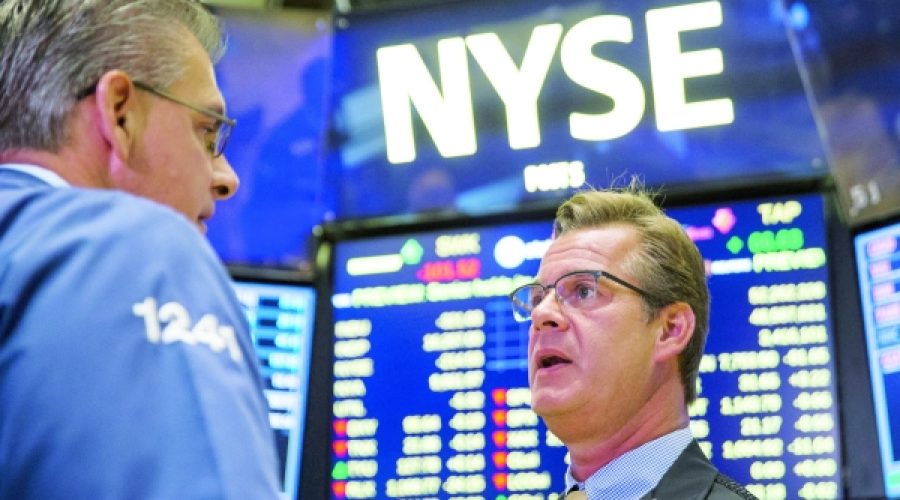
All three major US stock indices closed lower Friday, with the S&P 500 dropping 1.5 percent.
US Federal Reserve Governor Christopher Waller expressed inflation worries amid the ongoing conflict. While previously supporting interest rate cuts due to labor market issues, Waller recently revised his stance on easing pace because of inflation risks. “Since the Strait of Hormuz was closed, this is looking like it’s going to be a much more protracted conflict, and oil prices are going to stay high for a longer time,” he stated. “So that suggested inflation was more of a concern than I was putting it.”
In Europe, markets also ended lower. London’s FTSE 100 dipped below the 10,000 mark for the first time since early January, pressured by mounting bond market concerns.
On Thursday, US markets had been boosted by Israeli Prime Minister Benjamin Netanyahu’s remarks suggesting the war could conclude sooner than anticipated. However, on Friday, Iran’s Supreme Leader Ayatollah Mojtaba Khamenei maintained a defiant stance, declaring that Iranians had dealt a “dizzying blow” to their adversaries.
Also on Friday, US President Donald Trump dismissed the idea of a ceasefire with Iran, asserting that the US holds the advantage in the three-week conflict. “I don’t want to do a ceasefire. You know you don’t do a ceasefire when you’re literally obliterating the other side,” Trump told reporters at the White House. — AFP
Special Analysis by Omanet | Navigate Oman’s Market
The recent turmoil in Gulf energy infrastructure has pushed oil prices higher, signaling sustained volatility and inflation risks that could impact Omani businesses reliant on stable energy supplies and costs. For investors and entrepreneurs, this heightened geopolitical risk presents both a cautionary environment and opportunities in sectors tied to energy, security, and strategic supply chain diversification. Smart players should consider hedging against prolonged oil price spikes and exploring investments in resilience and alternative energy solutions to navigate this uncertain landscape.