Japan’s New Initiative to Tap Joint Oil Stockpiles: How It Affects Global Oil Prices and Your Investment Strategy
TOKYO: Japan plans to utilize joint oil stockpiles held with producing nations by the end of March as Prime Minister Sanae Takaichi announced on Tuesday. This move is part of Tokyo’s emergency measures to mitigate supply disruptions stemming from the Middle East.
Following missile strikes by the US and Israel on Iran on February 28, global oil prices surged to their highest levels since 2022, while the critical Strait of Hormuz, a vital passage for oil and liquefied natural gas shipments, remains closed.
Takaichi stated on social media, “We began releasing privately held reserves on March 16 and will start releasing national reserves from March 26.” She also confirmed that releases from joint stockpiles with oil-producing nations are planned to commence later in March.
According to the International Energy Agency (IEA), Japan’s contribution to a historic coordinated oil stockpile release will total nearly 80 million barrels, primarily consisting of crude oil. Additionally, Japan holds approximately 13 million barrels—equivalent to seven days of supply—jointly with Saudi Arabia, the United Arab Emirates, and Kuwait. Industry Minister Ryosei Akazawa noted that Japan intends to utilize five days’ worth of this supply.
NO STRAIT OF HORMUZ TANKERS SAILING TOWARDS JAPAN
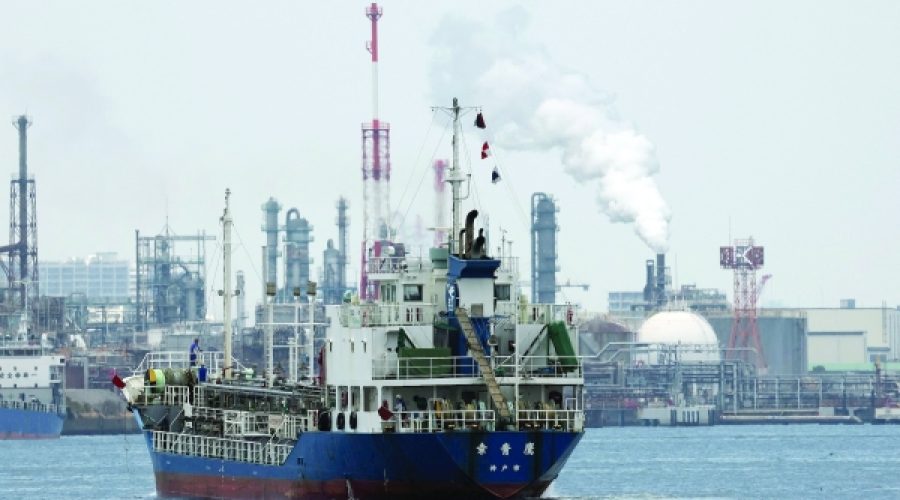
Two tankers, one departing from the Yanbu port in Saudi Arabia and another from Fujairah in the UAE, are currently en route to Japan, circumventing the Strait of Hormuz. Akazawa indicated that these vessels are expected to arrive this week and in early April. Furthermore, another tanker from outside the Middle East is scheduled to reach Japan by late April.
Iranian Foreign Minister Abbas Araqchi told Kyodo news agency last week that Tehran is willing to allow Japanese vessels to pass through the Strait of Hormuz. However, Kpler ship tracking data has shown no Japan-bound tankers departing the region since early March.
Major Japanese shipping companies, Mitsui O.S.K. and Nippon Yusen Kaisha, have suspended transit for their tankers positioned in the Gulf and are currently waiting in a safe area, as confirmed by both companies via email.
In response to the ongoing situation, Japan is tapping into its reserve funds to provide gasoline subsidies and is reportedly considering interventions in the crude oil futures market. Local buyers are also seeking alternative supplies, particularly from the US.
Shunichi Kito, president of the Petroleum Association of Japan (PAJ), which represents the country’s major oil refiners, noted that oil releases from both private and public stockpiles could sustain supply needs until the end of April. — Reuters
Special Analysis by Omanet | Navigate Oman’s Market
The recent escalation in oil prices due to geopolitical tensions creates significant opportunities for Omani businesses, particularly in energy and logistics sectors, as they can leverage increased demand for regional oil supplies. However, investors should be cautious of potential supply chain disruptions, particularly through crucial routes like the Strait of Hormuz, which could impact transportation costs and reliability. Strategic investments in alternative supply partnerships and enhanced local storage capabilities could provide significant advantages as the market evolves.