SEZAD Investments Surge to RO 6.394 Billion in 2025: What This Means for Business Growth and Opportunities in Oman
MUSCAT, APRIL 12 — The Special Economic Zone at Duqm (SEZAD) continues to solidify its status as a major investment and industrial center, with cumulative committed investments reaching RO 6.394 billion by 2025. Recent data reveals consistent progress in infrastructure development, investor engagement, and private sector-led initiatives. According to Duqm Economist, the zone is transitioning from a focus on infrastructure construction to sustained economic productivity.
SEZAD’s investment portfolio remains diverse, supported by 360 commercial and 65 industrial projects fueling its expansion. Within the reported period, 14 new investment agreements valued at RO 94.34 million were signed, alongside 17 new applications spanning industrial, fisheries, tourism, and service sectors. Licensing activity remained robust, with 427 economic licenses issued, signaling ongoing investor confidence in Duqm.
Administrative processes have been enhanced through the One-Stop Shop, which continues to simplify procedures for investors. During this time, 506 commercial registrations were completed, and 610 public services were delivered. Additionally, 32 building permits were granted for industrial, commercial, and tourism developments, while 1,562 visas and work permits were processed to facilitate project execution. These efforts aim to improve the business climate and accelerate project timelines.
Infrastructure development remains a cornerstone of SEZAD’s strategy. Notable achievements include the completion of a 13-kilometer internal road network within the Commercial District, connected to nine external roads and seven signalized intersections. Works spanning 1.08 square kilometers, including stormwater drainage and sewage systems, have also been finalized, enhancing the zone’s operational capabilities.
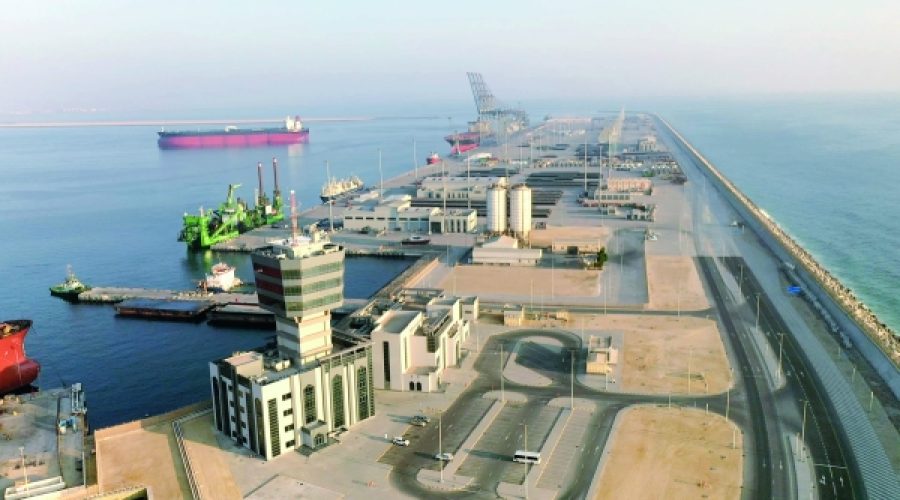
Connectivity improvements include the opening and dualization of major roads linking Duqm Airport, the refinery and heavy industries complex, and the Ras Markaz oil storage terminal. Internal road networks in the Sai Commercial District are complete, with construction underway on a dual carriageway connecting the tourism area to the fishing port and food industries complex. Public parks covering 13,000 square meters have been developed, complemented by landscaping and urban greening initiatives.
Ongoing infrastructure projects show significant progress. Sai Street and Tourism Street are 79% complete, while the agricultural nursery is 63% finished. Phase 1 of National Road (NR32) is 89% complete, and community facilities under the Lifestyle Project have been fully delivered. The dualization of Sultan Said bin Taimur Road (Southern) and roads in the Light and Medium Industries Area have each reached 98% completion, with Phase 2 of NR32 at 63%.
Private sector developments are advancing steadily. Maysan Square Duqm has reached 57.8% completion in Phase 1 and 20% in Phase 2. The Jindal Duqm Green Steel Project reports 26.9% progress in its steel plant and 34.4% in its export jetty. The ACME green hydrogen and ammonia project is 50% complete, with planned production capacity of 3,300 metric tonnes per day.
In renewable energy, the Mawarid wind turbine manufacturing project is underway, with investments exceeding RO 70 million. The facility aims to produce up to 100 turbines annually, generating between 800 and 1,000 MW, and is slated to commence commercial operations between 2026 and 2027.
Trade through Duqm Port reflects the zone’s expanding economic role, with imports totaling RO 1.67 billion and re-exports reaching RO 591.1 million. Exports stood at RO 165.5 million, highlighting growing logistics activities.
Aviation performance also saw growth, with Duqm Airport handling 65,075 passengers—a 6.5% increase from 2024. Additionally, 349 passengers were transferred to other destinations, underscoring the airport’s emerging role in regional connectivity.
Special Analysis by Omanet | Navigate Oman’s Market
The rapid development and diversified investment in SEZAD, marked by robust infrastructure upgrades and strong private sector projects, signal Oman’s strategic shift towards becoming a leading industrial and logistics hub. For businesses, this creates significant opportunities in sectors like renewable energy, tourism, and fisheries, while smart investors should prioritize projects aligned with long-term infrastructure growth and the government’s streamlined regulatory environment. However, maintaining momentum and managing risks related to global market fluctuations will be critical for sustaining this upward trajectory.