Tim Cook’s Departure as Apple CEO: What This Means for Investors and the Future of Tech Business
Apple Appoints John Ternus as New CEO Following Tim Cook’s Departure
Apple has officially announced the appointment of John Ternus as its next CEO, marking a significant leadership change for the technology giant. Ternus, who has served as the company’s hardware chief, will take over the reins from Tim Cook, who will transition to the role of executive chairman. This announcement comes as Apple prepares to navigate evolving industry dynamics influenced by advancements in artificial intelligence.
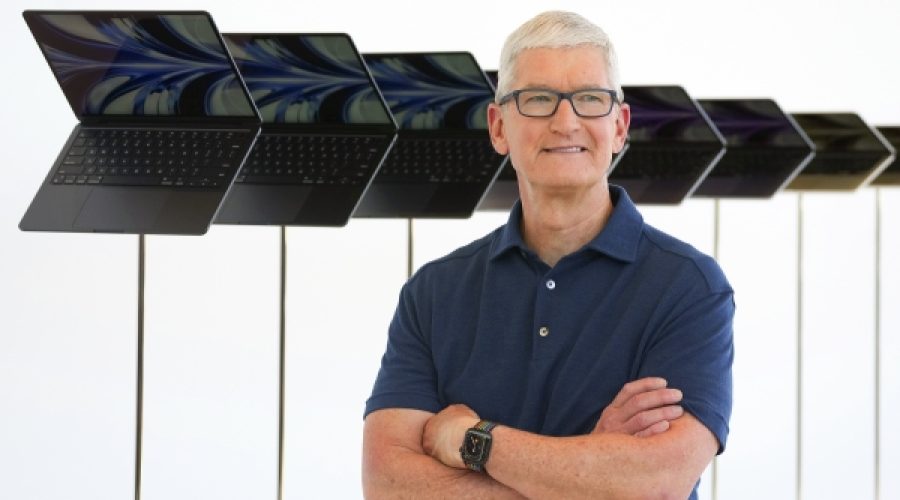
Cook, 65, has led Apple for nearly 15 years, overseeing its rise to one of the world’s most influential and valuable companies. Under his stewardship, Apple’s annual profits quadrupled to over $110 billion, while the company’s market capitalization surged more than tenfold to approximately $4 trillion.
Replacing the late co-founder Steve Jobs, Cook has been recognized for his operational expertise, particularly in managing Apple’s global supply chain and retail presence, which spans five continents. “He stepped into the world’s biggest shoes and has done an amazing job,” said Peter Oppenheimer, Apple’s former chief financial officer.
Ternus, 50, has been with Apple since 2001 and played a pivotal role in the development of key products such as the Macintosh and iPad. He will be the eighth CEO in the company’s 50-year history and the third since Jobs returned in 1997, when the company faced near bankruptcy.
“I am filled with optimism about what we can achieve in the years to come,” Ternus stated. “I promise to lead with the values and vision that have defined this special place for half a century.”
As he steps into his new role, Ternus faces challenges, including stagnation in product innovation and concerns about the future management of the company amid recent executive departures. Investors are anxious about Apple’s strategy and its relative inactivity in the rapidly advancing field of artificial intelligence, where competitors are investing significantly.
Apple is also dealing with complex political and economic issues, including the repercussions of tariffs from the previous U.S. administration and geopolitical tensions with China, where the majority of its products are manufactured.
Cook will remain involved as executive chairman, focusing on key areas such as engaging with global policymakers. “This is not goodbye,” he stated in a letter on Apple’s website, noting that it is “a moment of transition.”
Despite these challenges, Apple continues to be one of the most profitable companies globally, supported by stable sales across its devices and services, including the popular iCloud and Apple Pay.
Cook joined Apple in 1998 as chief operating officer and was instrumental in transforming product inventory management. Though he has been less publicly visible than Jobs, Cook has emerged as a prominent figure in corporate America, particularly as one of the most visible LGBTQ+ executives.
As Ternus assumes leadership, he will be tasked with the critical question that has lingered throughout Cook’s tenure: Can Apple innovate and produce groundbreaking products in a post-Jobs era? “John will need to find a way to ensure Apple remains relevant and impactful,” noted Cameron Rogers, a former Apple product marketing executive.
Apple also announced the promotion of Johny Srouji to chief hardware officer, succeeding Ternus and continuing to advance the company’s hardware innovations.
With this leadership transition, Apple’s future direction remains a topic of keen interest as it looks to redefine its impact in the tech industry.
Special Analysis by Omanet | Navigate Oman’s Market
The transition to John Ternus as Apple’s CEO signals a pivotal moment for businesses in Oman, especially in tech and consumer goods, as they must adapt to Apple’s evolving strategies amidst pressures from artificial intelligence and geopolitical challenges. Opportunities lie in aligning local innovations with Apple’s product ecosystem, while risks stem from dependence on supply chains that are increasingly vulnerable to global tensions, particularly with China. Smart investors and entrepreneurs should focus on leveraging AI advancements, ensuring agility to capture emerging trends in consumer technology.