Markets Ignore War Uncertainty, Surge to Record Highs: What Investors and Business Owners Need to Know
Stock markets are demonstrating resilience amid ongoing US-Iran tensions, a perspective endorsed by Nigel Green, CEO of one of the world’s largest independent financial advisory firms. He urges investors to look beyond the prevailing geopolitical headlines to safeguard and grow their investments.
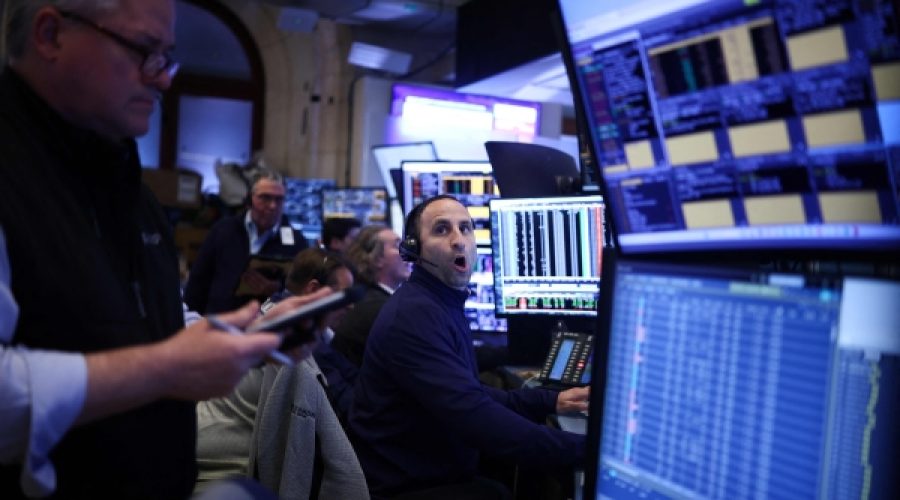
Despite the continued standoff between the US and Iran over control of the Strait of Hormuz, which has effectively restricted maritime traffic during an extended ceasefire, global stock markets are hitting record highs. Yesterday, Wall Street surged to new heights: the S&P 500 rose approximately 1% to reach an all-time peak, the Nasdaq advanced around 1.6% to set another record, and the Dow Jones Industrial Average gained over 300 points. This strength was mirrored internationally.
Europe’s STOXX 600 index hit multi-month highs, Germany’s DAX remained near record levels, and France’s CAC 40 showed firm gains. In the Asia-Pacific region, Japan’s Nikkei 225 stayed close to multi-decade highs, while India’s key indices continued their upward momentum, reflecting a robust global appetite for risk.
Green explains, “Markets are looking past the war headlines and concentrating on earnings, liquidity, and long-term structural growth. While geopolitics is important, it is not the sole determinant of capital allocation.”
He adds, “The extension of the ceasefire by Donald Trump has eased immediate fears of escalation, but tensions in the Strait of Hormuz still pose significant risks to oil supply and inflation. Energy markets remain highly sensitive, with disruptions quickly affecting global pricing.”
Nonetheless, equities are progressing due to a strong corporate earnings environment. For example, Tesla exceeded expectations with its latest quarterly results, driven by increased investments in AI computing, battery materials, and autonomous systems, including robotaxi development.
“The results underscore how leading companies are intensifying their focus on next-generation technologies that are transforming entire industries,” Green notes.
He emphasizes that earnings growth tied to AI and technology is fueling a robust revaluation of global equities. Companies central to this transformation are drawing significant capital as they build infrastructure essential for future economic growth.
This trend is evident in shifting global capital flows. Taiwan’s stock market has surpassed the UK in total market capitalization, reaching about $4.1 trillion, largely due to its dominance in semiconductors. Conversely, the UK market has remained near levels seen over a decade ago, reflecting its lower exposure to high-growth sectors.
Green states, “Taiwan’s rise reflects a fundamental shift. Capital is decisively flowing towards regions and sectors key to AI and tech advancement.”
He further explains, “Semiconductor supply chains, advanced manufacturing, and digital infrastructure command premium valuations because they are vital to future growth.”
Highlighting Taiwan Semiconductor Manufacturing Company (TSMC), Green says, “TSMC holds a significant market share and is central to the global AI ecosystem. Major AI investments, from hyperscalers to chip designers, depend on this supply chain, prompting investors to position themselves accordingly.”
Foreign investment inflows into Taiwanese equities have surged recently, putting the market on course for one of its strongest months in history. In Asia and other growth markets, these sustained inflows contrast with more subdued interest in traditional, legacy-heavy indices.
Green acknowledges ongoing risks linked to the Middle East. “Oil price volatility caused by potential disruptions in the Strait of Hormuz can drive inflation and influence monetary policy decisions. Global supply chains remain vulnerable to prolonged restrictions in critical shipping routes.”
He cautions, “Geopolitical developments will continue to introduce volatility, especially in energy markets. Investors must consider inflation, stagflation risks, and possible policy responses. Ignoring these factors would be unwise.”
In conclusion, Green affirms, “Global markets are advancing because their fundamental growth drivers are strong and accelerating. AI and technology are rapidly reshaping the global economy, generating opportunities across various sectors and regions.”
He advises investors to recognize these trends and position themselves early to maximize benefits. “Waiting for uncertainty to resolve often means missing the most crucial phase of opportunity. This is the message markets are sending us in real time.”
Special Analysis by Omanet | Navigate Oman’s Market
The current geopolitical tensions around the Strait of Hormuz pose significant risks for energy markets and inflation, critical factors for Omani businesses reliant on oil exports and global supply chains. However, the bullish global equities driven by AI and tech advancements reveal a strategic opportunity for Omani investors and entrepreneurs to diversify into high-growth sectors beyond traditional energy markets. Smart market participants should focus on emerging tech trends and regional shifts in capital flow to position themselves advantageously in a rapidly evolving economic landscape.