US Commitment to Clear Stranded Ships in Hormuz: What It Means for Maritime Trade and Business Stability in Oman
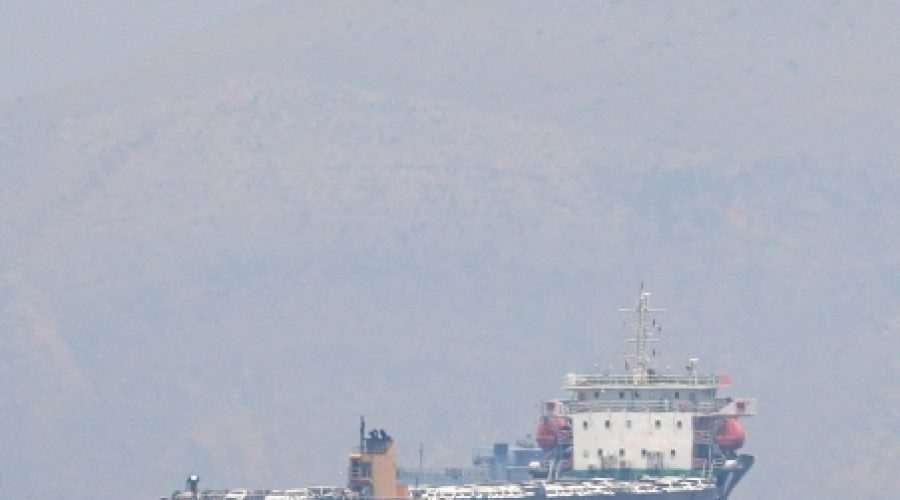
President Donald Trump announced on Sunday that the United States will launch a new initiative, called Project Freedom, aimed at assisting ships stranded in the Strait of Hormuz, an area Iran has effectively closed. The program is set to begin Monday morning, Middle East time, responding to requests from nations seeking help in freeing their vessels.
Trump cautioned that any interference with the initiative would be met with “forceful” measures, although he did not provide detailed information on how the operation would be conducted. He emphasized that the stranded ships come from regions not involved in the ongoing conflict in the Middle East.
This announcement serves as a direct challenge to Iran, with Trump betting that Tehran would avoid the risks of initiating hostilities, such as firing on ships or deploying mines, thus provoking a U.S. response. Notably, Trump did not address lifting the U.S. blockade on Iranian ports.
If successful, Project Freedom could undermine the existing dual blockades—the Iranian blockade and the U.S. blockade—potentially altering the current status quo. However, it also carries the risk of escalating tensions if Iran attempts to block or confront the U.S.-led effort, risking a breach of the ceasefire.
Trump’s statement did not clarify what “guiding” ships would entail. However, a subsequent statement from U.S. Central Command revealed that the U.S. role would focus on coordinating safe passage among the stranded ships rather than providing direct escorts. Central Command detailed that the military support for Project Freedom will involve guided-missile destroyers, over 100 aircraft from land and sea, multi-domain unmanned platforms, and around 15,000 service members.
Iran’s initial reaction on Sunday was restrained. Revolutionary Guard spokesperson Sardar Hossein Mohibi expressed confidence in Iran’s military capabilities, framing their preparedness within a religious context of divine support. The state-run broadcaster IRIB dismissed Trump’s announcement as “delirium,” while some Iranian news outlets offered only summarized coverage of the threat.
Ebrahim Azizi, chairman of the Iranian parliamentary national security commission, posted a stark warning on social media, stating that any American interference in the Strait of Hormuz’s new maritime regime would violate the ceasefire.
Trump’s declaration follows a recent Iranian proposal to end the ongoing conflict, which the U.S. president deemed likely insufficient. He acknowledged that negotiations are continuing and suggested they might yet produce a positive outcome for all parties.
The president’s strategy appears to aim at restoring conditions to those before the outbreak of the war on February 28, when cargo ships transporting oil, fertilizer, helium for semiconductor manufacturing, and other goods did not face Iranian-imposed tolls—some reportedly as high as $2 million per ship.
Additionally, this move subtly critiques European efforts to keep the Persian Gulf open, which have been conditioned on a cessation of hostilities. Trump has previously criticized European reluctance to confront Iran directly while the conflict is active.
Significant risks remain. It is unclear whether all mines in the strait have been cleared. Even if Iran’s central command opts not to oppose the U.S. effort, there is a possibility that an autonomous Revolutionary Guard unit or an individual could provoke a confrontation by opening fire from land or small boats.
Despite the loss of much of Iran’s traditional navy during the conflict, the Revolutionary Guard maintains a “mosquito fleet” of speedboats capable of mine-laying and harassment, alongside mobile shore-based missile and drone launchers capable of striking ships in the narrow strait.
According to the International Maritime Organization, approximately 20 commercial vessels were struck by projectiles in the weeks following the war’s onset, with military analysts attributing most attacks to drones.
This article originally appeared in The New York Times.
Special Analysis by Omanet | Navigate Oman’s Market
The U.S. initiative, Project Freedom, aimed at unblocking the Strait of Hormuz, presents a critical geopolitical shift with major implications for Oman’s strategic shipping routes and regional stability. For businesses and investors in Oman, this creates both opportunities to safeguard maritime trade and risks of renewed conflict escalation, particularly if Iran challenges the initiative. Smart investors should closely monitor how the U.S.-Iran tensions evolve and consider diversifying logistics and supply chains to mitigate potential disruptions in this pivotal maritime corridor.