Oman’s Banking Evolution: How the Intelligence-First Era Will Transform Your Investments and Business Strategies
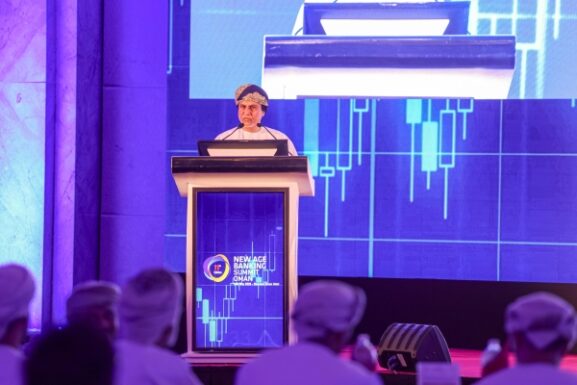
Muscat — Oman’s banking sector is transitioning from digital adoption to an “intelligence-first” phase, where artificial intelligence (AI), open banking, and cybersecurity will shape the future of financial services, stated the Governor of the Central Bank of Oman (CBO).
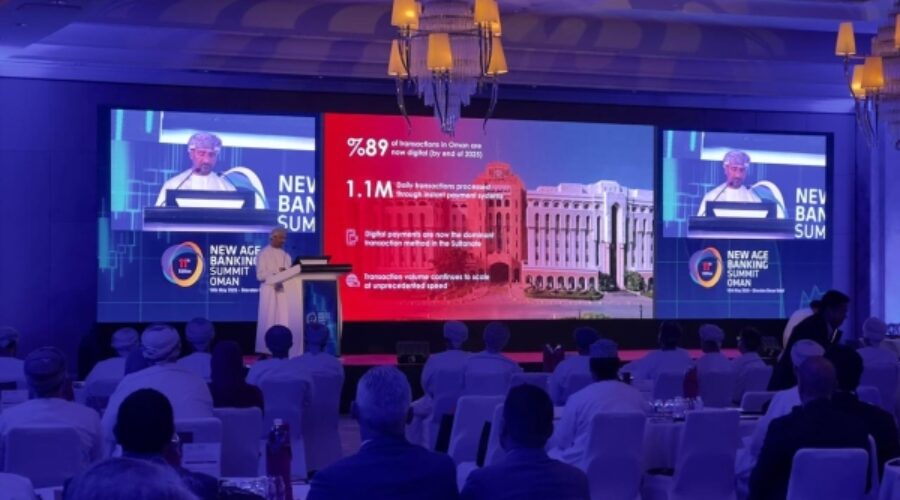
Addressing the New Age Banking Summit Oman, the governor highlighted that by the end of 2025, digital transactions accounted for approximately 89 percent of total transaction volumes in the Sultanate. Additionally, Oman’s instant payment systems now handle around 1.1 million transactions daily.
“These figures represent more than operational milestones,” he noted. “They demonstrate the trust earned, the resilience of our foundations, and the robustness of the infrastructure supporting our next economic ambitions.”
He explained that Oman’s banking sector had moved beyond digital-first initiatives—such as digitizing payments, customer onboarding, and services—and is now entering an era defined by intelligence-first banking. AI integration is expanding across payments, supervision, compliance, risk management, and financial decision-making. This shift, he emphasized, poses a critical challenge for regulators and financial institutions: ensuring that trust, ethics, and human judgment remain central as algorithms increasingly influence economic behavior and access to opportunities.
“Intelligence without wisdom is not progress. It is risk disguised as innovation,” he warned.
On open banking, the governor described it as a profound strategic and institutional transformation rather than merely a technological upgrade. For decades, financial institutions controlled access to financial data and services. Today, customers demand ownership, portability, transparency, and autonomy over their financial lives. He asserted that the institutions poised to lead the future will be those that proactively reinvent themselves instead of waiting for disruption.
The governor also stressed that innovation must be rooted in governance. “Innovation without governance breeds fragility; innovation grounded in trust fosters sustainable transformation,” he said. Reflecting on the history of financial crises, he cautioned about the dangers when innovation outpaces the wisdom needed to regulate it.
He further underscored cybersecurity’s growing role as a pillar of financial and national resilience amid increasingly intelligent and interconnected banking systems. “Cybersecurity is no longer a technical function; it is financial security. It is economic security. And in a time of geopolitical volatility, it is national security,” he affirmed.
Linking the banking sector’s evolution to Oman’s 11th Five-Year Development Plan, the governor described this plan as more than an economic blueprint—it is a declaration of strategic ambition in a rapidly evolving global landscape. He highlighted Oman’s efforts to build a financial ecosystem that is digitally advanced, globally integrated, innovation-driven, and nationally sovereign.
“The future of banking will not be shaped by technology alone. Technology is merely the instrument,” he said. “Leadership, strategic foresight, and a collective commitment to guiding innovation in ways that promote prosperity without compromising trust will determine that future.”
Under the guidance of His Majesty Sultan Haitham bin Tarik, Oman is advancing toward this future with clear purpose and confidence. “We are not here merely to observe the new age of banking; we are here to shape it,” the governor declared.
Special Analysis by Omanet | Navigate Oman’s Market
Oman’s banking sector is transitioning to an intelligence-first era, integrating AI, open banking, and cybersecurity, which signals a profound shift beyond digital adoption. For businesses, this creates opportunities to leverage smart financial services for enhanced efficiency and innovation, while also introducing risks related to data governance and cybersecurity threats. Smart investors and entrepreneurs should prioritize ethical AI integration, robust cyber defenses, and embrace open banking frameworks to stay ahead in a rapidly evolving and interconnected financial ecosystem.