Flare Gas Projects Gain Momentum in Oman: What This Means for Investors and Business Growth
MUSCAT: The Sultanate of Oman is emerging as a strategic hub for innovative flare-gas monetisation technologies. A partnership revealed at the Oman Petroleum & Energy Show (OPES) 2026 aims to transform stranded and flared gas into electricity for industrial and high-density computing applications.
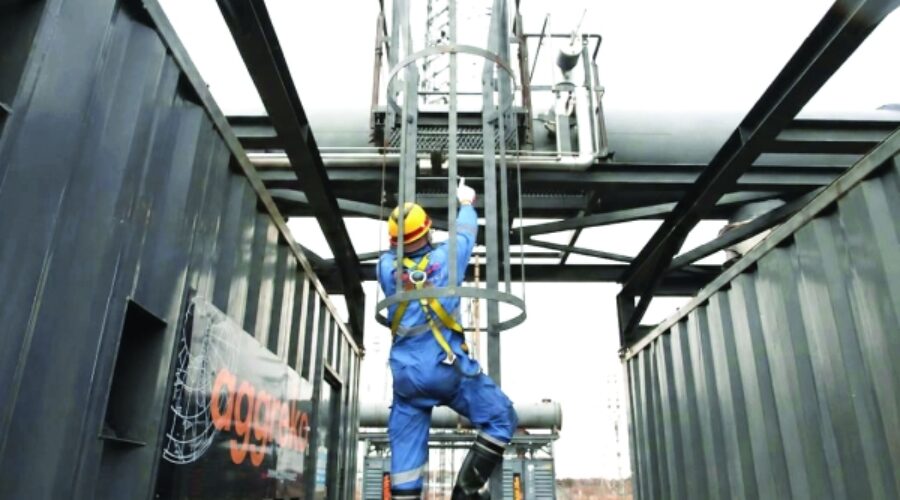
Czech technology firm InoWatti and Aggreko Middle East have signed a Memorandum of Understanding (MoU) to jointly develop modular flare-gas-to-power projects in Oman. These projects target remote and smaller oilfield operations where the installation of permanent infrastructure is typically uneconomical.
This agreement aligns with Oman’s accelerated efforts to reduce emissions and enhance energy efficiency as part of Oman Vision 2040, while sustaining the competitiveness of its oil and gas sector.
Under the partnership, Aggreko will supply gas-to-power generation systems and engineered energy solutions. InoWatti will lead the commercial development, which includes identifying suitable sites, engaging with operators, and integrating mobile high-performance computing (HPC) infrastructure.
The initiative is designed for flare-gas environments lacking commercial viability for pipeline connections or processing facilities, especially in early-stage production sites, remote oilfields, and locations with intermittent gas flows.
Alex Pilar, Chairman of InoWatti, highlighted Oman’s significance for the company, citing the country’s mature energy industry and commitment to sustainability. He emphasized that InoWatti has spent nearly two years establishing local partnerships and setting up a fully owned subsidiary in Oman as part of its long-term strategy.
Industry experts identify flare-gas utilisation as a major operational and environmental challenge globally. Often, associated gas produced alongside oil is flared off in remote fields due to costly transportation and processing infrastructure.
Jakub Hlavenka, CEO of InoWatti, explained that the company focuses on mobility and flexibility rather than large, fixed infrastructure. “Routine flaring of associated gas in many small or remote oil fields occurs because there’s no economically viable infrastructure,” he said. “Our model uses modular gas-to-power systems, mobile HPC data centres, and modular power distribution infrastructure that can be deployed onsite and relocated if needed.”
Hlavenka noted that this approach creates new revenue streams by converting previously wasted gas into productive energy, thereby improving the economics of flare reduction projects where conventional infrastructure is not justified.
Pilar stressed the importance of commercial viability for the success of flare reduction efforts. “Flare elimination must generate value. When operators can profit from gas that was previously wasted, adoption becomes sustainable and commercially rational,” he said.
The MoU reflects growing interest in modular, deployable energy solutions in Oman’s upstream oil sector, especially as operators balance decarbonisation goals with cost-efficiency.
James Smith, Business Development Manager for Projects & Gas at Aggreko Middle East, stated that the collaboration offers practical solutions for flare reduction. “By combining Aggreko’s gas-to-power technology with InoWatti’s flexible computing infrastructure, we aim to convert wasted gas into productive power,” he said.
Hlavenka added that Oman’s numerous small and emerging production sites make it particularly suitable for mobile flare-gas utilisation projects, where large permanent infrastructure is not justified initially.
InoWatti’s immediate objective is to secure and execute its first operational project in Oman. Pilar expressed confidence in Oman’s potential to become a regional leader in practical flare-gas utilisation through deployable business models that deliver real-world results.
Special Analysis by Omanet | Navigate Oman’s Market
Oman’s strategic move to adopt modular flare-gas-to-power technologies presents a significant opportunity for businesses to capitalize on untapped energy resources in remote fields, enhancing energy efficiency and sustainability in line with Oman Vision 2040. This initiative mitigates the risk of stranded gas waste while offering smart investors and entrepreneurs the chance to pioneer scalable, flexible solutions that convert flare gas into valuable power and HPC infrastructure, fostering new revenue streams in the evolving energy landscape.