Contract Awarded for Oman Wind Turbine Project: What It Means for Investors and Entrepreneurs
MUSCAT, JUNE 10 — The China Energy Engineering Corporation (CEEC) Shanxi Institute, a prominent international engineering and infrastructure contractor, has announced that its Oman-based subsidiary has secured the Engineering, Procurement, and Construction (EPC) contract for the Mawarid Wind Turbine Manufacturing Project at the Special Economic Zone at Duqm (SEZAD) in southeastern Oman.
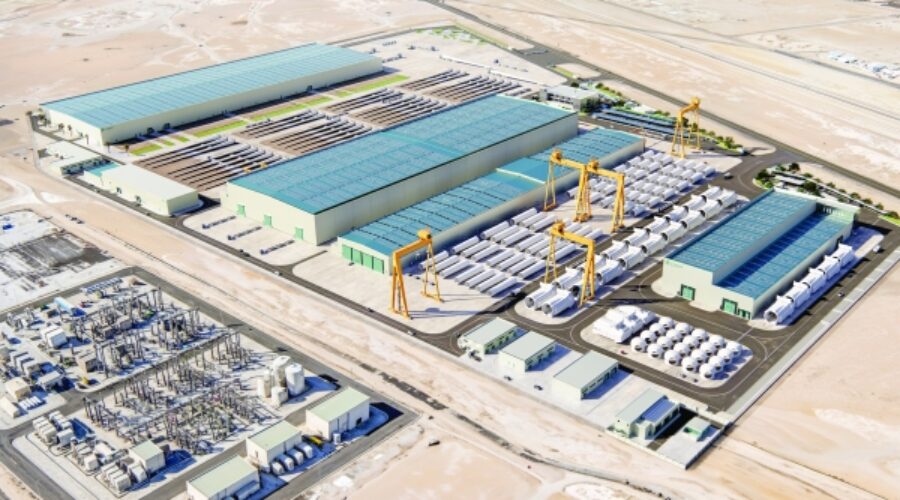
As the EPC general contractor, CEEC Shanxi Institute will manage the construction of approximately 90,000 square meters of industrial and supporting facilities. The project scope includes the development of a blade manufacturing workshop, a hub manufacturing workshop, an energy centre, office buildings, integrated utility networks, wastewater treatment facilities, as well as road and landscaping infrastructure.
The Chinese contractor described the project as a significant milestone in Oman’s energy transition, stating: “This project is a benchmark for Oman’s implementation of Vision 2040 and its advancement of green energy transformation.” Upon completion, the facility will enable integrated localisation of wind power research and development, production, and supply. This will substantially reduce construction costs and shorten delivery times. The project is designed to provide core support to Oman’s wind power and green hydrogen sectors, foster the clustering of high-end manufacturing, technology research and development, and operations and maintenance services, and act as a model for new-energy localisation throughout the Gulf region.
Mawarid Turbine, a subsidiary of O-Green — the state-backed integrated renewable energy and industrialisation platform — is leading the development of Oman’s first wind turbine manufacturing facility, with an initial investment of approximately RO 70 million. A usufruct agreement supporting the project was signed earlier this year with the Public Authority for Special Economic Zones and Free Zones (OPAZ).
The project will be executed in phases. The first phase focuses on producing wind turbine blades and key components, while the second phase plans to establish a dedicated facility for manufacturing wind turbine towers and additional renewable energy components in partnership with local enterprises. The annual production capacity is expected to reach between 800 MW and 1,000 MW, positioning the facility as one of the largest wind turbine manufacturers in the region.
Technology for the project will be provided through a strategic partnership with Shanghai Electric Wind Power, one of China’s leading wind turbine manufacturers. This company has been appointed as the technology licensor and knowledge-transfer partner, responsible for technology licensing, establishing a research center, designing manufacturing systems, and supplying turbines for pilot projects.
The collaboration also emphasizes workforce development and Omanisation efforts, including specialized training programs in China for Omani engineers and technicians to nurture a local wind energy manufacturing ecosystem.
The EPC contractor, China Energy Engineering Group Shanxi Electric Power Engineering Co., Ltd. (SEPEC), is a key engineering and design subsidiary of the state-owned CEEC, one of the world’s largest energy and infrastructure conglomerates. Headquartered in Shanxi Province, SEPEC specializes in engineering design, consultancy, EPC contracting, renewable energy, power transmission and distribution, energy storage, and environmental infrastructure.
Special Analysis by Omanet | Navigate Oman’s Market
The award of the EPC contract to CEEC Shanxi Institute for the Mawarid Wind Turbine Manufacturing Project marks a transformative leap in Oman’s green energy sector, positioning the country as a regional hub for wind power innovation and manufacturing. For businesses, this opens substantial opportunities in high-end manufacturing, technology R&D, and renewable energy supply chains, while smart investors should consider early partnerships and workforce development initiatives to capitalize on Oman’s Vision 2040 momentum. The project also mitigates risks from energy dependency by promoting localized, sustainable energy production.