Oman LNG Exports Hit 11.9 Million Tonnes: What This Growth Means for Investors and Businesses in Oman
MUSCAT: In 2025, Oman exported 11.9 million tonnes of liquefied natural gas (LNG), securing its position as the world’s eighth-largest LNG supplier and accounting for 2.7% of global LNG trade, according to the International Gas Union’s (IGU) 2026 World LNG Report.
This export volume surpassed Oman’s installed liquefaction capacity of 10.4 million tonnes per annum, highlighting the exceptional performance of the Sultanate’s three-train Oman LNG complex. The report noted that Oman operated above its nominal capacity throughout the year.
Global LNG trade expanded by 6.3% to reach a record 436.98 million tonnes in 2025, connecting 24 exporting countries with 50 importing markets. The United States remained the largest exporter with 110.74 million tonnes, followed by Qatar at 81.51 million tonnes and Australia at 80.32 million tonnes.
The Middle East region supplied 98.03 million tonnes of LNG in 2025, an increase of 3.8 million tonnes from the previous year, driven mainly by elevated production in Qatar. Oman accounted for approximately 12% of the region’s LNG exports.
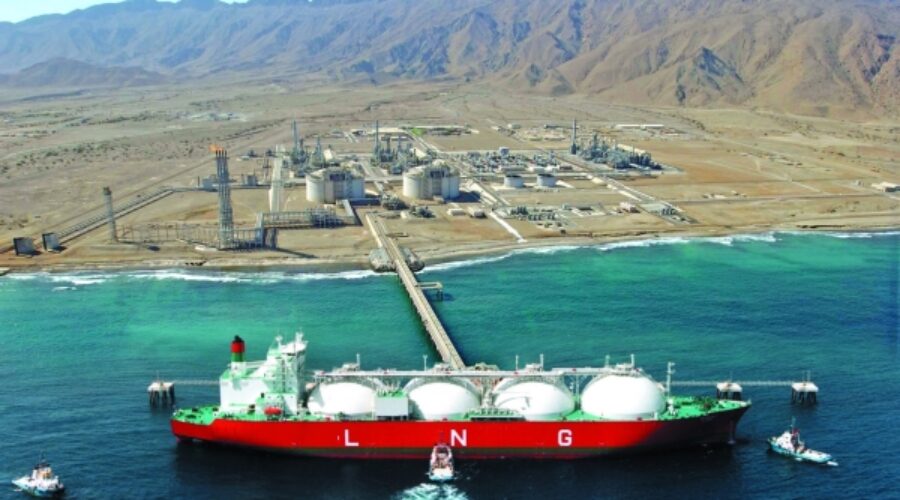
The IGU specified that Oman LNG’s two original trains, commissioned in 2000, each have a capacity of 3.55 million tonnes annually, while the third train at Qalhat, commissioned in 2006, has a capacity of 3.30 million tonnes per annum. Collectively, these trains form Oman’s 10.4 million tonne annual export foundation.
At the end of 2025, Oman had 1 million tonnes per annum of approved liquefaction capacity, representing 0.4% of the global approved project pipeline, with an additional 3.8 million tonnes per annum in projects at the pre-final investment decision stage, equating to 0.3% of proposed global capacity.
These forthcoming projects could bolster Oman’s standing as buyers increasingly seek geographically diversified LNG supplies. The report highlighted that geopolitical uncertainties surrounding the Strait of Hormuz and recent damages to liquefaction facilities elsewhere in the Gulf could intensify demand for LNG projects offering more stable supply routes.
Oman’s LNG facilities, situated at Qalhat on the Arabian Sea coast, benefit from their location outside the Strait of Hormuz, providing direct access to international shipping lanes without the need for cargoes to transit this strategic waterway. This advantage has grown more significant amid supply disruptions in early 2026, which tightened cargo availability and drove Asian benchmark prices sharply higher.
The Platts Japan Korea Marker (JKM) benchmark price averaged $12.16 per million British thermal units (MMBtu) in 2025, a 2.1% increase from 2024. It then surged nearly 70% to $25.39 per MMBtu by March 3, 2026, following Middle East supply disruptions that heightened market hedging activity.
Global liquefaction capacity reached 524.5 million tonnes per annum at the close of 2025, with average utilization dipping to 83.9%. In this context, Oman’s performance above its nameplate capacity underscores the reliability and critical commercial role of its established LNG infrastructure.
The IGU report also noted that final investment decisions for new liquefaction capacity worldwide reached 68.4 million tonnes per annum in 2025, the highest level since 2019. Moving forward, the report emphasized that investment strategy, technology choices, emissions performance, and construction efficiency will be key factors shaping competition among future LNG projects globally.
Special Analysis by Omanet | Navigate Oman’s Market
Oman’s ability to export LNG beyond its nominal capacity, coupled with its strategic location outside the Strait of Hormuz, enhances its appeal as a reliable and geopolitically stable supplier amid global supply uncertainties. For businesses and investors, this creates significant opportunities to capitalize on Oman’s expanding LNG capacity and rising global demand, while also incentivizing investment in new liquefaction projects and infrastructure to maintain competitive advantage in a dynamic market.