Putin Reassures Modi on Steady Oil Supply: Implications for Indian Energy Security and Oman’s Investment Landscape
Russian President Vladimir Putin expressed his commitment on Friday to maintain "uninterrupted shipments" of fuel to India, amidst significant pressure from the United States for New Delhi to cease its oil purchases from Moscow.
This statement comes in light of US President Donald Trump’s decision in August to impose severe tariffs of 50 percent on the majority of Indian goods, citing India’s continuing purchases of Russian oil. Washington argues that these purchases contribute financially to Russia’s ongoing war in Ukraine.
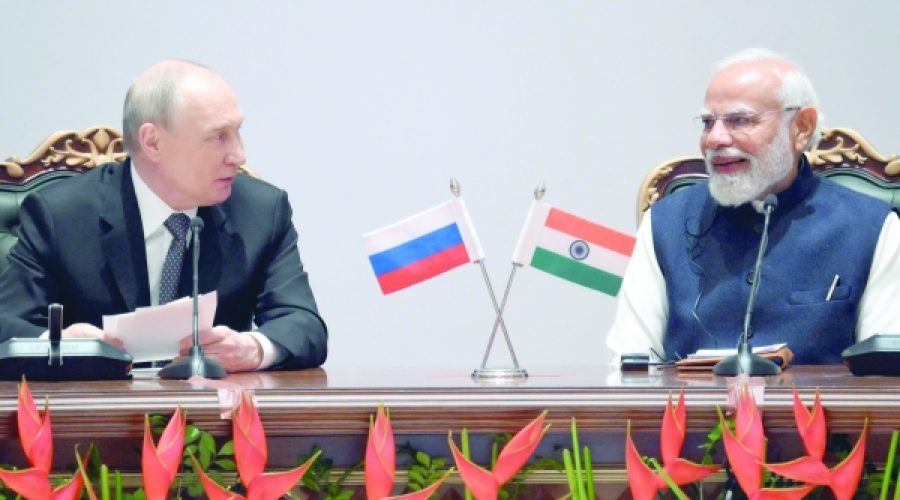
During a summit in New Delhi, which focused on energy, defense, and trade discussions, Indian Prime Minister Narendra Modi extended his gratitude to Putin for his "unwavering commitment to India." This marks Putin’s first visit to India since the onset of the Ukraine conflict, where he received a warm welcome, including a red-carpet reception and a 21-gun salute.
"Russia is a reliable supplier of oil, gas, coal, and all necessary resources for the development of India’s energy sector," Putin stated after their talks. He added, "We are ready to continue uninterrupted shipments of fuel to support India’s rapidly growing economy," according to an official translator.
Modi emphasized that "energy security has been a crucial pillar of the India-Russia partnership," noting nuclear energy without specifically mentioning oil. Following the start of the Ukraine war, India emerged as a significant buyer of Russian oil, aiding Moscow’s export market as European nations reduced their purchases sharply. In 2024, approximately 36 percent of India’s crude imports came from Russia, equating to around 1.8 million barrels of discounted oil per day. However, New Delhi has recently faced pressure to reduce its Russian crude imports.
Putin indicated that he had shared extensive details with Modi regarding the situation in Ukraine and Russia’s efforts, along with certain partners, including the United States, towards a potential peaceful resolution. Modi reiterated India’s longstanding advocacy for peace in relation to Ukraine.
India finds itself in a delicate diplomatic position, balancing its reliance on strategic Russian oil imports with the need to avoid tensions with the US during ongoing tariff negotiations. "Balancing acts are second nature to Indian foreign policy," commented Pankaj Saran, a former Indian envoy to Russia, in the Times of India.
Referring to Putin as "my friend," Modi lauded the enduring ties between New Delhi and Moscow. He noted an agreement on an economic cooperation program extending until 2030, following the exchange of various agreements covering sectors such as employment, health, shipping, and chemicals.
This cooperation aims to ensure that their trade and investment are diversified, balanced, and sustainable. Bilateral trade reached $68.7 billion in 2024-25, nearly six times higher than pre-pandemic levels; however, Indian exports constituted only $4.88 billion of this total.
Ashok Malik from the consultancy The Asia Group described the visit as a key part of India’s strategy to diversify both its strategic and economic partnerships, particularly as US tariffs have impacted the nation. Additionally, New Delhi has sought alternative suppliers and has been working on boosting domestic production, with the Russian share of India’s arms imports declining from 76 percent between 2009 and 2013 to 36 percent from 2019 to 2023, according to the Stockholm International Peace Research Institute.
Special Analysis by Omanet | Navigate Oman’s Market
The ongoing geopolitical tensions, particularly between India and the US, highlight significant opportunities for Oman, especially in the energy sector as nations seek stable alternatives for oil supplies. Businesses in Oman should consider leveraging its strategic position as a neutral player to foster partnerships with both India and Russia, thus enhancing trade and investment. Smart investors and entrepreneurs must stay alert to shifts in global energy markets, positioning themselves to capture market share as countries navigate their energy diversification strategies.