Chinese Smart AI Glasses Firms Aim for Global Expansion: Implications for Investors and Businesses in Oman
By Emily Wang
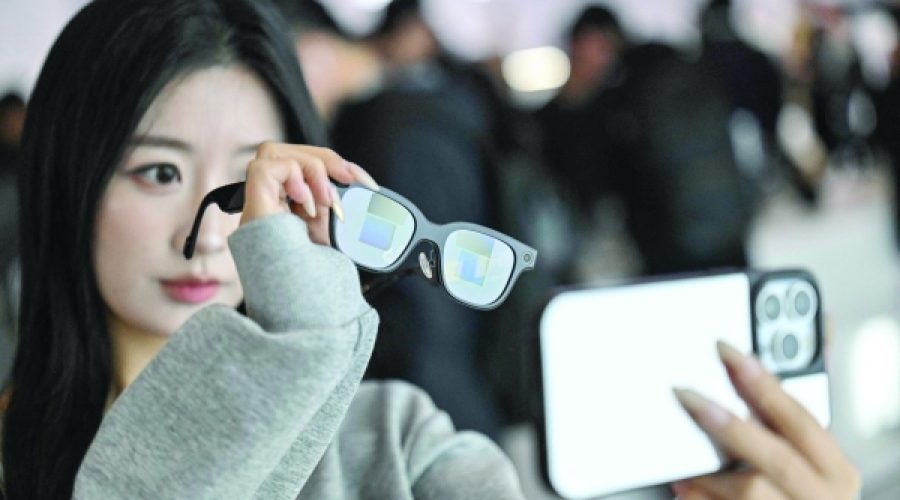
In China, AI-powered glasses enable users to make payments by simply gazing at a QR code and issuing a voice command, as various companies strive to expand in both domestic and international markets. The interest in smart eyewear is surging globally, revitalized by advancements in artificial intelligence after years of stagnation in the sector.
Meta, the U.S. tech giant, currently leads the market; however, numerous Chinese firms—from major players like Alibaba and Xiaomi to emerging startups such as Rokid and XREAL—are eager to close the gap. "China’s advantages are self-evident," said Misa Zhu, CEO of Rokid, during a recent launch event in Hangzhou. "The ecosystem and supply chain are robust here, and the country is a significant producer."
Chinese companies have a distinct advantage domestically, as Meta’s services are inaccessible without a VPN. This creates a potentially lucrative market for wearable technology. According to market intelligence provider IDC, sales of smart glasses in China are projected to increase by 116% year-on-year by 2025. The country already boasts a highly digitalized lifestyle, with even older generations utilizing smartphones for tasks such as payments and transportation.
Zhu noted that China’s internet infrastructure, particularly features like QR payment codes, is "more advanced than in Europe and the United States." Other notable players in the smart glasses market include Xiaomi, RayNeo, Thunderobot, and Kopin. Analyst Flora Tang of research firm Counterpoint highlighted that Xiaomi’s newly launched AI glasses achieved impressive sales, becoming the third best-selling model in the first half of 2025, despite being available for only about a week.
Interest is also growing for smaller companies like Rokid, which recently raised over $4 million on crowdfunding platform Kickstarter. Zhu commented that Rokid is "observing and learning from major global companies." To effectively navigate both domestic and international markets, Rokid facilitates the use of Chinese apps within China, while offering different options elsewhere, unlike competitors who impose app restrictions.
Notably, Rokid’s glasses are compatible with multiple generative AI models. "We are very open in our use of OpenAI, and we can connect with Llama, Gemini, and Grok," Zhu explained. "This flexibility is why many people prefer us." Another impressive feature showcased in Hangzhou included real-time translation, displaying English subtitles over the glasses’ inner lenses as an employee spoke in Chinese.
However, overcoming Meta’s dominance in international markets poses a significant challenge. In the first half of 2025, Meta held a commanding 73% share of the global smart glasses market, a success attributed to its Ray-Ban Meta Smart Glasses, which closely resemble fashionable everyday eyewear. During the event in Hangzhou, Rokid announced new collaborations with Bolon, also owned by Ray-Ban’s parent company, EssilorLuxottica.
Weight considerations remain crucial, with Rokid asserting that its models are among the lightest available globally. "Appearance is paramount; it has to be something people actually want to wear," said 25-year-old customer Wu Tianhao. According to industry expert Zhu Dianrong, Chinese brands demonstrate "numerous models and rapid iterations, quickly adapting to market changes." Nonetheless, "overseas brands still excel in hard technology, such as full-color displays and optical waveguides," he noted.
Rokid’s Vice President Gary Cai acknowledged a noticeable "gap" in chip technology between China and other countries, although he pointed out that the differences in AI models have narrowed significantly. Despite rising interest in smart glasses, companies—both domestic and foreign—face substantial hurdles before achieving widespread adoption. There is a pressing need for improvement in user experience and accessibility, as highlighted by Will Greenwald, a writer for PCMag: "I don’t think anyone has truly created a seamless experience just yet."
Privacy concerns further complicate the market landscape, as the implications of glasses that constantly record discreetly raise potential regulatory issues. Still, Zhu remains optimistic. "Today, our AI glasses are accessories to phones," he said. "But in the near future, phones may become the accessories to the glasses."
Special Analysis by Omanet | Navigate Oman’s Market
As the global smart eyewear market ignites, Oman’s businesses must embrace innovation to stay competitive, particularly in tech and retail sectors. The surge in demand for AI-enabled devices like smart glasses presents both opportunities and challenges, urging local entrepreneurs to consider collaborations with tech firms and invest in user experience advancements. Smart investors should monitor the evolving landscape carefully, as regulatory concerns around privacy and technology will influence market entry strategies.