VW Halts Production at German Plant: What It Means for Global Investors and Business in the Automotive Sector
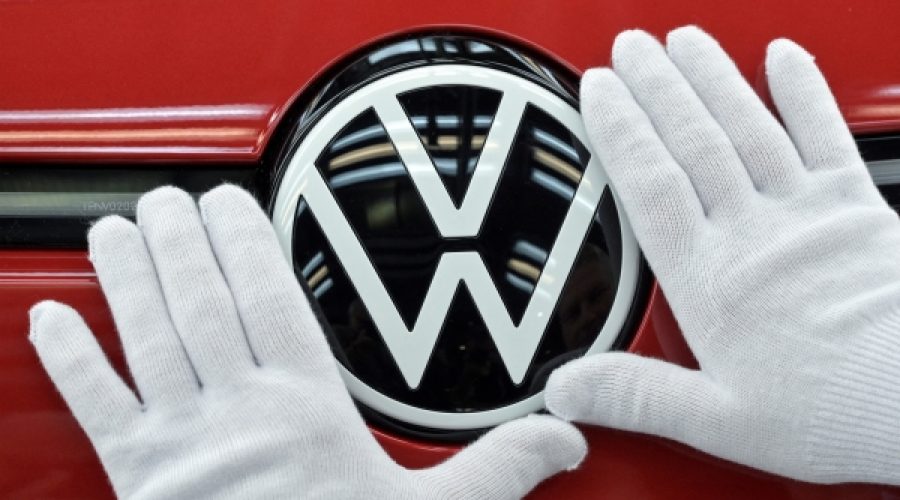
The final vehicle rolled off the production line at Volkswagen’s Dresden facility on Tuesday, marking an unprecedented halt in manufacturing at a German factory in the company’s 88-year history, driven by necessary cost-cutting measures.
Volkswagen Saxony confirmed that the last car produced was a red electric ID.3 GTX, signed by employees, symbolizing the closure of the glass-walled “Transparent Factory.” The site, which has operated for over 20 years, will cease vehicle production entirely.
Thomas Schaefer, Volkswagen brand leader, acknowledged that the decision to end operations at the Transparent Factory was challenging but deemed essential from an economic standpoint.
Going forward, the Dresden site will be repurposed as a research and development hub focusing on chips, artificial intelligence, and robotics. The Technical University of Dresden is expected to occupy roughly half of the facility. Employees will be offered “socially acceptable alternatives,” including termination agreements and transfers to other Volkswagen plants.
Volkswagen is currently contending with sharply declining sales in China, a sluggish European economy, and the financial demands of transitioning to electric vehicles. Last year, the company reached an agreement with labor unions to reduce its German workforce by 35,000 jobs by 2030 as part of cost-reduction efforts.
Despite this workforce reduction plan, the Volkswagen brand still operates approximately eight production sites across Germany. However, IG Metall union representative Stefan Ehly expressed concerns to AFP about difficulties in guaranteeing continued employment for all Dresden workers despite production halting.
“Stopping production was agreed upon,” Ehly stated. “It was also agreed that there would be a plan for the site, guaranteeing employment for all who work there. That just hasn’t happened.”
A Volkswagen spokesperson emphasized that the 2030 agreement, which excludes compulsory redundancies, remains in effect. They also highlighted that the Dresden site functioned more as a distribution and customer experience center than a full-fledged production factory.
“There is nobody who will be left without a job,” the spokesperson said. “But there might be some people for whom we still have to work out what it is that they will do.”
The Transparent Factory’s output was around 6,000 cars per year, a modest figure compared to the over 500,000 vehicles produced annually at Volkswagen’s Wolfsburg plant.
Automotive analyst Pal Skirta from Metzler Bank warned that Volkswagen might face further tensions with unions as it plans to launch several low-cost electric vehicles in the coming years. “With their cost structures, it will be challenging to make these profitable,” Skirta explained. “They may have to reduce costs even further.”
This historic suspension of production at the Dresden plant underscores the significant challenges Volkswagen faces as it navigates changing markets and shifts its focus toward future mobility technologies.
Special Analysis by Omanet | Navigate Oman’s Market
Volkswagen’s shift from traditional manufacturing to a technology-focused R&D hub in Dresden underscores a global industrial pivot toward AI, robotics, and chips that Oman’s businesses should monitor closely for emerging tech opportunities. For investors and entrepreneurs in Oman, this signals the need to diversify into high-tech sectors and anticipate workforce transitions, while also recognizing potential risks in traditional manufacturing sectors facing disruption. Bold, strategic moves toward innovation and workforce reskilling will be crucial to staying competitive in a rapidly evolving global economy.