Understanding Flight Disruptions: How Ground Teams Impact Airline Operations and Your Travel Experience
American Airlines Operations Center: Managing Complexities Behind the Scenes
FORT WORTH, Texas — This month, American Airlines Flight 27 encountered a medical emergency hundreds of miles out at sea on its journey from Los Angeles to Tokyo. The flight’s captain reached out to Mike Doran, a dispatcher at the airline’s Texas operations center. Doran promptly connected him with a company doctor, leading the pilot to divert the flight to San Francisco for urgent assistance.
As the plane altered its course, Doran and his team began addressing the logistical challenges posed by the diversion. Crew members would require rest, passengers needed new accommodations, and the aircraft would need fresh meals. Furthermore, the scheduling of other flights would have to be reassigned.
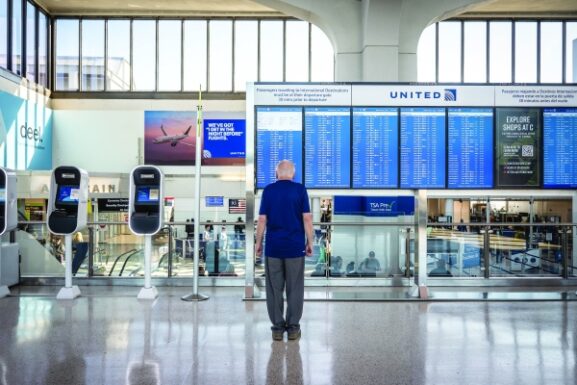
Such complexities are routine within the operations center, where Doran and hundreds of colleagues oversee the intricate workings of the world’s largest airline. While the efforts of airport security staff and air traffic controllers have garnered significant attention, the critical functions of airline operations centers often remain unnoticed by the public.
Even minor disruptions can have a significant impact on an airline’s operations and customer experience. Airlines meticulously plan for such incidents, maintaining backup planes, parts, and pilots for unforeseen circumstances, particularly during busy periods like the holiday season.
To navigate these challenges effectively, operations teams rely on careful coordination. “These operation control centers are essential for optimizing resource use,” stated Michael Boyd, a consultant with Boyd Group International, which specializes in aviation consulting.
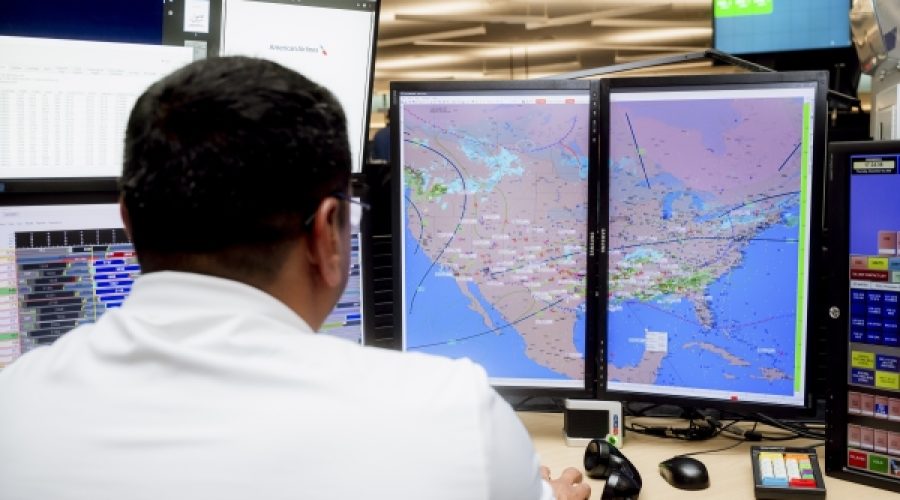
American Airlines’ Integrated Operations Center is located at its headquarters near Dallas Fort Worth International Airport. Much of the operational management occurs on the second floor of the building, designed to withstand tornadoes with winds up to 165 mph. Employees monitor a range of factors, including flight schedules, mechanical issues, weather conditions, and geopolitical events, from a high-tech, noise-canceling environment.
Jess Tyler, the vice president overseeing the operations center, noted, “We often complete all of our flights, but on those days, we’ve still had to resolve numerous issues to ensure smooth operations.”
This focus on operations is particularly vital for American Airlines as it seeks to enhance its financial performance to match that of its major competitors, Delta Air Lines and United Airlines. Since 2022, these two airlines have dominated the profitability of the U.S. airline industry.
Punctuality and customer satisfaction remain closely linked to an airline’s success. In the first nine months of the year, approximately 72% of American’s flights arrived on time—compared to 77% for United and 79% for Delta. During this period, American canceled around 2% of its flights, while Delta and United each canceled less than 1%.
The operations center operates 24/7, employing around 1,700 individuals, which include dispatchers, crew schedulers, maintenance controllers, meteorologists, and security experts. Operations are divided among 11 teams based on aircraft type or geographical focus.
On December 4, the day following the Tokyo flight’s diversion, Ricardo Eva was managing operations for Airbus A321 flights at the Dallas-Fort Worth hub. That day, he received a call concerning a medical emergency on Flight 2535, which had just departed from San Diego. The aircraft returned to the gate to assist the passenger in distress.
Eva quickly coordinated with his team. Customer service representatives contacted ground staff, crew coordinators verified the availability of flight attendants, and those managing aircraft availability ensured a backup jet was ready. “It’s like playing Tetris on top of Jenga,” said Betty Hernandez, emphasizing the need for agility during such situations.
Fortunately, the situation was handled smoothly, with the passenger rebooked on another flight, and the original flight arriving in Dallas less than an hour late. Overall, of the 6,500 American Airlines flights scheduled on December 4, only 13 were canceled.
Flight cancellations are typically a last resort, as they can create a ripple effect affecting other flights and resources. David Seymour, American’s chief operating officer, remarked, “It’s about keeping the system as whole as possible.”
The operations center also collaborates with external entities, including Air Traffic Control and partner airlines, to minimize disruptions. Enhanced digital tools allow for rapid passenger reassignments, enabling approximately 75% of affected travelers to be booked on a new flight within 12 minutes.
However, some challenges require innovative solutions. Following an urgent software update announcement by Airbus, American Airlines worked swiftly to replace Airbus planes with Boeing aircraft, rebooking passengers and scheduling technicians for the necessary updates. Despite the hectic situation, all affected planes were updated before regulatory deadlines.
During the subsequent week, the command center adeptly managed various medical emergencies, including those occurring at sea and in San Diego. Doran summarized the mission succinctly: “People are coming to us for a variety of significant life events. You’re making memories. It’s a challenge, but the reward is the successful transportation of countless individuals.”
Special Analysis by Omanet | Navigate Oman’s Market
The article highlights the critical importance of operational efficiency in aviation, specifically how American Airlines’ Integrated Operations Center adeptly manages complex disruptions to ensure timely service. For businesses in Oman, this underscores the necessity of robust operational frameworks that can adapt to unexpected challenges, especially in sectors reliant on logistics and transportation. Smart investors should consider technologies that enhance operational agility, as efficient management can significantly boost profitability and customer satisfaction in a competitive market.