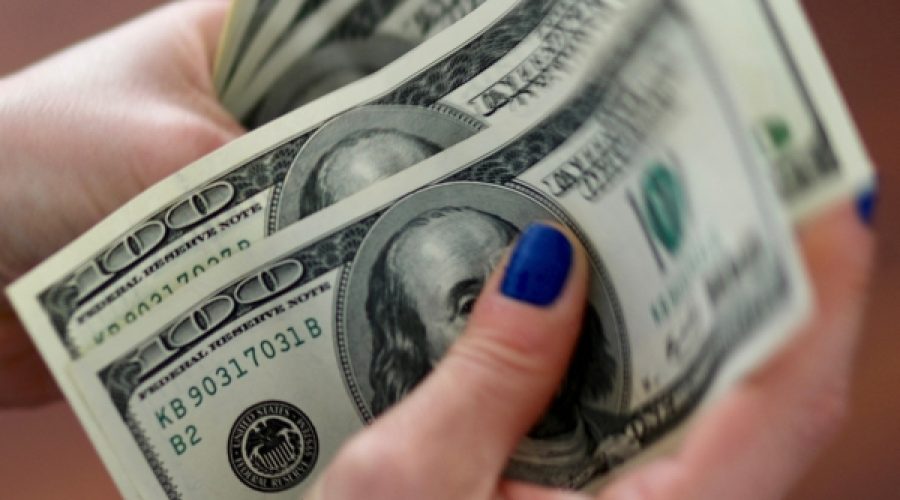
Dollar Faces Worst Year Since 2017: What This Means for Investors and Businesses in Oman
SINGAPORE/LONDON — The U.S. dollar weakened on Wednesday, poised for its largest annual decline since 2017, with potential for further losses as investors anticipate the Federal Reserve will continue cutting interest rates next year, even as other major central banks appear to have ended their easing cycles.
Despite a robust U.S. GDP report on Tuesday, market expectations remained unchanged, pricing in approximately two additional Federal Reserve rate cuts in 2026. Goldman Sachs Chief U.S. Economist David Mericle noted, "We expect the FOMC to compromise on two more 25 basis point cuts to 3-3.25%, with risks leaning towards even lower rates," attributing this outlook to slowing inflation.
The euro and British pound each rose to fresh three-month highs on Wednesday, trading broadly steady at $1.180 and $1.3522, respectively. The dollar index, measuring the greenback against a basket of currencies, dropped to a two-and-a-half-month low of 97.767. It is on track to decline 9.8% for the year, marking its steepest yearly drop since 2017. Any further depreciation in the final week of 2025 could result in its biggest annual loss since 2003.
The dollar’s turbulent year has been influenced by former President Donald Trump’s disruptive tariffs, which undermined confidence in U.S. assets, alongside concerns about his growing influence over the Federal Reserve’s independence.
In contrast, the euro has gained just over 14% in 2025, aiming for its best yearly performance since 2003. Last week, the European Central Bank held interest rates steady and raised some growth and inflation forecasts, signaling a reduced likelihood of further easing in the near term. As a result, traders now assign a slim chance of tightening by the ECB next year, a sentiment mirrored in Australia and New Zealand, where rate hikes are expected.
This outlook boosted the Australian and New Zealand dollars, with the Australian dollar reaching a three-month high of $0.6710 on Wednesday, while the New Zealand dollar touched a two-and-a-half-month peak at $0.58475.
Sterling has risen over 8% this year, with markets wagering that the Bank of England will cut rates at least once in early 2026, and there is about a 50% probability of a second cut before year-end.
Despite these gains, most currencies have lost significant ground against precious metals like gold, which hit a new record high on Wednesday.
Currencies from smaller European nations—typically characterized by low debt—have been among the best performers this year. The dollar has fallen 12% against the Norwegian krone, 13% against the Swiss franc (last trading at 0.7865 francs), and 17% against the Swedish krona, which dropped to its lowest level since early 2022 at 9.167 kronor on Wednesday.
Traders Turning Attention to Yen Intervention Risks
The Japanese yen remains a focal point in foreign exchange markets amid speculation about possible intervention by Japanese authorities to halt the yen’s slide. Japan’s Finance Minister Satsuki Katayama issued the strongest warning yet on Tokyo’s readiness to intervene, stating the country has "a free hand" to manage excessive currency movements. Her statement helped reverse the yen’s decline, with the dollar retreating 0.3% against the yen to 155.83 on Wednesday after a 0.5% drop the previous day.
While the Bank of Japan last Friday enacted a widely anticipated rate hike, the market was left disappointed by Governor Kazuo Ueda’s less hawkish tone than expected, which contributed to the yen’s subsequent weakness. With trading volumes expected to thin toward year-end, analysts caution that this could be an ideal time for Japanese authorities to initiate yen-buying interventions.
— End —
Special Analysis by Omanet | Navigate Oman’s Market
The anticipated prolonged Federal Reserve rate cuts and the declining U.S. dollar create a strategic opportunity for Omani businesses and investors to explore diversified investments and hedge against currency risks, especially by considering assets in stronger currencies like the euro and precious metals such as gold. However, the volatility in global currency markets also underscores a risk of exchange rate fluctuations, urging entrepreneurs to adopt robust financial strategies, including potential currency hedging, to safeguard profitability. Smart investors should monitor central bank policies closely, as shifts—especially in the yen and Fed moves—could influence liquidity and capital flows impacting Oman’s investment climate.