OQ Trading’s Global Expansion: What Investors and Business Owners Should Expect
MUSCAT, DEC 24 — OQ Trading (OQT), the international trading division of Oman’s integrated energy group OQ, is set to increase its trading volumes to over 60 million tonnes in 2025, up from 55 million tonnes in 2024. This growth underscores OQT’s expanding role in maximising the value of Omani energy resources and its rising presence as a global commodity trader.
The state-owned company trades a diverse range of products, including crude oil, refined products, petrochemicals, fertilisers, and carbon. Starting January 2026, Oman LNG volumes will also be added to its portfolio, CEO Wail al Jamali confirmed.
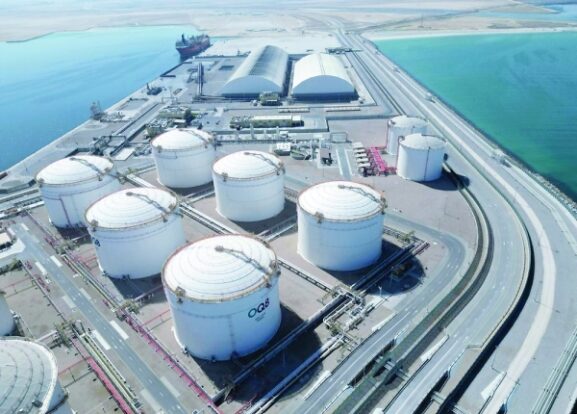
Al Jamali explained, “We manage a significant crude offtake from the Ministry of Energy and Minerals and supply Oman’s share of feedstock for the OQ8 refinery in Duqm. Beyond physical trading, we engage actively in derivatives and paper products for hedging and market positioning.”
He further emphasised OQT’s expanding global reach: “Our international network facilitates exports, ensuring OQ’s products are delivered to optimal destinations while supporting feedstock and blending needs for OQ’s plants. Our offices are located in Muscat, Dubai, Singapore, Shanghai, Rotterdam, London, and Houston. Through our affiliate Hass Petroleum, in which we hold a 40% stake acquired in 2017, we operate across nine East African countries. Notably, about half of our portfolio consists of non-Omani volumes sourced from Nigeria, Singapore, and the UAE.”
Al Jamali highlighted that a crucial aspect of OQT’s mission is to serve as a market intelligence and optimisation partner to OQ, advising on production, product specifications, and investment strategies based on real-time market insights. The commercial optimisation team collaborates closely with OQ to align trading with asset planning, improve plant efficiency, and surpass short-term tactical goals to secure higher margins.
While Oman remains central to its activities, OQT is increasingly pursuing international growth. The company’s strategy—“diversify, expand and partner”—aims to broaden its product portfolio and global footprint, with third-party trading now constituting roughly half of total volumes.
“Our objective is to manage products on global trading books spanning Houston, London, and Singapore. We are also implementing an internal energy transition plan to stay agile amid a rapidly evolving energy landscape,” Al Jamali concluded.
Special Analysis by Omanet | Navigate Oman’s Market
OQ Trading’s ambitious volume growth and international expansion signal Oman’s strengthening position as a global energy and commodity trading hub, creating significant opportunities for businesses to tap into broadened markets and diversified product portfolios. However, the increasing focus on derivatives, global trading networks, and energy transition strategies also presents risks related to market volatility and the need for agile adaptation. Smart investors and entrepreneurs should now consider leveraging OQT’s expanding footprint and its energy transition initiatives to align with evolving global energy demands and sustainable practices.