Oman’s Ambitious Project to Become a Global Grain Trading Hub: What This Means for Investors and Business Owners
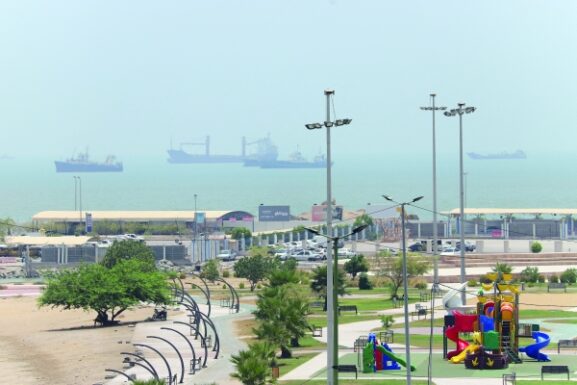
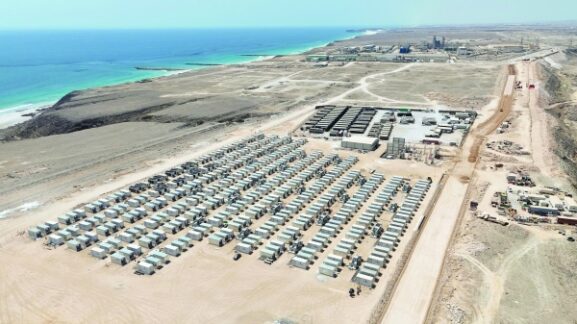
MUSCAT, DEC 29 — A recently signed Memorandum of Understanding (MoU) between Salalah Mills Company SAOG and the Port of Salalah will initiate the development of a Strategic Silos Project at Oman’s southern maritime gateway.
This project, led by Salalah Mills in Raysut, aims to bolster national food security and facilitate Oman’s entry into the global grain trading market.
In a statement to the Muscat Stock Exchange, Salalah Mills described the MoU as a “significant strategic step” that will enhance food security in Oman and strengthen the company’s position in both regional and international grain trade.
While specific details regarding the storage capacity, number and size of silos, exact site within the port, and project timelines remain undisclosed, the initiative is expected to elevate Salalah Mills as a prominent player in the grain trade sector. The project will capitalize on the Port of Salalah’s advanced logistics infrastructure, maritime connectivity, and cargo-handling capabilities.
Salalah Mills, one of the largest grain importers and flour producers in Oman, currently operates extensive storage facilities, including wheat silos with a combined capacity of around 120,000 tonnes. Overall, the company manages grain storage totaling approximately 161,500 tonnes, the largest capacity in the Sultanate. Additionally, it operates three grain unloading machines at the Port of Salalah with a total discharge rate of 1,200 tonnes per hour.
Two years ago, Salalah Mills signaled its intention to expand into the global grain trade by establishing Salalah Grains Trading International, a dedicated trading arm based at the Dubai Multi Commodities Centre (DMCC), a major international commodities hub.
Global grain trading presents a significant opportunity for Omani businesses. According to Rabobank, global trade in grains and oilseeds reached roughly 880 million tonnes during the 2023–24 season, valued at about $330 billion. Key commodities traded include wheat, corn, barley, oats, and rice—essential staples for global food and animal feed systems.
In line with its trading strategy, Salalah Mills raised RO 12.5 million last year through a private placement of 12.5 million new shares to ME (O) Solaris Investments Holding Limited, a UAE-based leading grain supplier sourcing primarily from the Black Sea region. The partnership is expected to enhance supply chain stability, procurement efficiency, and secure long-term sourcing advantages.
Further expanding its regional presence, Salalah Mills acquired a 50 percent stake in Al Rayyan Salalah Co Ltd, a flour mill based in Yemen. This investment supports the company’s strategic goal of entering high-growth markets, securing supply chains, and scaling milling capacity to meet growing regional demand.
Special Analysis by Omanet | Navigate Oman’s Market
The Strategic Silos Project at the Port of Salalah positions Oman as a key player in global grain trading, enhancing national food security while leveraging its strategic maritime infrastructure. For businesses, this signals opportunities in agro-logistics and supply chain integration, while investors should watch for growth in regional milling and trading hubs as Oman deepens its footprint in high-demand markets. Smart entrepreneurs must consider strategic partnerships and infrastructure investments to capitalize on Oman’s expanding role in the $330 billion global grain trade.