Stocks Surge Amid Venezuela Unrest: Key Insights for Investors and Entrepreneurs
Asian Markets Rally Amid Geopolitical Developments
SINGAPORE — Asian stocks rose on Monday, buoyed by themes related to artificial intelligence (AI) as the first full trading week of the year commenced. Meanwhile, oil prices fell, reflecting the sentiment that U.S. military actions in Venezuela are unlikely to disrupt an adequately supplied energy market.
The MSCI index, which tracks shares across the Asia-Pacific region excluding Japan, increased by 1.4%, reaching a record high. Concurrently, S&P 500 e-mini futures showed a modest uptick of 0.2%, as investors remained optimistic despite ongoing geopolitical tensions and prepared for significant economic data releases later in the week.
Investors are evaluating the fallout from a tumultuous weekend during which U.S. forces captured Venezuelan President Nicolás Maduro. U.S. President Donald Trump announced plans to place the South American nation under temporary American control, stating that further military action could be ordered if Venezuela fails to cooperate with U.S. initiatives to revitalize its oil sector and curb drug trafficking.
Neil Shearing, group chief economist at Capital Economics, commented, "The removal of Maduro by the U.S. is unlikely to yield immediate economic repercussions for the global economy, but the political and geopolitical consequences will resonate."
Brent crude futures oscillated between gains and losses, recently down 0.7% to $60.33 as markets digested the implications of the U.S. intervention in Venezuela in conjunction with a recent OPEC+ decision to maintain oil production levels.
David Chao, global market strategist for Asia-Pacific at Invesco, noted that the immediate market response in Asia has been subdued, with investors largely overlooking the recent geopolitical developments. "In North Asia, attention remains focused on the positive structural impacts from increased AI investments, overshadowing geopolitical risks."
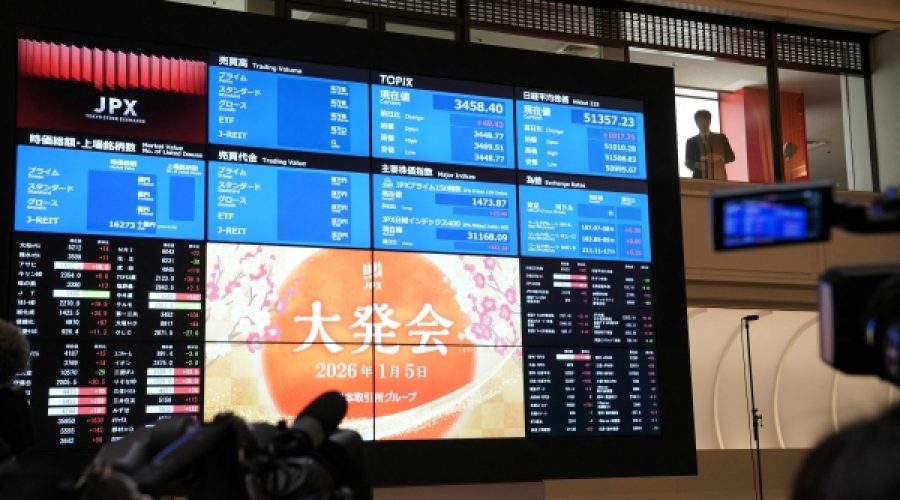
Among regional bourses, Japan’s Nikkei 225 surged over 3.3%, nearing a record high from two months ago, following the reopening of markets for the New Year. Japanese stocks continued their upward trajectory as data indicated a stabilization in manufacturing activity for December, putting an end to a five-month decline.
Both Seoul’s Kospi and Taiwan’s equity markets gained more than 3% each, reaching new record highs.
Goldman Sachs analysts highlighted that the surge in AI investments from the United States has significantly contributed to GDP growth in Taiwan and, to a lesser extent, Korea. They estimated that between 5-10 cents of every dollar invested in U.S. AI ventures ends up in Taiwan, with much of the remainder flowing into Asia, particularly benefiting TSMC, the largest semiconductor supplier.
In contrast, the Chinese markets were less reactive, with the Hang Seng Index remaining flat, pulled down by declines in Hong Kong-listed energy stocks. Australian shares also showed little change, as gains from major miners countered losses in leading energy companies.
Vasu Menon, managing director for investment strategy at OCBC in Singapore, remarked on the uncertain future trajectory of U.S. foreign policy, questioning whether the Trump administration might seek further regime changes in countries like Iran amidst a backdrop of midterm elections.
In early European trading, pan-region futures were up by 0.7%, while German DAX and FTSE futures rose by 0.5% and 0.6%, respectively.
The U.S. dollar index, which gauges the strength of the greenback against six major currencies, recorded a 0.2% increase, reaching 98.746 and extending its gains into a sixth consecutive day. The dollar also strengthened against the yen, climbing 0.3% to 157.21 yen, hitting a two-week high. Bank of Japan Governor Kazuo Ueda indicated that the central bank would continue to raise interest rates in line with economic and price forecasts following last month’s hike of 25 basis points to 0.75%.
In bond markets, the yield on U.S. 10-year Treasury securities rose by 0.8 basis points, reaching 4.179%. As geopolitical uncertainties persist, gold prices increased by 2%, trading at $4,413.93, reflecting rising demand for safe-haven assets.
Cryptocurrencies also saw gains, with Bitcoin rising 1.3% to $92,393.99, while ether increased by 0.3% to $3,153.41.
Special Analysis by Omanet | Navigate Oman’s Market
The geopolitical developments surrounding Venezuela could signal heightened volatility in global oil markets, offering potential opportunities for businesses in Oman to adapt to shifting energy prices and align with emerging investment trends. Smart investors should consider capitalizing on the AI-driven economic growth, especially as regional markets respond positively to such investments, thus potentially reorienting their strategies towards tech-enhanced sectors. However, this landscape poses risks as well, with geopolitical uncertainty likely affecting market performance; businesses must remain agile and informed.