Tourism and Industry Growth: Key Drivers of an Inclusive Labour Market and Business Opportunities in Oman
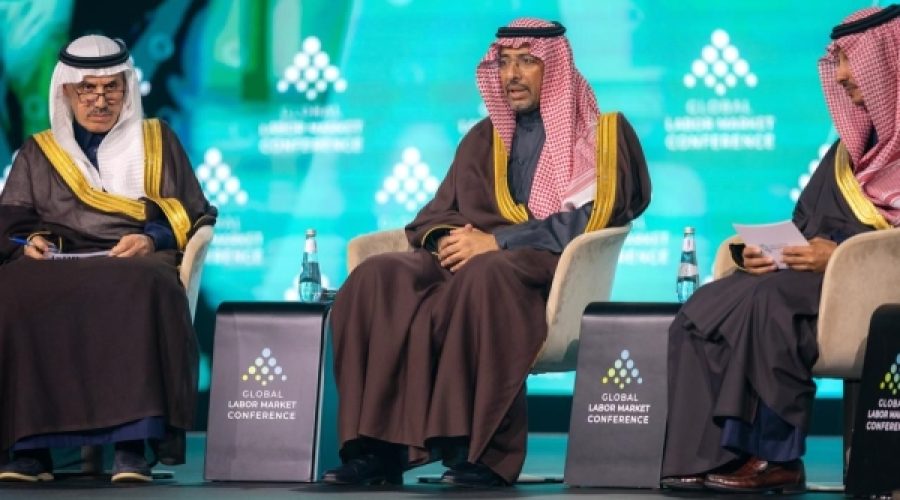
Riyadh – The Global Labour Market Conference (GLMC) held in Riyadh focused on how high-impact sectors can stimulate job creation, enhance workforce readiness, and promote inclusive economic growth amid global labor market transitions.
Ahmed Al Khateeb, Saudi Arabia’s Minister of Tourism, emphasized tourism’s significant role as one of the world’s largest employment sectors, contributing about 10 percent to global GDP and supporting nearly 370 million jobs worldwide. He highlighted that women occupy around 45 percent of tourism jobs globally, while youth make up approximately 80 percent, illustrating the sector’s vital role in fostering inclusive participation.
Minister Al Khateeb noted that under Saudi Arabia’s Vision 2030, new sectors such as education-linked tourism and cultural tourism have been developed. The Ministry of Tourism is dedicated to preparing young Saudis for careers in this sector through substantial investments in training and development programs. Saudi Arabia aims to create between 400,000 to 600,000 new jobs in hospitality, ensuring that young people acquire the skills necessary for success and career advancement.
Bandar Al Khorayef, Minister of Industry and Mineral Resources, stressed the crucial role of governments in shaping future-ready labor markets by establishing appropriate policy frameworks, encouraging technological adoption, and promoting continuous upskilling and reskilling through education systems. He highlighted the private sector’s role in fostering supportive work environments and providing on-the-job training, noting that global competitiveness depends on strong public-private cooperation.
Al Khorayef also introduced the Occupational and Skills Framework for the Mining and Industrial Sectors, which covers over 500 occupations and specifies required skills for each role. This framework supports the broader training ecosystem and improves understanding of labor market demands across sectors, enhancing Saudi Arabia’s long-term economic competitiveness.
Dr. Muhammad Sulaiman Al Jasser, Chairman of the Islamic Development Bank Group, underscored infrastructure as a highly inclusive sector for job creation, generating both direct and indirect employment through strong multiplier effects. He pointed out the broad economic and social benefits of infrastructure projects, with sector financing supporting sustainable national development.
Prof. Dr. Vedat Işıkhan, Minister of Labour and Social Security of Türkiye, reaffirmed manufacturing’s ongoing importance to national and global economic growth. He advocated for the promotion of decent, equitable, and sustainable employment while addressing labor market informality.
Hind Aboud Kabawat, Minister of Social Affairs and Labor of Syria, discussed labor market challenges linked to post-conflict recovery, especially the reintegration of displaced populations. She noted the significant challenges but also highlighted opportunities to leverage the international experience and skills acquired by returning workers.
The ministerial discussions collectively emphasized the critical importance of skills development, institutional reform, and cross-sector collaboration to build resilient labor markets. Participants called for policies that better align education, training, and labor demand to foster sustainable job creation and inclusive growth.
In a keynote address, Dr. Mamta Murthi, Vice President for the People at the World Bank, highlighted the necessity for workforce systems to evolve alongside rapid global economic changes. She praised the cooperation between Saudi Arabia and the World Bank as a model of evidence-based policy driving inclusive economic opportunities across businesses of all sizes.
Dr. Murthi noted the varying labor market challenges and opportunities worldwide, spotlighting Sub-Saharan Africa and South Asia as regions with potential for growth if their youth populations receive relevant, market-aligned skills. She identified persistent obstacles in skills development, such as education systems focused on inputs rather than outcomes, outdated training programs, skill mismatches, and difficulties scaling effective solutions. She warned against supply-driven approaches inadequately linked to labor market demand.
To overcome these challenges, Dr. Murthi proposed three major shifts in workforce development: adopting industry-led solutions, embedding market-driven approaches to unlock job opportunities along value chains, and prioritizing sector-based reforms to enable long-term ecosystem transformation ahead of system-wide changes. Central to these shifts is deeper employer engagement, positioning businesses as key drivers of skills development and job creation.
Dr. Murthi also outlined the World Bank’s expanding knowledge and learning agenda, including a new Human Capital Index incorporating higher education and on-the-job learning to assist governments in identifying skills gaps. This agenda integrates education, skills, and labor market diagnostics into economic and fiscal policymaking.
Key initiatives include an Annual Labour Market Academy, a Global Expert Advisory Panel, and practical guidebooks for targeted workforce interventions. The World Bank will also release a report assessing Saudi Arabia’s progress in labor market and skills reforms.
Concluding her address, Dr. Murthi stressed the importance of inclusive workforce policies designed from the start and integrated into the global labor economy. She called for interdependence and coalition-building among governments, industries, and knowledge institutions to transform evidence into impactful action.
Special Analysis by Omanet | Navigate Oman’s Market
The Global Labour Market Conference’s insights underscore tourism, infrastructure, and industrial sectors as pivotal drivers for job creation and economic growth, highlighting significant opportunities for Oman to diversify its economy. Smart investors and entrepreneurs should focus on skills development and workforce readiness, aligning with market demands and fostering public-private collaboration to build a competitive and inclusive labor market. Oman must also consider adopting industry-led, market-driven workforce solutions and sector-based reforms to unlock sustainable growth and innovation.