Oman’s Space Sector Moves to Market-Building Phase: What This Means for Investors and Entrepreneurs
MUSCAT: The Omani space sector is progressing from its establishment phase to a market-building stage, according to Dr. Saoud al Shoaili, Head of the National Space Programme at the Ministry of Transport, Communications and Information Technology.
Addressing the 2nd Middle East Space Conference, Dr. Al Shoaili noted that since the launch of the National Space Sector Policy in 2023, the sector has seen significant development. “Over the past three years, the space sector in the Sultanate of Oman has transitioned from establishment to market building,” he stated.
He highlighted the sector’s expansion, with the number of companies rising from 11 in 2023 to 25 by the end of 2025. These firms have generated approximately 400 direct and indirect jobs. Additionally, over 300 individuals have benefited from capacity-building and training programmes. Investments in the space sector have surged by more than 200 percent.
Dr. Al Shoaili emphasized that these statistics represent more than just sectoral growth; they signal the emergence of a new economic domain in Oman. Since the policy’s inception, partnerships in the space sector have emerged across five key areas: launch services, satellite communications, remote sensing, drone and aerial applications, and consulting, training, and capacity-building services.
To reinforce these partnerships, the Ministry is working on regulatory frameworks and governance, aiming to enhance the sector’s appeal and foster a national ecosystem led by private sector companies and supported by the government. This approach is designed to stimulate growth, create employment, and contribute to the national economy.
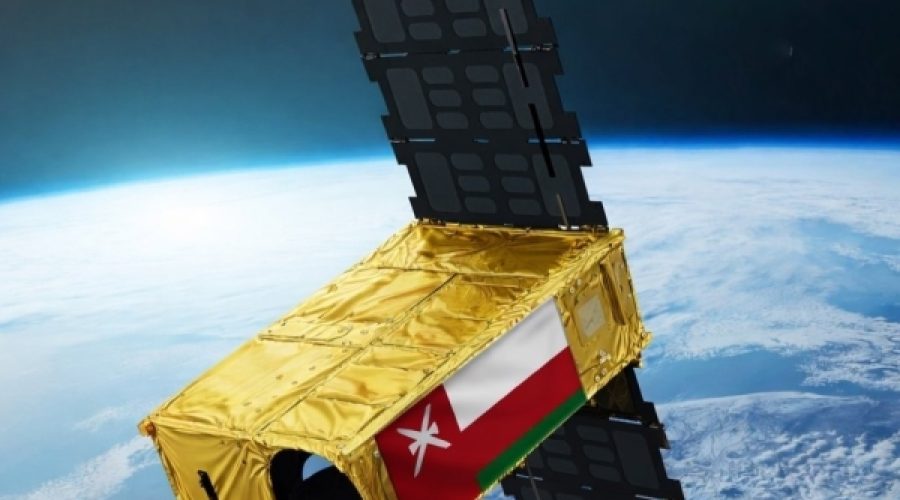
Among the sector’s flagship initiatives, Dr. Al Shoaili highlighted the national satellite project, launched in November last year under Royal directives. This project aims not only to deliver communications services but also to bolster digital sovereignty, develop national capabilities, and enable Oman’s entry into global satellite communications markets.
He also drew attention to the Etlaq spaceport project in Al Duqm, describing it as a significant leap forward. This facility marks Oman’s progression from a space user to a country aspiring to own space systems, particularly focusing on launch capabilities.
Human capital development remains a priority, exemplified by the Astronaut Camp initiative targeting students aged 5 to 17. Piloted across four governorates with around 100 participants, the camp fosters a culture of science and innovation, nurturing a passion for space sciences and supporting the sector’s long-term sustainability.
Dr. Al Shoaili also spotlighted the Space Engineering Laboratory at Sultan Qaboos University, supported by the Ministry. This laboratory serves as a national hub for localising CubeSat technology. The initial phase, including a ground receiving station, has been completed, with ongoing efforts to advance design, development, and manufacturing.
Regarding entrepreneurship and commercialisation, Dr. Al Shoaili mentioned the Oman Space Accelerator, a strategic initiative aimed at cultivating an innovation-driven space economy. The accelerator supports startups within the space sector and transforms innovative ideas into viable commercial ventures.
These developments underscore Oman’s commitment to building a robust, sustainable, and innovative space sector that contributes significantly to its economy and technological sovereignty.
Special Analysis by Omanet | Navigate Oman’s Market
Oman’s space sector is rapidly evolving from establishment to market-building, with a 200% investment growth and a rising number of companies, signaling a new, dynamic economic frontier. For businesses, this creates opportunities in satellite communications, launch services, and space-tech innovation, while smart investors should watch for developments in national projects like the sovereign satellite and Al Duqm spaceport. Entrepreneurs can capitalize on government-backed initiatives such as the Oman Space Accelerator, positioning themselves at the forefront of a nation-building, tech-driven industry with strong public-private partnerships.