Dhofar Ginger Pilot Program: Unlocking Import-Substitution Opportunities for Businesses in Oman
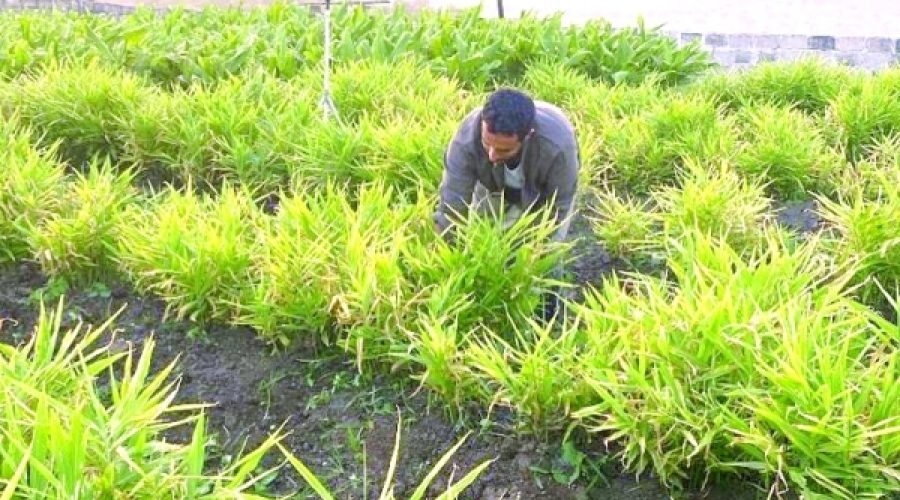
MUSCAT, FEBRUARY 23 — A government-supported ginger cultivation initiative in Dhofar Governorate is demonstrating potential for commercial success, with second-season output rising to 2.5 tonnes. Officials believe scaling this project could reduce imports and enhance farmers’ incomes.
Launched in 2024 by the Directorate General of Agriculture, Fisheries and Water Resources in Dhofar and financed by the Agricultural and Fisheries Development Fund, the project is being implemented in the Wilayats of Rakhyout and Dhalkout, with a timeline extending from 2024 to 2027.
Eng Ridwan bin Abdullah al Ibrahim, Director of the Agricultural Development Department and project manager, noted that the initiative targets 60 farmers and is designed as a comprehensive support program. This includes not just crop planting but also technical assistance and extension services throughout the farming process, from land preparation to harvest.
The project’s first phase commenced in June 2024, involving about 30 farmers with a total cultivated area of approximately two feddans. The first season yielded around one tonne of ginger.
In 2025, a second phase was introduced, bringing another 30 farmers into the fold. The second-season harvest took place in February 2026, producing an estimated 2.5 tonnes, more than double the initial season’s output.
“These early results suggest that ginger is a promising crop, capable of attracting investment to boost domestic production and reduce reliance on imports,” Al Ibrahim stated. He added that the program offers guidance on field preparation, installation of modern irrigation systems, and monitoring throughout growth stages.
This ginger initiative builds on the success of an earlier turmeric localization project in Dhofar, which is viewed as a model for introducing high-value crops suited to local conditions. Agriculture planners regard the new project as part of a broader strategy to enhance food security while diversifying rural livelihoods through economically viable cultivation.
Project management aims to expand the program to additional wilayats over the next two years, increasing participation among farmers. The objective is to foster community involvement in modern farming practices and create sustainable income opportunities, leveraging a crop deemed highly promising.
For policymakers, this initiative serves not only as a test for yield improvements but also as a model for developing a competitive local value chain. Success will depend on maintaining consistent productivity, ensuring quality control, and establishing effective methods for aggregation, marketing, and distribution that can stand up to imported goods.
Special Analysis by Omanet | Navigate Oman’s Market
The government-backed ginger cultivation project in Dhofar presents significant opportunities for businesses and investors as it aims to bolster import substitution and enhance local farm incomes. With its scalable model, entrepreneurs should consider engaging in related sectors, such as irrigation technology and distribution, to capitalize on this emerging market. However, investors must also be aware of the risks associated with establishing a competitive local supply chain, ensuring sustainable production quality and effective market access.