Rolling Back War Risk Cover: How This Affects Investment Stability for Businesses in Oman
MUSCAT: Several prominent international Protection and Indemnity (P&I) Clubs have announced the suspension of war-risk coverage, effective midnight on Thursday, March 5, 2026. This decision affects vessels operating in the Arabian Gulf, Strait of Hormuz, Sea of Oman, and parts of the Arabian Sea, in response to increasing risks linked to the ongoing conflict involving Iran.
The coverage suspension applies specifically to the following designated risk zone: all Iranian waters, including a 12-nautical-mile zone from Iran’s coastline, as well as the entire Arabian Gulf, the Strait of Hormuz, and the Sea of Oman. Additionally, it encompasses all waters west of an imaginary line drawn from Oman’s territorial limit at Ras Al Hadd northeast to the Iran-Pakistan maritime border. Notably, this includes the entire Hormuz gateway and its surrounding approaches, but excludes the more extensive Arabian Sea and Indian Ocean beyond Oman’s easternmost point.
Clubs such as Gard AS, Skuld, North Standard, London P&I Club, American Club, The Swedish Club, and the Steamship Mutual Underwriting Association are among those withdrawing or suspending war-risk coverage. This action is primarily driven by reinsurers tightening or withdrawing their support for Gulf-related risks.
This cancellation extends to a variety of marine and related liability policies, including P&I coverage and liabilities for charterers and traders, comprehensive general liability policies for ships and mobile offshore units, as well as crew, passenger, carriers’, bunkers, and ancillary protections that rely on war-risk backing.
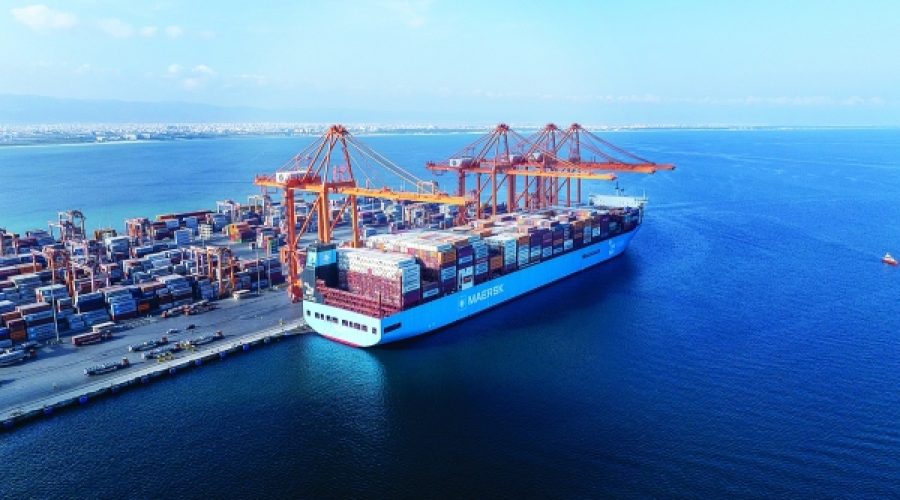
Experts suggest that the impact on vessel movements and cargo flows to and from Omani ports may be less pronounced than for GCC ports situated within the Arabian Gulf. Among Oman’s three main commercial gateways, SOHAR Port and Freezone technically fall within the designated war-risk area established by many P&I Clubs. However, vessels calling at Sohar may incur additional premiums, require voyage-by-voyage approval, and special underwriting clearance; while war-risk coverage is not automatically granted, it can still be obtained under specific terms. On the other hand, the Port of Duqm lies southeast of Ras Al Hadd, typically outside the designated risk zone, while the Port of Salalah, located on the Arabian Sea, is clearly beyond this area.
Nonetheless, ships visiting Sohar, Duqm, or Salalah may encounter increased insurance premiums if their voyage paths approach designated risk zones. Although these ports are outside the Arabian Gulf, shipping companies may adjust their rates for vessels traveling to or from Oman to reflect heightened insurance costs. As a result, freight rates for Oman-related cargo—especially bulk, container, and energy shipments—are likely to rise.
Additionally, as many carriers steer clear of the Strait of Hormuz and parts of the northern Arabian Sea to mitigate war-risk exposure, shipping routes connecting Asia, Africa, Europe, and the Gulf are undergoing significant changes. For Oman’s ports, this could mean longer voyage durations due to southern rerouting and altered traffic patterns, as some carriers might bypass the Gulf entirely in favor of alternative hubs. This shift could enhance Oman’s position as a trans-shipment hub, or conversely, lead to a reduction in calls if Gulf-focused services are diminished.
Special Analysis by Omanet | Navigate Oman’s Market
The recent rollback of war-risk cover by leading P&I Clubs poses significant challenges and opportunities for businesses in Oman. While increased insurance premiums may raise freight costs, Oman could bolster its position as a critical trans-shipment hub if rerouted shipping lines favor its ports. Smart investors and entrepreneurs should consider innovative logistics solutions to adapt to the changing maritime landscape and capitalize on potential shifts in trade patterns.