China’s Economic Opening: Key Opportunities for Investors and Entrepreneurs in Oman
BEIJING: Li Qiang, China’s second-highest-ranking leader, stated on Sunday that the country is committed to expanding the global economy by opening its markets further, while opposing unilateralism from certain nations, according to state media.
Growing calls from many of China’s key trading partners have urged the nation to address its increasing trade surplus, which is affecting local competition. Recent official data revealed that China’s trade surged by 20% in the first two months of this year, significantly exceeding predictions.
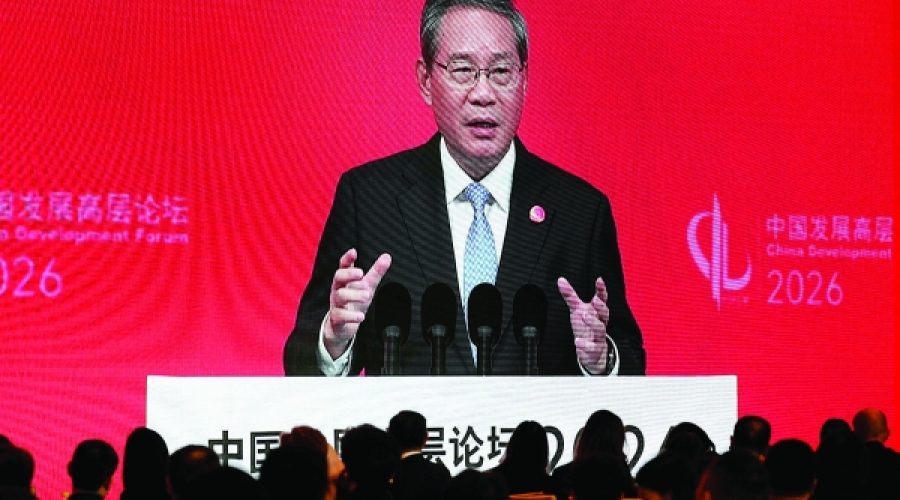
During the opening of the annual China Development Forum in Beijing, attended by notable business figures such as Apple CEO Tim Cook, Premier Li affirmed that China “will steadfastly advance high-level opening up,” aiming to import more high-quality foreign goods and collaborate with all nations to achieve optimized and balanced trade development.
He criticized the rise of unilateralism and protectionist measures, arguing that such approaches are not effective solutions to global issues. Since the pandemic, Beijing has been working to stabilize its economy, particularly focusing on boosting domestic consumption.
Last year, China experienced a fierce trade conflict with the United States as former President Donald Trump imposed tariffs on several countries, including China. The recent trade increase serves as a vital support for China, the world’s second-largest economy, especially as domestic consumer spending has declined, overshadowing last year’s record trade surplus.
The China Development Forum convenes amid ongoing regional conflicts, particularly in the Middle East, where tensions have escalated following U.S. and Israeli strikes on Iran. This situation has raised concerns about global energy security, including the security of China’s oil supplies.
Li emphasized that the international rules-based order is being severely disrupted, with growing power politics contributing to instability. In a separate address at the forum, Pan Gongsheng, the governor of China’s central bank, sought to address worries regarding the trade surplus.
He noted, “Analyzing global economic imbalances requires looking not only at trade in goods but also in services, as well as the current and financial accounts.” While China maintains the largest goods surplus, it also faces a significant services deficit. Pan reiterated that China has no intention of seeking competitive advantages through currency depreciation.
Addressing concerns over foreign investment, China aims to reverse a 5.7% year-on-year decline reported in January, alongside a 9.5% drop throughout 2022. In December, the government expanded the list of sectors eligible for foreign investment incentives, focusing on advanced manufacturing, modern services, and green technologies.
Li assured that foreign companies would receive equal treatment alongside domestic entities, fostering an environment where businesses from all countries can develop with confidence in China. In a separate meeting, Commerce Minister Wang Wentao pledged to enhance intellectual property protections and improve policy transparency to U.S. pharmaceutical executives.
In his keynote address, Tim Cook confirmed that Apple would continue collaborating with Chinese suppliers to further advance the industry, as reported by state media.
Special Analysis by Omanet | Navigate Oman’s Market
China’s commitment to expand its trade relationships amid rising calls for reduced trade surplus creates both opportunities and challenges for Omani businesses. As China opens its market further, there is potential for enhanced export opportunities for Omani goods, particularly in sectors such as agriculture and energy. However, local businesses must prepare for intensified competition as foreign players gain easier access to the Omani market.
Investors and entrepreneurs should strategically assess how to leverage contacts and trade agreements with China, focusing on high-quality imports and partnerships in sectors prioritized for growth, such as technology and green industries.