Chinese Firms Shift Strategies Post-TikTok Deal: Opportunities for Investors and Entrepreneurs in Oman
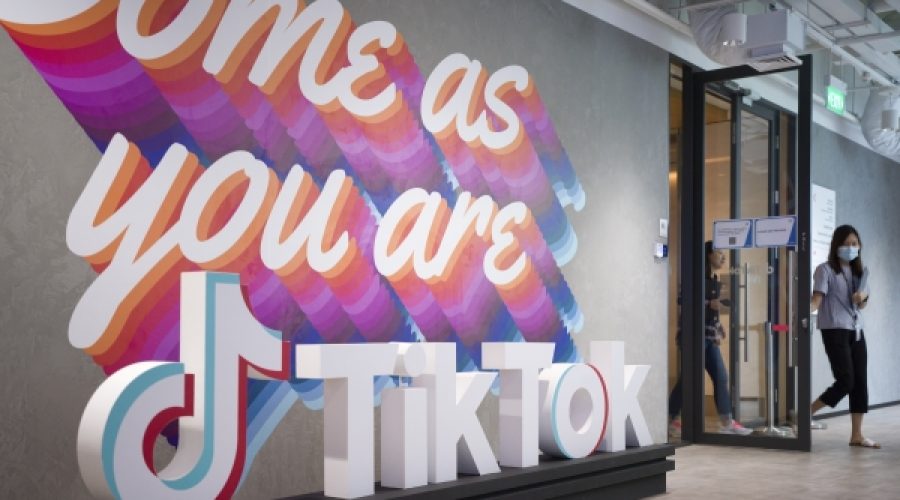
TAIPEI, Taiwan — On Thursday, ByteDance, the Chinese parent company of TikTok, officially separated the app into distinct entities for the United States and the rest of the world. This move signals a significant concession in the ongoing struggle to secure TikTok’s future in the U.S. after a challenging six-year battle.
The division of TikTok illustrates the complex choices faced by Chinese tech companies looking to expand globally. In the U.S., they must navigate a landscape marked by shifting geopolitical tensions, prolonged legal disputes, and skepticism surrounding the involvement of Chinese firms. Alternatively, they could pursue a less complicated international strategy that, while potentially more manageable, would exclude access to the world’s largest economy.
Over the past six years, as TikTok intensified tensions between China and the U.S., several Chinese tech firms sought ways to appear more acceptable to American officials and investors. A number relocated their headquarters from China to more neutral locales, such as Singapore. Others invested heavily in marketing campaigns to familiarize American consumers with their brands. Some even restricted access to their platforms from within China, reinforcing their narrative as companies independent of Chinese influence.
In a notable development last month, AI startup Manus captured attention when Meta announced its acquisition of the company for approximately $2 billion. Founded by Chinese engineers, Manus had moved its headquarters to Singapore and ceased operations in China. This shift appears to have insulated the company from regulatory scrutiny, allowing it to attract American investors more easily.
Manus gained significant recognition in March after unveiling an AI agent capable of building websites and executing basic coding tasks with minimal human involvement. By December, the company reported over $100 million in annual recurring revenue.
Despite its success, just days after the acquisition news, the Chinese government announced an investigation into whether Meta’s purchase of Manus contravened national laws concerning technology exports and foreign investments. China’s regulatory landscape has tightened considerably, particularly regarding technology sectors. In 2020, amendments to export regulations expanded governmental authority over software technologies, enabling the state to approve or deny any deals involving TikTok’s technology.
Some industry insiders refer to the attempts to downplay Chinese affiliations as “China shedding.” Despite the challenges posed by regulatory oversight, they argue that Manus’s successful exit demonstrates a viable approach for other startups seeking American investment.
Kevin Xu, founder of Interconnected Capital, a hedge fund focused on AI investments, remarked, “Manus is the first successful exit of China shedding for a startup.”
As the Chinese tech landscape becomes increasingly competitive, many entrepreneurs are actively seeking new markets. The downturn in the real estate sector has led to consumer hesitancy, intensifying competition across various industries, including food delivery and electric vehicles. This dynamic is often referred to as “involution” by policymakers.
Entrepreneurs are increasingly aware that establishing businesses outside of China can lead to better profit margins and reduced anxiety, according to Jianggan Li, CEO of Singapore-based consultancy Momentum Works.
While Chinese startups face rigorous competition domestically, their operations in the United States are under increasing scrutiny. For instance, in 2019, a U.S. government committee mandated that the Chinese owner of the dating app Grindr divest from the platform over concerns about the potential access of sensitive data by the Chinese government.
Currently, American regulations expect Chinese companies to store user data within the U.S. and adhere to closer oversight. Consequently, some firms are reevaluating their strategies and shifting their focus toward other significant markets.
In May, Meituan, China’s largest food delivery service, announced a $1 billion investment to establish operations in Brazil. Known for its aggressive tactics, Meituan has historically operated at a loss to capture market share. It previously implemented a similar strategy when launching its food delivery service, Keeta, in Saudi Arabia, where it rapidly gained dominance.
Brazil is also a critical market for fast-fashion retailer Shein, which has established three warehouses near São Paulo. Originally founded in China, Shein relocated its headquarters to Singapore in 2022. However, it faced challenges when U.S. policymakers closed a loophole that previously exempted low-value Chinese goods from tariffs.
Chinese electric vehicle manufacturers, among the fastest-growing segments, find themselves largely excluded from the U.S. market due to a 100% tariff imposed by Washington. Despite BYD surpassing Tesla as the world’s leading electric vehicle seller last year, its cars are absent from American streets, as the company redirects its focus to markets such as Brazil and Thailand, where its budget-friendly models are well-received.
For ByteDance, this separation represents a full-circle moment. TikTok was launched in 2016 following the acquisition of Musical.ly, a Chinese app that gained popularity among U.S. and European teens by emphasizing music and lip-syncing. However, the founders opted not to tap into the Chinese market, which is burdened by heavy internet restrictions.
The app has faced a series of legal challenges globally, with governments increasingly concerned about its connections to China and its influence over younger audiences. At least 20 countries have either banned or blocked TikTok outright.
Analysts believe ByteDance’s decision to license TikTok’s technology in the U.S. provides a pragmatic solution—neither a complete ban nor a forced sale—offering potential pathways for advanced technologies, such as battery tech and rare earth materials, to flow from China to the U.S.
This article originally appeared in The New York Times.
Special Analysis by Omanet | Navigate Oman’s Market
The recent splitting of TikTok underscores a strategic pivot for Chinese tech companies as they navigate complex geopolitical landscapes. For businesses in Oman, this presents opportunities to engage with companies seeking alternative markets; however, reliance on partnerships with firms grappling with geopolitical scrutiny poses significant risks. Smart investors and entrepreneurs should closely monitor shifts in technology flows between China and the U.S. to capitalize on emerging trends while remaining cautious of regulatory changes and market dynamics.