Strategic Move to Commercialize Omani Ginger Cultivation: Implications for Investors and Entrepreneurs
MUSCAT, FEB 22 — The Agricultural and Fisheries Development Fund has officially announced the start of this year’s Omani ginger harvest season, part of an initiative aimed at leveraging modern technologies to develop specialized farms for cash vegetable crops in border regions with inherent advantages.
According to official indicators and economic reports, the ginger market in Oman is expected to experience significant growth, projected at 19% by 2028. This initiative is strategically aligned with efforts to decrease reliance on imports while enhancing local production through advanced irrigation techniques. Initial estimates for the first phase suggest a yield of 20 to 30 tonnes from a pilot area of approximately three acres.
The Ministry of Agriculture, Fisheries, and Water Resources is actively facilitating connections between farmers and the private sector to ensure effective purchase and commercial marketing of the crop. This initiative presents promising investment opportunities in ginger processing, including the production of essential oils, nutritional supplements, and dried or ground ginger.
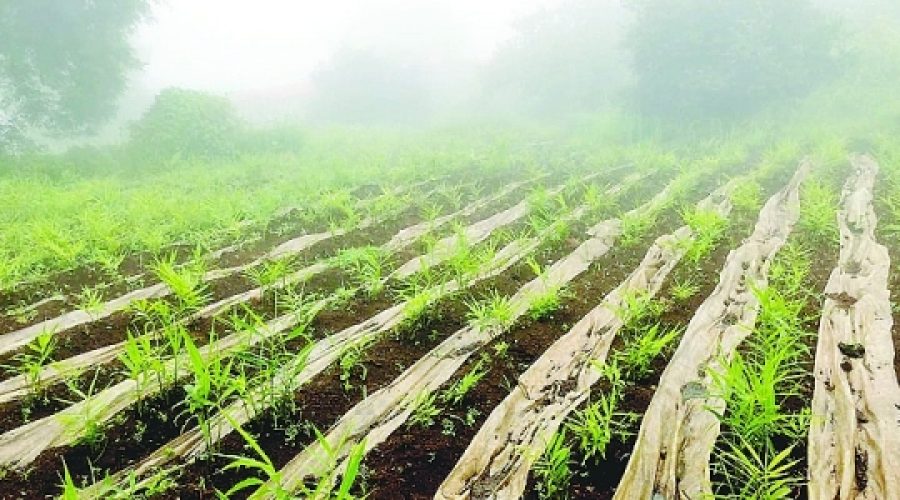
Ginger cultivation predominantly occurs in the mountainous areas of Dhofar Governorate, particularly in the Wilayats of Rakhyout and Dhalkout. Planting typically commences in mid-June, with the crop maturing fully for harvest after eight to nine months.
This project is part of Oman Vision 2040, aimed at realizing substantial strategic gains, including economic diversification and enhanced food security. Additionally, it seeks to localize tropical crops, thereby reducing import dependence. Given the rising local and international demand in the food and pharmaceutical sectors, ginger is recognized as a crop of high economic value that contributes positively to the nation’s gross domestic product. Moreover, it offers a sustainable income source for rural families in Rakhyout and Dhalkout, bolstering their economic stability in mountainous environments. The expansion of this cultivation is also expected to generate job opportunities for young Omanis in agriculture, marketing, and processing sectors.
The adoption of modern irrigation systems and advanced agricultural technologies has significantly boosted production. This harvest marks the culmination of the first phase, initiated in June 2024 with the involvement of 30 farmers. The project, which has garnered support from the Agricultural and Fisheries Development Fund, builds on the successful turmeric cultivation experiment in the same region. Efforts are currently focused on linking farmers with private sector companies to ensure the purchase and marketing of this nationally significant product.
A key achievement of the project thus far is the transition of ginger cultivation from research trials to actual commercial production. The inaugural harvest has yielded quantities that successfully meet quality standards, rivaling imported products in flavor and volatile oil content.
Special Analysis by Omanet | Navigate Oman’s Market
The launch of Oman’s ginger harvest season signifies a strategic shift towards agricultural self-sufficiency and economic diversification, aligning with Oman Vision 2040. This initiative presents significant opportunities for businesses in the agro-processing sector, particularly in the production of ginger-based products, while also posing a risk to current import-dependent models. Smart investors and entrepreneurs should focus on innovative technologies and sustainable practices to capitalize on the growing demand for local and global markets, thereby enhancing their competitive advantage.