U.S. Fed’s Expected Rate Cut: Implications for Investors and Businesses in Oman
WASHINGTON: The U.S. Federal Reserve is expected to announce a quarter-percentage-point interest rate cut on Wednesday as policymakers navigate uncertainties arising from the recent government shutdown and differing perspectives on economic risks.
This anticipated cut may be accompanied by a cautious or even hawkish stance regarding future rate adjustments, reflecting a divide among officials. Some are doubtful about the necessity of further rate reductions, citing persistent inflation, while others warn that not lowering borrowing costs could lead to a weakening economy and job market. The latest quarterly economic projections, released alongside the rate decision, will provide insights into how Fed officials foresee the economy evolving in 2026 and their expectations for the appropriate interest rate trajectory.
However, these year-ahead forecasts often become outdated quickly due to incoming data, particularly since a significant amount of economic data was delayed by the government shutdown. Upcoming releases, including job and inflation reports for November, are crucial for resolving central bankers’ ongoing debates. This adds to the necessity for the Federal Open Market Committee (FOMC) to proceed cautiously while aiming to lower the policy rate to the 3.50%-3.75% range. Analysts at TD Securities predict a 25-basis-point cut, adding that the decision is likely to provoke contention comparable to October’s meetings.
The last key data points the Fed received regarding inflation and employment were from September, showing a slight rise in the unemployment rate to 4.4% and an inflation measure of 2.8%, compared to the Fed’s 2% target. The previous rate cut on October 29 resulted in dissenting opinions favoring both tighter and looser monetary policy—an unusual situation pointing to contrasting concerns regarding inflation and potential job market weakening.
Fed Governor Stephen Miran, currently on leave from an advisory position in the White House, has consistently favored larger half-percentage-point cuts and is expected to dissent again. Additionally, several regional bank presidents have publicly opposed further cuts, with potential dissent expected from some of them.
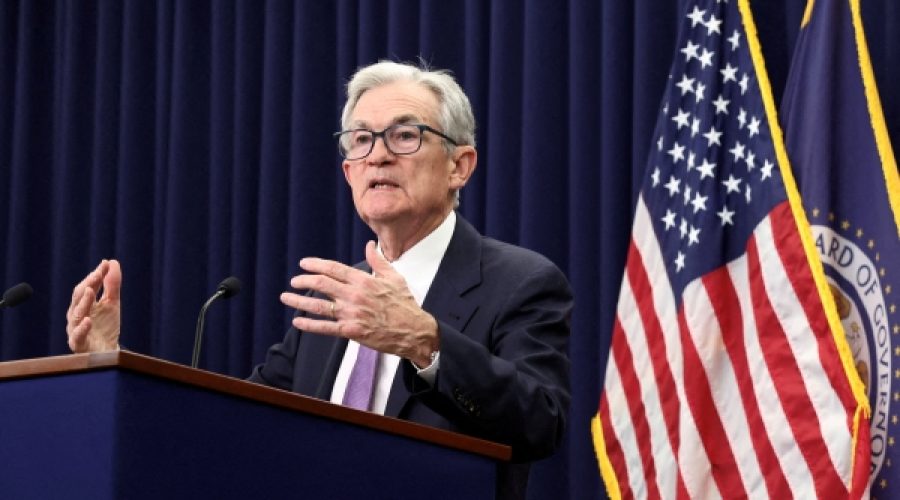
The details of the rate decision, projections, and a new policy statement will be unveiled at 2 p.m. EST (1900 GMT), followed by a press conference with Fed Chair Jerome Powell at 2:30 p.m.
HIGHER BAR FOR FURTHER RATE CUTS
Beyond the expected rate cut, investors are anticipating two additional quarter-percentage-point cuts by the end of 2026, placing the benchmark policy rate at 3.00%-3.25%. In September, policymakers were more hawkish, projecting the benchmark rate to end 2026 between 3.25% and 3.50%. Since then, some regional officials have further tightened their policy perspectives.
Michael Feroli, chief U.S. economist at JP Morgan, stated that the emerging hawkish stance among reserve bank presidents may keep the 2026 rate outlook unchanged from September, indicating limited support for this week’s cut and raising the threshold for future reductions. Feroli noted that the forthcoming rate projections would reflect discomfort with further cuts, suggesting that the policy statement might also indicate a lower likelihood of cuts at subsequent meetings. Powell is expected to emphasize that any further reductions would require a significant downturn in the labor market.
These developments may not resolve the ongoing policy disagreements within the Fed or between the central bank and President Donald Trump, who has called for aggressive rate cuts since regaining power a year ago. Trump is in the process of selecting a successor for Powell, partly based on the nominee’s willingness to lower borrowing costs. Advocates for lowering rates argue it is essential to avert a downturn in the job market, while opponents point out the risks of persistent inflation fueled by Trump’s tax cuts, which may increase consumer and business spending.
As Powell approaches the end of his term in May, the divided opinions within the central bank may complicate effective communication of their plans. Standard Chartered economists Steve Englander and John Davies observed that the upcoming meeting’s messaging may be viewed skeptically due to divergent FOMC views, unreliable communications from the Fed, the government’s shutdown impacts, leadership transitions, and other uncertainties regarding future participants in the FOMC.
Special Analysis by Omanet | Navigate Oman’s Market
The anticipated interest rate cut by the U.S. Federal Reserve presents both opportunities and risks for businesses in Oman. Lower borrowing costs in the U.S. could stimulate global trade, benefiting Omani exporters; however, persistent inflation concerns may lead to a volatile economic environment. Smart investors should closely monitor the Fed’s evolving policy stance and seek opportunities in sectors poised to benefit from increased demand and lower financing costs.