UN Security Council Postpones Vote on Hormuz Protection Force: Implications for Business Security and Trade in Oman

The UN Security Council has postponed a vote originally scheduled for Friday on a draft resolution that would authorize the use of “defensive” force to safeguard shipping in the Strait of Hormuz from Iranian attacks. This delay was announced by the Council, which includes 15 member states.
The vote was set for Friday morning, spearheaded by Bahrain, but the schedule changed by Thursday night. Diplomatic sources indicated that the change was due to the observation of Good Friday as a public holiday by the United Nations, despite this being known at the time the vote was announced. A new date for the vote has not yet been provided.
Iran’s actions have severely impacted this crucial shipping lane, threatening global fuel supplies and aggravating the international economy in response to recent US-Israeli military actions that have contributed to ongoing conflict in the Middle East. Bahrain’s UN ambassador, Jamal Alrowaiei, emphasized that economic terrorism affecting the region is a concern for the entire world.
The draft, which has undergone multiple amendments and has the backing of the United States, is described by Alrowaiei as coming at an essential moment. President Donald Trump remarked on Wednesday that nations facing fuel shortages should “go get your own oil” in the Strait of Hormuz and clarified that US forces would not assist them.
The latest version of the draft resolution, as seen by AFP, permits member states to employ “all defensive means necessary and commensurate with the circumstances,” either individually or through “voluntary multinational naval partnerships.” This plan spans the Strait and its adjacent waters, aiming to ensure secure transit and deter any attempts to close or obstruct international navigation. The measure would remain in effect for a minimum of six months.
Efforts have been made to persuade skeptical countries, such as Russia, China, and France, to back the resolution. The revised draft does not explicitly reference Chapter 7 of the UN Charter, which allows for the authorization of armed force to maintain peace. Instead, it stresses the defensive nature of any potential intervention, a revision that appears to have addressed French concerns.
French UN Ambassador Jerome Bonnafont stated that it is imperative for the Council to promptly devise a necessary defensive response, following a vote in March that condemned Iran’s interference in the Strait of Hormuz. He added that a military operation to secure the waterway is “unrealistic.”
The support of Russia and China, both of which hold veto power, remains uncertain. Chinese Ambassador Fu Cong warned that authorizing force could legitimize what he called unlawful and indiscriminate violence, leading to further escalation and severe repercussions. Meanwhile, Russia, a staunch ally of Iran, has criticized the proposed measures as one-sided.
Given the likelihood of vetoes from Russia and China, the resolution appears to face significant challenges in passing through the Security Council. Analyst Daniel Forti from the International Crisis Group noted that it is difficult to envision these nations supporting a resolution that frames the stability of the Strait solely as a security issue without addressing the need for a lasting political solution to the ongoing conflict.
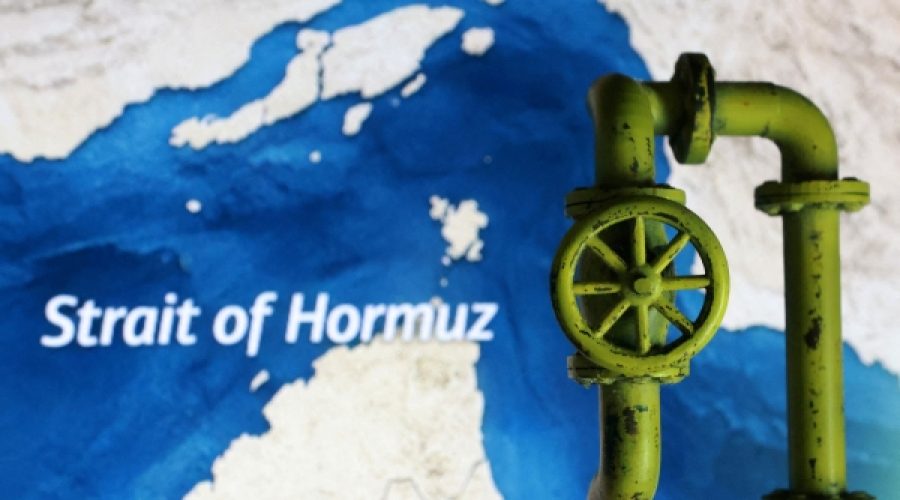
The Strait of Hormuz is a vital conduit for about one-fifth of the world’s oil and liquefied natural gas. Its near-total closure is disrupting global supplies of essential commodities, including oil, liquefied natural gas, and fertilizers, and is contributing to soaring energy prices. Authorizations permitting military force by the Security Council are relatively uncommon, with notable exceptions during the Gulf War in 1990 and NATO’s intervention in Libya in 2011.
Special Analysis by Omanet | Navigate Oman’s Market
The postponement of the UN Security Council vote on protective measures in the Strait of Hormuz creates significant uncertainty for businesses in Oman, particularly those reliant on stable energy supplies. This scenario presents both opportunities and risks: while rising energy prices could boost local oil revenues, heightened geopolitical tensions may deter foreign investment. Smart investors should closely monitor developments, considering strategies that mitigate exposure to potential supply disruptions and the escalating global energy costs.