Banks Eye Venezuela Investment: What It Means for Omani Investors and Business Opportunities
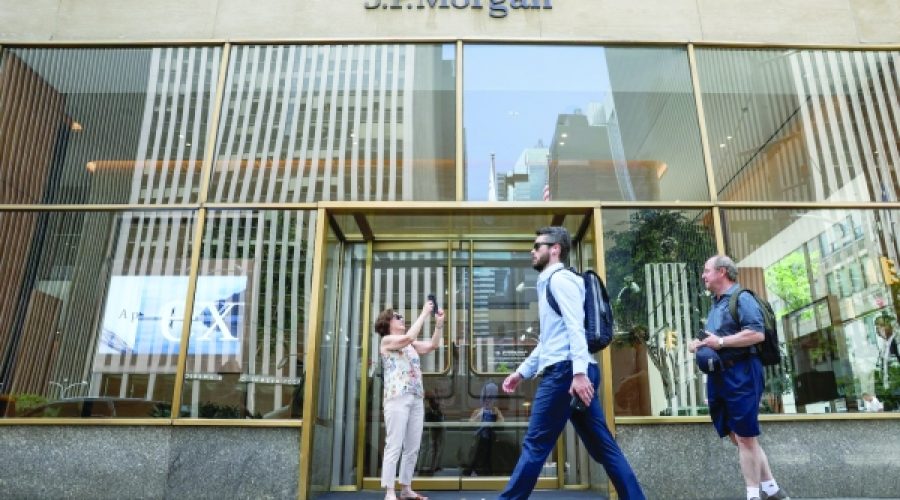
NEW YORK/HOUSTON — The United States’ re-engagement with Venezuela’s oil sector presents promising opportunities for international banks, with JPMorgan Chase positioned favorably due to its longstanding history and previous involvement in trade financing within the country.
Historically, several banks including JPMorgan and Citigroup operated in Venezuela but scaled back or exited their operations over the past decades. However, US banks may now find chances to compete in trade financing or in funding investments related to Venezuela’s oil infrastructure, according to a source familiar with the developments. Despite Venezuela being governed by an interim administration, analysts caution that substantial challenges remain for conducting business there.
Among these institutions, JPMorgan holds a distinct advantage due to its continuous presence in Venezuela spanning 60 years. Although JPMorgan halted its banking and stock trading activities in 2002, it maintained a dormant office in Caracas for many years, with the potential to reactivate it if necessary, a second source noted.
María Paola Figueroa, Head of Frontier Latin America Research at the Institute of International Finance, emphasized: “JPMorgan is among the very few US banks with an office in Venezuela, though current activity is minimal due to existing restrictions. The potential reopening of the oil sector and a broader economic recovery could generate significant opportunities for foreign banks to re-enter the Venezuelan market, conditional on easing of US financial sanctions.”
US sanctions against Venezuela date back to 2006 and were intensified in 2017, barring US financial entities from extending new funds to the Venezuelan government or its state oil company, PDVSA. In 2019, comprehensive sanctions were imposed on Venezuela’s oil sector. Presently, the US intends to selectively ease sanctions as it resumes marketing Venezuelan oil. Recently, the Department of Energy stated that proceeds from oil sales would be managed in US-controlled accounts at global banks. At a White House meeting, ConocoPhillips CEO Ryan Lance noted that US banks, including the federal Export-Import Bank which finances overseas projects, might play a role in supporting investments in Venezuela’s oil industry.
For JPMorgan, several avenues for involvement exist. One concept under internal consideration is the potential establishment of a trade bank dedicated to financing oil exports, a third source said, although it remains unclear if formal discussions are underway. With a solid footprint in oil-rich regions such as the Middle East and Africa, JPMorgan has relevant experience, having led a bank consortium that operated the Trade Bank of Iraq established in 2003 following the US-led invasion.
Additionally, JPMorgan might leverage funds from its Security and Resiliency Initiative—a $1.5 trillion, 10-year plan launched last year—to invest in critical sectors like minerals, where Venezuela holds abundant resources, according to the second source.
Mike Mayo, a banking analyst at Wells Fargo, remarked, “JPMorgan is the best-in-class global bank. If there are more global or Venezuelan opportunities, the leading global bank should capture a significant share.”
Currently, JPMorgan trades Venezuelan sovereign bonds that are not subject to sanctions with offshore counterparts, another source revealed.
— Reuters
Special Analysis by Omanet | Navigate Oman’s Market
The potential easing of US sanctions on Venezuela’s oil sector signals emerging opportunities for international banks like JPMorgan, which could leverage its historical presence to finance oil exports and infrastructure investments. For businesses in Oman, this development underscores the importance of monitoring geopolitical shifts that may unlock new trade finance avenues in energy markets. Smart investors should consider diversifying into frontier markets linked to oil and critical minerals, while staying alert to regulatory risks and evolving US foreign policy.