Brent Oil Surges 8%: What Trump’s New Threats Mean for Energy Investors and Market Stability

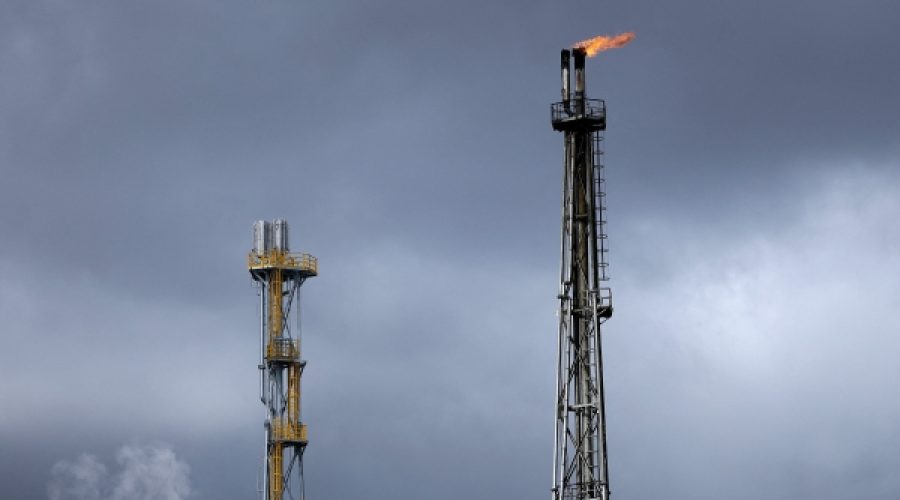
U.S. oil prices surged sharply on Thursday, with West Texas Intermediate (WTI) crude settling more than 11% higher and Brent crude rising nearly 8% amid volatile trading. This spike came as concerns mounted over prolonged disruptions to oil supply following President Donald Trump’s announcement of continued U.S. military actions against Iran.
Brent crude futures closed up $7.87, or 7.78%, at $109.03 per barrel. Meanwhile, WTI crude futures increased by $11.42, or 11.41%, to settle at $111.54 per barrel—marking the largest absolute price jump since 2020. Despite the gains, both benchmarks remained below their recent peaks near $120 a barrel.
President Trump stated that military operations against Iran would intensify but did not specify an end date for the hostilities. He made no mention of any plans to reopen the strategically crucial Strait of Hormuz. “We’re going to hit them extremely hard over the next two to three weeks,” Trump declared. “We’re going to bring them back to the Stone Ages, where they belong.”
In response, Iran is reportedly drafting a monitoring protocol with Oman for traffic through the strait, which remains effectively closed in retaliation to U.S. and Israeli strikes that began on February 28. The Strait of Hormuz typically facilitates about one-fifth of global oil and liquefied natural gas shipments. Its reopening has become a key priority for governments worldwide due to soaring energy prices.
Dennis Kissler, senior vice president of trading at BOK Financial, noted, “The real question on traders’ minds is that if Iran’s oil infrastructure is possibly now at risk, and with more damage in the area now very likely, even if left intact, the restart of oil flows in the region is now looking to be delayed further.”
Interestingly, WTI prices, which usually trade below Brent, were nearly $3 above Brent for May deliveries, while Brent was priced for June delivery. This WTI premium over the global benchmark was the highest seen in a year.
John Kilduff, partner at Again Capital, commented, “The market expects that if the Strait of Hormuz opens up in a couple of weeks, this risk premium will immediately go down.”
Turning to economic impacts, Lorie Logan, President of the Federal Reserve Bank of Dallas, said a swift resolution to the conflict may limit economic damage. However, she highlighted uncertainty in the economic outlook due to the crisis. She also noted that the U.S. has some buffers to mitigate war-related impacts.
Looking ahead, Citi projects Brent crude prices averaging $95 per barrel under a base scenario and $130 per barrel in a bullish case during the second half of the year. JPMorgan expects oil prices to rise to $120-$130 per barrel in the near term, with the potential to exceed $150 per barrel if the Strait remains closed into mid-May.
Energy services firm Baker Hughes reported that U.S. oil rig counts increased by two this week to 411, indicating some producers are considering ramping up output if higher prices persist.
In other market developments, front-month WTI traded at its largest-ever premium over second- and seventh-month contracts on Thursday.
On diplomatic efforts, the United Kingdom is hosting a virtual meeting with approximately 40 countries to discuss reopening the Strait of Hormuz, though the United States is not expected to participate.
Meanwhile, OPEC+ is anticipated to consider another oil output increase during its meeting on Sunday. While this move would position members to boost production if the strait reopens, it is unlikely to significantly raise supply beforehand.
Compounding supply challenges, strikes by Ukraine on Russian port infrastructure and pipelines have cut export capacity by about 1 million barrels per day—roughly one-fifth of total capacity—leading to expectations of imminent production cuts. The International Energy Agency has warned that supply disruptions will begin affecting Europe’s economy in April after a period of relative insulation sustained by pre-war contracts.
The ongoing conflict and its impact on key oil transit routes continue to drive volatility in global energy markets amid significant geopolitical uncertainty.
Special Analysis by Omanet | Navigate Oman’s Market
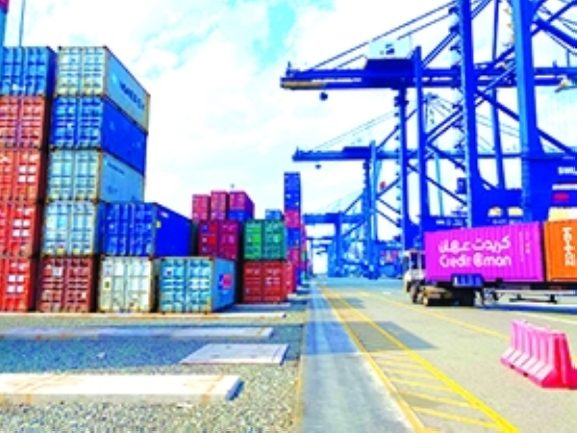
The sharp surge in oil prices amid ongoing geopolitical tensions and disruptions in the Strait of Hormuz presents both risks and opportunities for Oman’s economy. Businesses should anticipate increased energy costs and supply chain volatility while investors might find openings in energy infrastructure and logistics sectors as global demand for secure oil routes intensifies. Smart entrepreneurs should monitor regional diplomatic efforts and consider investments that capitalize on Oman’s strategic position as a stable energy transit hub.