Why Calculators Still Matter in Business: Understanding Their Resilience Amid AI Advancements
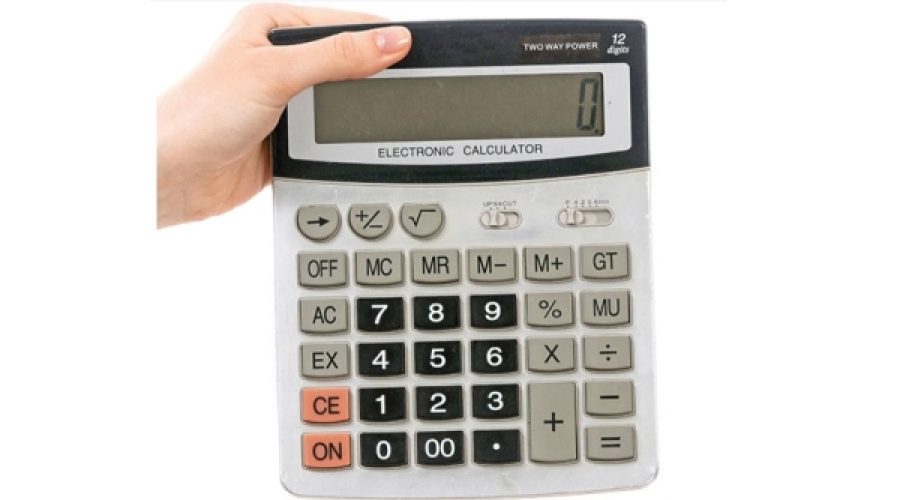
TOKYO – Despite the rapid advancements in artificial intelligence, pocket calculators remain unmatched in reliability, consistently providing accurate results without error. This dependable performance continues to drive millions of sales annually for Japan’s Casio, which is now exploring opportunities for expansion in select regions.
While AI chatbots occasionally falter on basic arithmetic, Casio executive Tomoaki Sato emphasized that calculators "always give the correct answer." However, he acknowledged the possibility that calculators could eventually become obsolete, much like the abacus.
Sato noted in Tokyo that personal calculators used for business purposes are experiencing a decline in demand. Smartphones and internet browsers can now handle everyday calculations, and AI models recently achieved gold-level scores at a prestigious global mathematics competition for the first time.
Yet calculators maintain an advantage in affordability and power options, operating on batteries and solar energy—features that appeal particularly to schools in developing countries, a key target market for Casio’s growth.
Consumers also appreciate the tactile experience of calculators. Thitinan Suntisubpool, a shop co-owner in Bangkok’s Chinatown, praised the durability and convenience of her large calculator, which she uses to input numbers visibly for customers, helping to overcome language barriers.
In contrast, another local vendor, Da, reported quiet sales for calculators at her street stall.
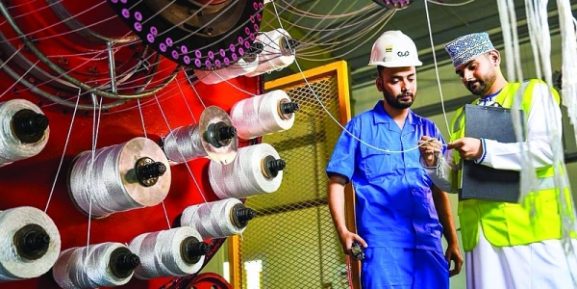
At Casio’s factory in Thailand’s Nakhon Ratchasima province, workers assemble calculators by fitting circuit boards and buttons into pastel-colored frames. Ryohei Saito, a Casio general manager in Thailand, affirmed that calculators remain in demand, especially in areas lacking widespread smartphone connectivity. He described calculators as “optimized tools focused on necessary functions.”
Casio sold 39 million general and scientific calculators worldwide in the year up to March 2025. This figure is slightly lower than the 45 million sold in 2019-20 but represents a rebound from 31 million sold during the post-Covid downturn.
Casio’s journey began with the groundbreaking 1957 invention of the compact desk-sized "14-A" calculator, hailed as the first all-electric calculator of its size.
Calculator innovation even recently made headlines when Christie’s auction house halted the sale of an early calculating machine, "La Pascaline" (circa 1642), after a court ruling prevented its export. The ebony-decorated device has been described as history’s first mechanical attempt to replace human calculation.
As AI continues to evolve, it marked a milestone in July when models from Google, OpenAI, and DeepSeek earned gold-level scores at the International Mathematical Olympiad (IMO). However, unlike five human participants who achieved perfect scores, none of the AI models reached full marks.
IMO president Gregor Dolinar called AI’s mathematical progress "fascinating" and acknowledged that while scientific calculators were once essential, today it is often easier to rely on AI—provided questions are posed correctly. AI can now tackle abstract, logical problems and explain its reasoning.
Dolinar, an engineering professor at the University of Ljubljana, predicts that physical calculators will gradually disappear, a trend already evident among his students who perform all calculations on their phones.
Workers assembling calculators at Casio’s factory in Thailand’s Nakhon Ratchasima province continue to produce these enduring tools, ensuring their presence in markets where technology access remains limited. — AFP
Special Analysis by Omanet | Navigate Oman’s Market
Casio’s ongoing, though declining, calculator sales highlight a shift from traditional tools to AI and smartphone-based solutions, signaling that businesses in Oman should prioritize digital innovation over legacy tech. However, the sustained demand in regions with limited connectivity presents opportunities for affordable, reliable tech products targeting underserved markets. Smart investors should consider hybrid strategies combining dependable hardware with AI capabilities to capture both emerging and transitioning user bases.