From Food Imports to Global Export Hub: What This Transformation Means for Oman’s Business Landscape
MUSCAT: The newly announced strategic partnership between Oman Food Capital, the food investment division of the Oman Investment Authority (OIA), and the Brazilian food powerhouse JBS is a significant milestone that transcends a mere commercial contract. It signals a transformative approach to food security, now recognized as equally vital as medicine, energy, and political stability, and a fundamental element of economic sovereignty, according to Saleh al Shanfari, Chairman of the Food Security Committee at the Oman Chamber of Commerce and Industry (OCCI).
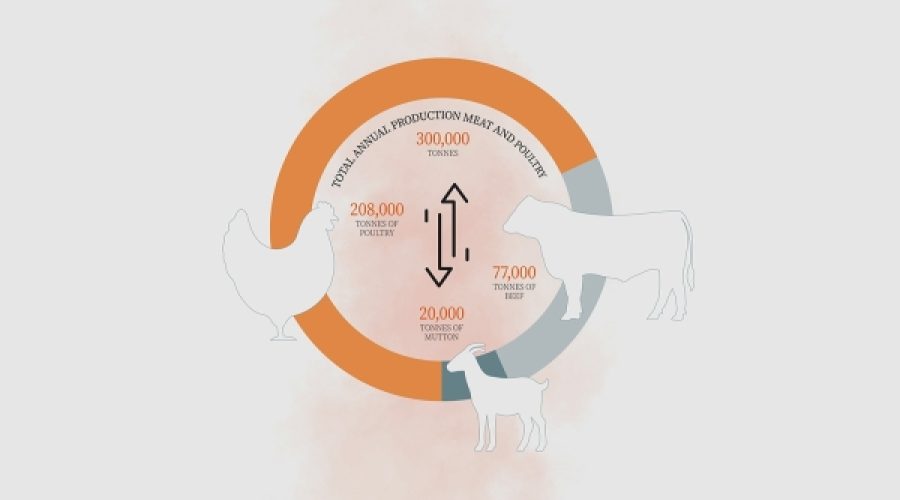
Al Shanfari highlighted this perspective in a recent statement concerning last week’s $150 million (approximately RO 57.7 million) investment deal. The partnership aims to boost the annual production capacity of two key meat and poultry facilities in Oman to 300,000 tonnes. Specifically, A’Namaa Poultry Company’s Ibri plant will produce 208,000 tonnes of poultry, while Al Bashayer Meat’s Thamrait facilities will contribute around 77,000 tonnes of beef and 20,000 tonnes of mutton.
This substantial production increase is expected to reduce Oman’s reliance on imports, thereby strengthening the local market through more competitive prices and improved product quality. Beyond achieving domestic self-sufficiency, the collaboration seeks to position Oman as a global export hub for halal food products. Utilizing JBS’s extensive logistics and distribution network, Oman is set to become a regional operational base, producing high-quality goods and exporting them across the Middle East, Africa, and Asia, enhancing the Sultanate’s stature in the expanding halal food market.
A critical advantage of this partnership is the transfer of advanced technology. JBS’s collaboration with Oman’s Al Bashayer and A’Namaa, backed by the OIA, will introduce cutting-edge processing, packaging, and livestock production technologies. This will raise food safety and quality standards, improve operational efficiency, and nurture broader industry development by localizing knowledge and expertise.
Economically, the partnership is projected to create over 3,000 direct jobs within five years across the entire production chain. It also demonstrates strong confidence from a leading global corporation in Oman’s investment climate, potentially attracting more international companies to the food sector and enhancing its supporting ecosystem.
Al Shanfari emphasized the importance of local value creation, noting the partnership’s potential to increase domestic value addition by fostering integration among OIA-affiliated companies and expanding local manufacturing instead of relying on raw material exports or finished imports. This strategy could stimulate downstream industries and broaden the network of suppliers and service providers supporting the sector.
Sustainability is a core feature of the partnership. JBS will hold an approximately 80 percent majority stake in the joint venture, reducing financial pressure on the government while ensuring that the national companies operate under a commercially focused management model prioritizing profitability and long-term sustainability.
Looking forward, Al Shanfari envisions this partnership as a magnet for other global food corporations seeking a regional base in Oman. The Sultanate’s strategic location at the crossroads of major sea, air, and land routes makes it an attractive hub for companies aiming to efficiently serve regional markets, especially with the demonstration of world-class production, cold-chain logistics, and export capabilities by a major player like JBS.
At its essence, Al Shanfari’s message is clear: Oman is treating food as a strategic national asset. This partnership addresses capacity expansion, export growth, technology transfer, job creation, enhanced local value chains, and financial sustainability through a commercially driven framework. The ultimate measure of success will be the tangible realization of these goals, balancing national resilience with the competitive rigor needed for regional and global food markets. Nonetheless, he expressed confidence that the combined expertise of the OIA and JBS will achieve these ambitions.
Special Analysis by Omanet | Navigate Oman’s Market
The $150 million Oman-JBS partnership marks a strategic leap toward food security and economic sovereignty, reducing import dependence while positioning Oman as a regional halal food export hub. Smart investors should note the opportunities in technology transfer, job creation, and value chain expansion, with potential ripple effects in downstream industries and increased global investor confidence. Businesses must strategically align to leverage Oman’s geographic advantage and evolving food sector ecosystem to capitalize on this transformative market shift.