Hormuz Shipping Blockage: Key Solutions Every Investor and Business Owner in Oman Should Know
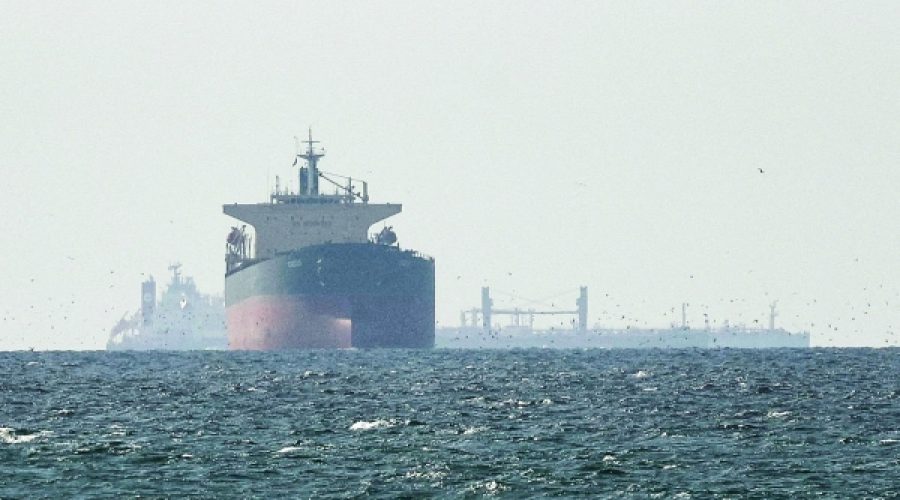
LONDON — Experts outline five potential paths for resuming commodity shipments through the Strait of Hormuz, a vital trade artery currently blocked by Iranian forces amid the ongoing Middle East conflict.
US-led Military Intervention
The most discussed approach involves the United States and allied nations securing the 167-kilometre (104-mile) waterway through military means. Presently, two US carrier strike groups—naval formations centered on aircraft carriers—operate in the region, representing the minimum naval presence required for escort operations, according to Nick Childs, senior fellow at the International Institute for Strategic Studies (IISS). Recently, Britain, France, Germany, Italy, the Netherlands, and Japan expressed willingness to support efforts to guarantee safe passage through the strait.
However, the mission is complex. A UK defense official emphasized that securing the passage is more than a maritime operation. It demands comprehensive air and maritime capabilities—including crewed and uncrewed assets with long- and short-range strike capacity. The official described the challenge as “significant” and insisted that it must be a multinational endeavor, one that is currently far from realization.
Diplomatic Resolution
A diplomatic solution remains preferable for many leaders worldwide. Several governments are engaged in bilateral talks with Tehran concerning an emerging “IRGC registration and vetting system”—a framework managed by Iran’s Revolutionary Guards. This system aims to establish an Iranian-approved “safe corridor” for ships transiting the strait, Richard Meade, editor-in-chief of maritime intelligence publication Lloyd’s List, explained. China, India, Pakistan, Iraq, and Malaysia are among the countries coordinating transit routes with Iran.
At least nine vessels have already utilized this corridor, which passes near Iran’s Larak Island, allowing Iranian authorities to conduct visual inspections. While this arrangement facilitates some movement, Meade cautioned that negotiated safe passage is unlikely to significantly increase the flow of cargo.
Risk Acceptance by Shipowners
Another option is for shipowners to navigate the strait without formal approval from Iran. Bridget Dyken, analyst at Lloyd’s List Intelligence, noted that Greek operators, in particular, demonstrate a higher tolerance for risk and continue to send tankers through the route. Her colleague, Cichen Shen, cited evidence of a potential Chinese insurance solution, where tankers pay a 7.5% premium on the hull value for 72 hours of coverage to transit safely.
Maintaining Strategic Ambiguity
In the medium term, Iran may maintain a partial, ambiguous opening of the strait with unclear transit rules. Richard Luckyn-Malone of intelligence consultancy Herminius observed that strategic ambiguity is central to Iran’s approach and aligns with its interests. However, he questioned whether the international community will tolerate a prolonged state of uncertainty with the strait “ambiguously open for months.”
Waiting for Stability
Iranian Parliament Speaker Mohammad-Bagher Ghalibaf recently warned that “the Strait of Hormuz won’t return to its pre-war status.” Luckyn-Malone added that even under the best circumstances, full reopening of the strait is likely months away due to unexploded ordnance, possible minefields, and heightened security forces on both sides.
— AFP
Special Analysis by Omanet | Navigate Oman’s Market
The blockade of the Strait of Hormuz by Iranian forces presents significant strategic and commercial risks for Oman, given its critical role in global energy trade. Businesses must prepare for increased volatility and potential disruptions in supply chains, while smart investors should eye opportunities in security, maritime insurance, and alternative transit routes. Entrepreneurs and policymakers need to closely monitor diplomatic developments and military responses, as these will shape Oman’s trade stability and regional economic outlook in the coming months.