Ford’s Kentucky Factory Job Losses: What It Means for Investors and Business Owners in the Auto Industry
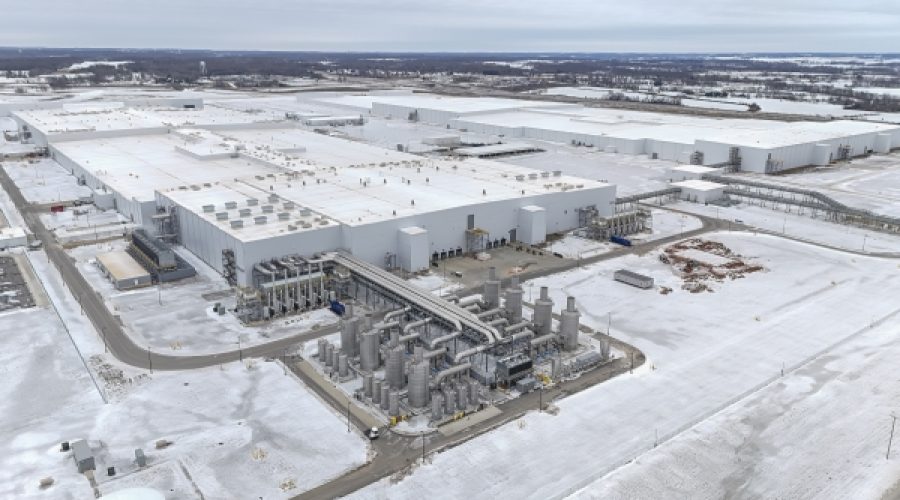
ELIZABETHTOWN, Kentucky — Last year, Ford Motor Company and South Korea’s SK On launched an electric vehicle (EV) battery factory on 1,500 acres of farmland in Hardin County, marking the largest economic development in the area’s history. However, just four months after production began, Ford abruptly ceased operations in December, laying off all 1,600 workers, leaving the local community stunned and frustrated.
The shutdown followed significant federal policy rollbacks under President Donald Trump and congressional Republicans, who eliminated programs supporting electric vehicles. This policy shift led to a sharp decline in EV sales. Despite Hardin County’s strong Republican support—Trump won 64% of the vote in 2024—residents largely hold Ford responsible for the plant’s closure, criticizing the company’s management of its electric vehicle initiatives as misguided.
Kentucky’s experience underscores the broader struggle of traditional automakers adapting to the rapidly evolving EV market. Having neglected electric vehicles for years, established manufacturers were caught off guard by Tesla’s rise and hastily invested billions in new factories reliant on government incentives. Many of Ford’s early EV models were costly, and customers often viewed them as inferior to Tesla’s offerings.
Workers like Derek Dougherty, who had found stability and essential health benefits through the job, expressed deep disappointment. Dougherty described the sudden layoffs—just before Christmas—as devastating, especially as he had recently relocated for the position with his family.
Local officials and workers argue Ford misjudged market demand or depended too heavily on now-vanished subsidies. The expiration of a federal EV tax credit worth up to $7,500 in September precipitated a nationwide plunge in electric vehicle sales. The Trump administration had also slashed clean energy subsidies and aimed to eliminate regulations promoting low-emission vehicles.
Andy Games, president of the Elizabethtown-Hardin County Industrial Foundation, identified the tax credit’s termination as the “ultimate downfall.” Ford CEO Jim Farley cited weak EV sales and announced a $19.5 billion loss in the company’s EV division, explaining the decision to shift investments to more lucrative opportunities.
Kentucky is not unique; last year saw $22 billion in canceled U.S. EV-related investments, primarily in Republican-voting regions. Democratic Governor Andy Beshear lamented the job losses, attributing them to Trump’s policy reversals and suggesting many affected workers had supported the former president.
The White House emphasized that EV demand was already slowing before tax credits expired and highlighted other Kentucky investments benefiting from Trump-era policies like tax cuts and deregulation.
Ford plans to reopen the Hardin County plant next year, repurposed to produce large batteries for utilities and data centers, a sector with growing demand. However, the factory’s employment will decrease from the initial 5,000 planned jobs to approximately 2,100. The previous joint venture with SK On ended last December, leaving Ford as sole owner.
Ford stated that laid-off workers, who had recently voted to unionize with the United Auto Workers, could reapply for positions, though reemployment is not guaranteed. The company also plans to produce a midsize electric pickup in Louisville starting next year, reaffirming Kentucky’s role as a significant manufacturing hub.
Locally, opinions reflect nuanced views. Joe Morgan, a registered Republican and former battery plant maintenance technician, criticized Ford for making the F-150 Lightning all-electric, deeming it unaffordable for most consumers. Meanwhile, some residents attribute the closure to market forces beyond Ford’s control.
Elizabethtown’s mayor, Jeff Gregory, a centrist Democrat, emphasized that local voters prioritize job performance over partisan politics, a sentiment echoed by county leader Keith Taul, a conservative Republican who expressed shared disappointment over the plant’s shutdown.
The factory had been a major milestone for the region, transforming the economy from a coal-reliant past to participation in a cutting-edge industry. Local governments invested approximately $250 million in infrastructure improvements and workforce training, with significant tax breaks granted to the manufacturers.
Despite the layoffs, many displaced workers have found new employment, though often with longer commutes and challenges securing jobs comparable to the factory’s wages and benefits.
Ford described converting the Hardin County facility to produce large-scale batteries as a “better opportunity for a sustainable and growing future.”
This report originally appeared in The New York Times.
Special Analysis by Omanet | Navigate Oman’s Market
The abrupt shutdown of Ford’s electric vehicle battery plant in Kentucky, driven by shifting government policies and market demand, underscores the risks of over-reliance on subsidies and volatile political support in emerging industries. For businesses in Oman, this highlights the need for diversifying investment strategies and focusing on sustainable, market-driven innovation rather than short-term incentives. Smart investors and entrepreneurs should closely monitor policy changes and consumer trends, preparing adaptable business models to navigate uncertainties in green technology sectors.