Middle East Conflict: How Rising Prices and Slower Growth Will Impact Your Business in Oman
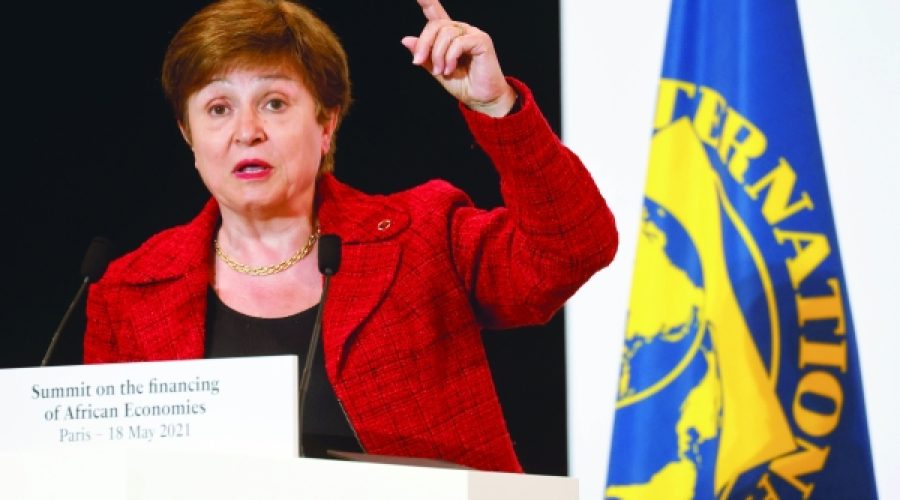
WASHINGTON: The ongoing war in the Middle East is set to drive higher inflation and slow global economic growth, according to Kristalina Georgieva, Managing Director of the International Monetary Fund (IMF). Her remarks come ahead of the IMF’s upcoming World Economic Outlook report, scheduled for release next week.
Georgieva highlighted that the conflict has caused the most severe disruption ever seen in global energy supplies. This has been exacerbated by Iran’s effective blockade of the Strait of Hormuz, a vital corridor responsible for transporting one-fifth of the world’s oil and gas. Even if the conflict were to end quickly, the IMF is expected to lower its economic growth forecasts while raising its inflation projections.
The war’s economic impact will be a central topic at the IMF and World Bank’s spring meetings in Washington next week, where finance officials from around the globe will convene. The IMF is preparing to outline various scenarios in its April 14 World Economic Outlook report. In a March 30 blog post, the Fund indicated a likely downgrade due to the war’s uneven economic shock and tightening financial conditions.
Prior to the conflict, the IMF had forecast modest upgrades in global growth, projecting 3.3% growth in 2026 and 3.2% in 2027 as economies continued pandemic recovery. Georgieva warned, “Instead, all roads now lead to higher prices and slower growth.” She will provide further insights in a speech on Thursday, while World Bank President Ajay Banga will share his perspective at an Atlantic Council event on Tuesday.
The IMF chief emphasized the “world of elevated uncertainty,” citing geopolitical tensions, technological changes, climate shocks, and demographic trends as ongoing risks. “After we recover from this shock, we need to keep our eyes open for the next one,” she added.
Georgieva revealed that global oil supply has contracted by 13% due to the conflict, affecting not just oil and gas shipments but also related supply chains such as helium and fertilizers. Even a swift resolution and recovery would lead to a “relatively small” downward adjustment in growth forecasts and an increase in inflation expectations. However, a prolonged war would exacerbate these negative effects on both inflation and growth. — Reuters
Special Analysis by Omanet | Navigate Oman’s Market
The ongoing Middle East conflict, causing a severe disruption in global energy supply, poses significant inflationary pressures and risks slower economic growth, directly impacting Oman’s energy-dependent economy. Businesses must brace for volatility in oil prices and inflation, while smart investors should explore diversification strategies and alternatives to mitigate risks. Oman’s strategic location near the Strait of Hormuz underscores the critical need for resilience planning amid heightened geopolitical uncertainty.