Rising Oil Prices Amid Escalating Conflict: What Investors and Businesses in Oman Need to Know
LONDON — Crude oil benchmarks surged by more than $4 on Tuesday, marking a third consecutive day of significant gains as the US-Israeli conflict with Iran intensifies. The widening hostilities have disrupted fuel shipments and raised concerns about further supply interruptions across the Middle East’s vital oil and gas infrastructure.
Brent crude futures climbed $4.94, or 6%, to $82.68 per barrel by 10:28 GMT, briefly reaching their highest level since July 2024 at $82.80. Meanwhile, US West Texas Intermediate (WTI) crude increased $4.68, or 7%, closing in at $75.91 per barrel after hitting a peak of $76.02, the highest since June.
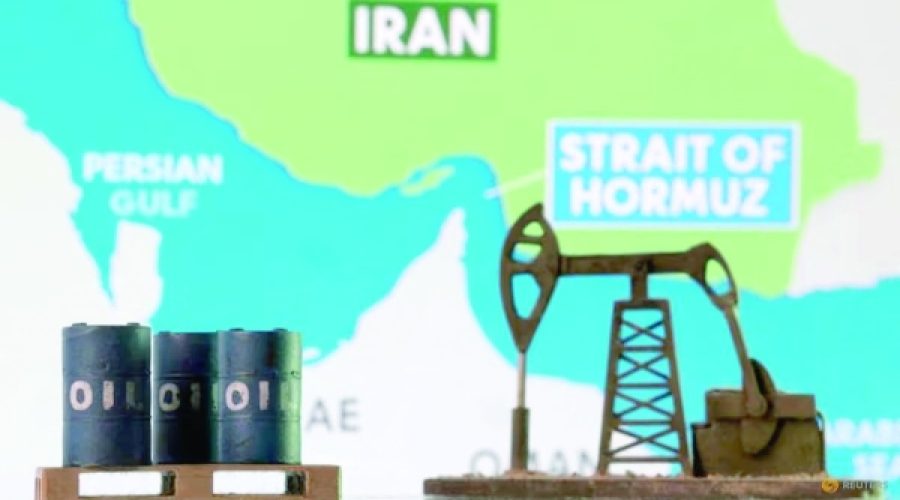
The conflict escalated following Israel’s initial attacks on Saturday, expanding to involve Lebanon and prompting reciprocal strikes by Iran against energy facilities in Gulf countries and tankers navigating the Strait of Hormuz. This narrow waterway typically handles about one-fifth of the world’s oil and liquefied natural gas (LNG) transport. Due to growing risks, tankers and container ships are rerouting to avoid the Strait after insurers withdrew coverage, while global shipping rates for oil and gas have soared.
Tensions heightened further on Monday when Iranian media reported that a senior Revolutionary Guards official declared the Strait of Hormuz closed and issued warnings of missile strikes against any vessel attempting passage.
Analysts at ING highlighted that although concerns over oil flow through the Strait are significant, a more severe threat to the market would be additional Iranian attacks on regional energy infrastructure, which could cause extended production outages.
In a related development, authorities in the United Arab Emirates are addressing a major fire at Fujairah port, according to state media reports.
Since the outbreak of attacks in the region, several countries have shut down oil and gas facilities either due to damage or as precautionary measures. Qatar has halted LNG production, Israel has suspended output at certain gas fields, Saudi Arabia closed its largest refinery, and oil production in Iraqi Kurdistan has nearly stopped.
Natural gas markets also reacted strongly, with benchmark Dutch contracts, British gas prices, and both European and Asian LNG prices all witnessing sharp increases.
The direct confrontation between the US, Israel, and Iran has unsettled the Middle East and investor sentiment worldwide. Market analysts expect oil prices to stay elevated amid ongoing conflict-related uncertainties.
On Monday, Bernstein raised its 2026 Brent crude price forecast from $65 to $80 per barrel, warning that prices could surge to between $120 and $150 in the event of a prolonged conflict.
Refined product prices rose alongside crude, reflecting risks to Middle East refining operations. US ultra-low-sulfur diesel futures jumped over 11% to $3.22 per gallon, reaching a two-year high on Monday, while gasoline futures increased by 5% to $2.49 per gallon. European gasoil futures surged 13% to $997.80 per metric tonne after an 18% rise on Monday.
The ongoing hostilities continue to cast a shadow over global energy markets, underscoring the fragile state of oil and gas supply chains in the Middle East.
Special Analysis by Omanet | Navigate Oman’s Market
The escalating US-Israeli conflict with Iran and disruptions in the Strait of Hormuz are driving oil prices sharply higher, creating both risks of prolonged supply outages and inflationary pressures for businesses in Oman. For investors and entrepreneurs, this signals a strategic opportunity to invest in energy infrastructure resilience and diversify supply chains, while closely monitoring geopolitical developments to mitigate exposure to market volatility.