Oman’s Aviation Sector Stability in 2026: What Investors and Entrepreneurs Need to Know for Business Growth
Muscat: The Sultanate of Oman has witnessed growth in both international and domestic passenger traffic during the first two months of 2026 compared to the same period last year.
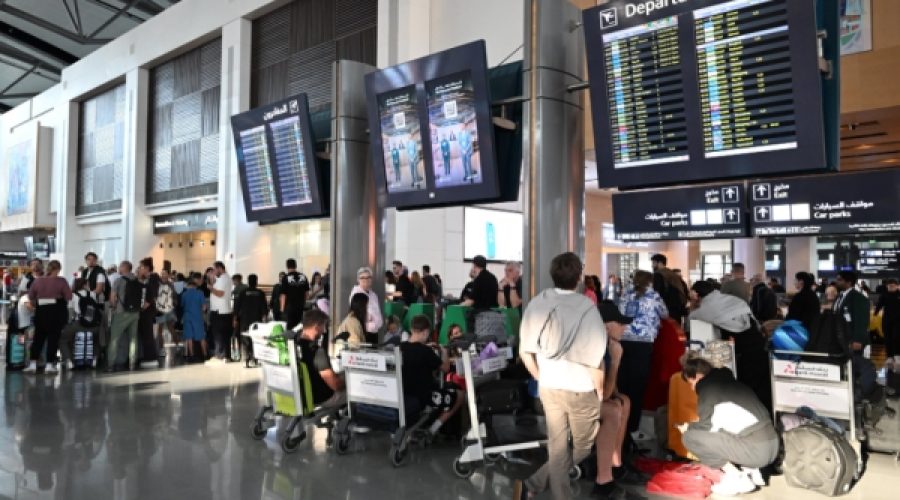
Despite challenges posed by flight cancellations and regional restrictions, Oman’s aviation sector has become a vital alternative hub for travelers, benefiting from its airspace remaining partially open while some neighboring GCC countries have imposed tighter limitations.
According to data from the National Centre for Statistics and Information, international passenger arrivals increased by 2 percent, reaching 1,133,214 in January and February 2026, up from 1,111,071 in 2025. Similarly, international departures rose by 1.2 percent to 1,112,640 from 1,099,942 in the previous year.
The number of international departing flights grew by 1.8 percent to 7,385 in early 2026, compared to 7,256 in 2025. Domestic passenger numbers also saw a significant rise of 7.3 percent, climbing to 173,361 from 151,404.
The top nationalities departing Oman on international flights included Indians, Omanis, Pakistanis, Bangladeshis, Egyptians, and British travelers.
Notably, transit passenger traffic surged by an exceptional 377.2 percent, from 2,006 in 2025 to 9,573 in the first two months of 2026.
International arriving flights increased by 1.9 percent to 7,331 in 2026, up from 7,199 in 2025, while domestic passenger numbers also rose by 7.8 percent to 172,792 from 160,321 in the same period.
Special Analysis by Omanet | Navigate Oman’s Market
Oman’s aviation sector shows resilient growth and strategic advantage as its airspace remains more accessible than neighboring GCC countries, attracting international and transit passengers. For businesses, this signals a booming travel and tourism opportunity, while investors should consider expanding in aviation-related services and hospitality to capitalize on increasing passenger flows. However, staying alert to regional geopolitical risks and evolving travel restrictions is essential for long-term planning.