Oman’s Clean Energy Share Nears 10% in 2025: What Investors and Businesses Need to Know
MUSCAT – Renewable energy contributed 9.46 percent of the electricity transmitted by Oman’s national grid in 2025, marking a key milestone in the Sultanate’s ongoing energy transition. This progress sets Oman on a path that will require renewable capacity to more than triple within the next five years to achieve the national target of 30 percent renewable energy by 2030.
The Oman Electricity Transmission Company (OETC), the sole owner and operator of the national grid, reported that grid-connected renewable sources generated approximately 4.26 terawatt-hours (TWh) of electricity during 2025. This output represented 9.46 percent of the total electricity transmitted throughout the year.
OETC affirmed its commitment to facilitating Oman’s energy transformation by enhancing the integration of clean and renewable energy into the grid. This effort supports the country’s growth ambitions, fosters innovation, and promotes long-term sustainability, while reinforcing national objectives to expand renewable power transmission across Oman’s extensive network.
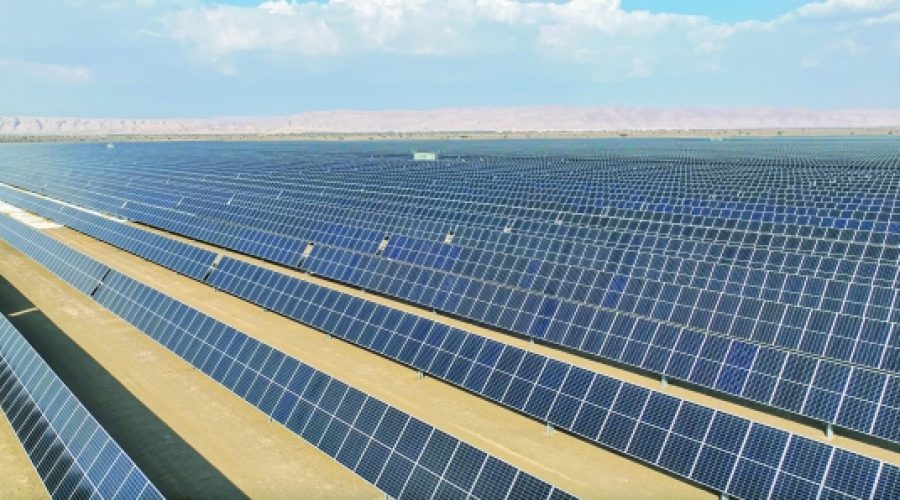
Currently, the renewable electricity supplied to the grid comes from four projects: Dhofar Wind I (50 MW), Ibri II Solar (500 MW), Manah I Solar (500 MW), and Manah II Solar (500 MW). Combined, these projects contribute around 1,550 MW of installed renewable capacity.
Looking forward, Oman has an ambitious pipeline of solar and wind projects in development and planning stages, totaling approximately 7,300 MW. When added to existing capacity, this pipeline is expected to bring the total renewable capacity to about 8.8 GW by 2030, aligning closely with the goal of renewable energy making up roughly 30 percent of generation capacity by that year.
Ongoing projects include the 500 MW Ibri III Solar PV project in Al Dhahirah Governorate, the 125 MW Dhofar II Wind Farm in Dhofar Governorate, and the 120 MW Jaalan Bani Bu Ali Wind IPP in Al Sharqiyah South Governorate. These projects are scheduled to be operational by 2027, adding an additional 745 MW of renewable capacity to the national grid.
Meanwhile, new wind power projects are currently under tender and expected to be awarded soon. These include the Duqm Wind IPP (approximately 234–270 MW), Mahoot Wind I IPP (around 342–400 MW), and Sadah Wind IPP (around 81–99 MW).
In addition, a series of medium- to large-scale solar PV projects are planned for delivery in 2029 and 2030, including developments of up to 3,000 MW. This comprehensive rollout is anticipated to enable Oman to surpass the 30 percent renewable capacity milestone by the end of the decade.
This phased approach—starting with early commissioning from 2025 to 2027, accelerating between 2027 and 2029, and culminating in large-scale solar deployment by 2030—positions Oman to meet its renewable electricity targets while enhancing grid resilience, regional energy integration, and sustained clean energy investment.
Special Analysis by Omanet | Navigate Oman’s Market
Oman’s achievement of 9.46% renewable energy in its electricity mix signals a transformative shift toward sustainability with renewable capacity set to triple by 2030. This creates significant investment opportunities in solar and wind projects while emphasizing the need for businesses to adapt to an evolving energy landscape. Smart investors and entrepreneurs should prioritize clean energy technologies and infrastructure development to capitalize on Oman’s ambitious green transition and regional energy integration goals.