$5 Billion Low-Carbon Steel Mega Hub in Oman: Key Investment Opportunity for Business Growth
MUSCAT: Brazilian mining giant Vale is expected to make a Final Investment Decision (FID) this year for its multi-billion-dollar low-carbon steel complex at the Special Economic Zone at Duqm (SEZAD), with construction anticipated to begin in 2025.
Known as the “Mega Hub,” the project aims to produce environmentally friendlier iron ore concentrates and hot briquetted iron (HBI) to supply steel mills throughout the Middle East. Nasser Al Azri, CEO of Vale Oman Pelletising Company, confirmed that early development stages are underway and the initiative has garnered strong interest from international investors targeting downstream opportunities.
“We are advancing our Mega Hubs strategy, where Vale invests directly and supports downstream investments by our clients. Several memorandums of understanding (MoUs) are already in place, clients have met with the government in Oman, and we expect agreements to be signed by year-end,” Al Azri said.
Highlighting progress, he noted: “We have signed our land agreement in Duqm, as have many clients, demonstrating serious commitment. In partnership, we anticipate investing about $5 billion in the first phase, targeting FID in 2026 and construction completion by 2029,” he told The Energy Year, a UK-based business news portal.
First announced in November 2022, this Oman Mega Hub is one of three planned by Vale for the Middle East. The project has secured a 6.78 square kilometer land lease with the Port of Duqm.
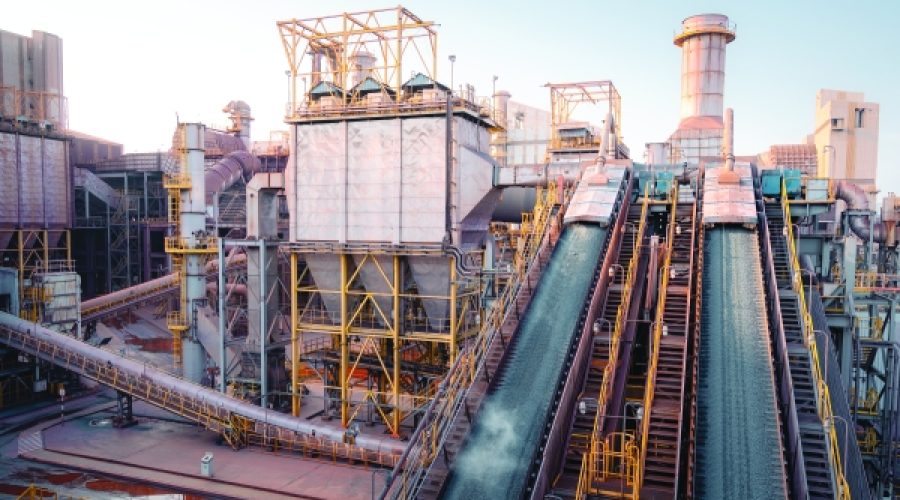
Vale plans to develop and operate iron ore concentration and briquetting facilities to ensure steady production of high-quality agglomerated materials. Local partners will manage the supporting logistics infrastructure, while investors and customers will build and operate direct reduction plants, purchasing the resulting HBI for domestic and export use. The Mega Hubs are designed to serve global markets and drive decarbonization in steelmaking.
The facility will produce HBI and steel products with substantially reduced CO₂ emissions. Using natural gas, the HBI production process emits approximately 60% less CO₂ compared to traditional pig iron produced via the Blast Furnace–Basic Oxygen Furnace method. Future shifts to hydrogen and renewable energy sources could potentially eliminate emissions entirely.
In addition, at Sohar Port and Freezone, where Vale operates in Oman, the company is progressing with the Sultanate’s first iron ore concentration plant. This $600 million joint venture with ACPG Jinnan Steel, a Chinese low-carbon steelmaker, aims to enhance operational flexibility, diversify ore sourcing, introduce advanced Chinese technology, create jobs, and boost Oman’s in-country value. Vale already contributes about $1.9 billion annually to Oman’s economy, positioning itself for sustained regional leadership, Al Azri added.
Special Analysis by Omanet | Navigate Oman’s Market
The upcoming $5 billion Vale Mega Hub in Duqm marks a strategic pivot towards low-carbon steel production, positioning Oman as a regional leader in sustainable industrial innovation. Businesses should eye downstream investment opportunities in logistics and hydrogen/renewable energy technologies, while smart investors must consider the long-term potential of green steel demand and associated export markets. This project not only enhances Oman’s industrial diversification but also signals a major step towards decarbonizing heavy industry in the Middle East, presenting both growth and sustainability-driven risk mitigation prospects.