Oman’s SME Sector Surges to 130,359 Firms: What This Growth Means for Investors and Entrepreneurs
MUSCAT — By the end of December 2025, Oman’s small and medium enterprise (SME) sector had grown to encompass 130,359 registered firms, driven by the Small and Medium Enterprises Development Authority (Riyada) and its extensive 2026 plan featuring over 700 initiatives and training programs.
The plan is structured around eight key pillars: fostering a culture of entrepreneurship; expanding SMEs regionally and globally; maximizing local content; broadening and innovating financing options; enhancing incubators and entrepreneurship centers; advancing governorates based on their comparative advantages; supporting the National Handicrafts Programme; and promoting innovation- and technology-based startups.
Riyada Chairperson Halima bint Rashid al Zaree expressed optimism that these efforts will significantly boost SMEs’ contribution to the national GDP. She highlighted that the introduction of ready-made factories, particularly for manufacturing and the digital economy, would accelerate business launches and job creation.
In the second half of 2025, Riyada reported 58,388 Entrepreneurship Card holders, including 25,986 active cards, collectively representing approximately 192,714 employees. Additionally, the Entrepreneurship Readiness Programme trained 7,453 individuals. Throughout 2025, 245 specialized and general training sessions were conducted, benefiting 29,513 participants. Riyada also provided general consultancy to 9,000 entrepreneurs, completed 5,939 feasibility studies, and enrolled 281 mentees in mentorship programs.
By year-end, approvals for industrial land usufruct reached 395, complemented by 877 plots offered via the Ministry of Housing and Urban Planning’s development platform. Incentives for businesses include nominal annual fees, grace periods aligned with business plans, and priority access to financing, marketing, training, and qualification opportunities.
To enhance local value addition, 294 small enterprises advanced to medium-sized, while 41 medium enterprises expanded into large companies. Riyada enrolled 4,188 enterprises in supplier development programs, with partnerships creating 2,170 new jobs. In collaboration with Madayn, the first 10 ready-made industrial workshops were inaugurated at the Nizwa Industrial Area in February 2026.
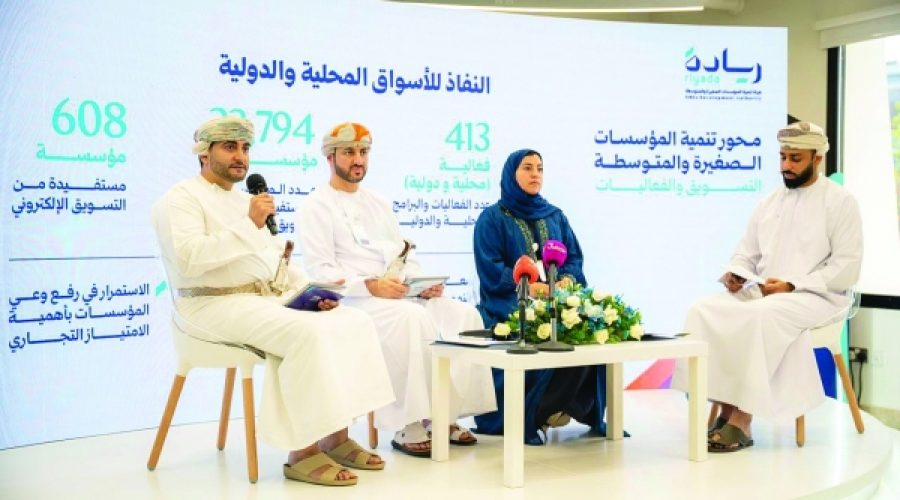
In 2025, Riyada participated in 413 local and international events, benefiting 23,794 enterprises. Additionally, 608 enterprises gained support through e-marketing initiatives.
The handicrafts sector saw 5,813 support applications approved by year-end. A total of 7,026 artisans received home-based licenses valued at RO 4.049 million, with 777 artisans benefiting from specialized training. House of Crafts outlets opened across Muscat, Dhofar, Musandam, and Al Dakhiliyah, registering 175 craft enterprises and listing 1,744 products online.
Since its inception, Riyada has established 30 business incubators, supporting 137 SMEs, creating 231 jobs, and generating revenues exceeding RO 3 million.
For 2026, Riyada aims to finance at least 200 projects. The “Al-Azm” loan program had approved 514 loans totaling RO 44.385 million by the end of December. Innovation-based startups numbered 205, employing 825 people with a combined market value of RO 395 million. Workshops on innovative financing mechanisms attracted 12,569 participants.
Oman achieved 8th place out of 56 countries in the Global Entrepreneurship Monitor 2024 entrepreneurship index. It also ranked among the top 15 globally for startup growth speed and within the top 10 for talent attraction in Startup Genome’s MENA 2023 report.
Special Analysis by Omanet | Navigate Oman’s Market
Oman’s robust SME sector growth, fueled by Riyada’s comprehensive 2026 plan, presents a strategic opportunity for businesses to leverage enhanced financing, ready-made industrial facilities, and innovation-driven ecosystems. Entrepreneurs and investors should focus on technology-based startups, local content maximization, and the expanding incubator network, as these pillars are poised to significantly boost GDP contribution and job creation. The rising emphasis on regional expansion and handicrafts also opens promising avenues for diversification and export-oriented ventures.