Oman Sets Ambitious 6 GW Solar Expansion by 2030-31: What This Means for Investors and Business Growth
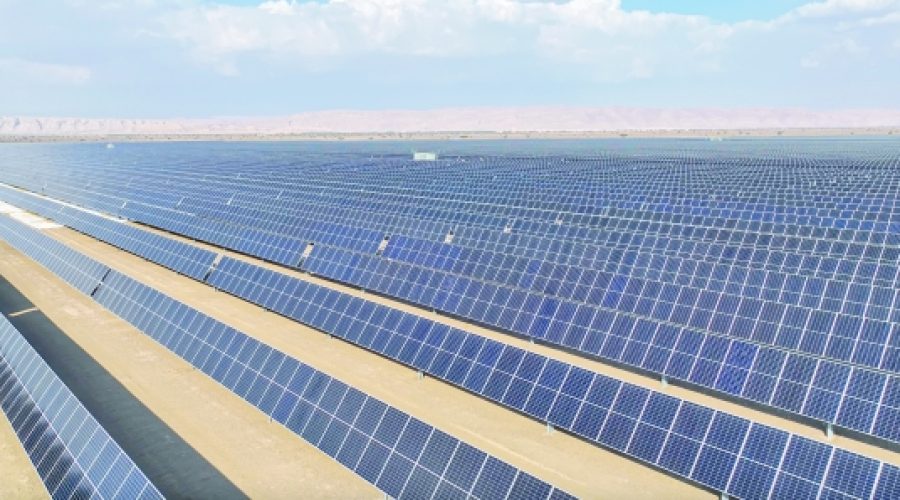
MUSCAT: Oman is preparing to significantly boost its renewable energy capacity with the planned operation of six major solar Independent Power Projects (IPPs), collectively generating around 6 GW by 2030–31. This substantial increase is aimed at elevating the share of renewable energy well beyond the national target of 30 percent.
Nama Power and Water Procurement Company (Nama PWP), the single buyer of electricity and water in Oman, revealed that each of the six large-scale solar PV projects—tentatively named Solar PV IPP I 2030, Solar PV IPP II 2030, Solar PV IPP III 2030, Solar PV IPP I 2031, Solar PV IPP II 2031, and Solar PV IPP III 2031—will have an approximate capacity of 1,000 MW. Project capacities may be adjusted based on site allocation and detailed resource assessments, with Scheduled Commercial Operation Dates (SCODs) to be confirmed accordingly.
Referencing policy directions from the Ministry of Energy and Minerals, Nama PWP highlighted that Oman aims to achieve renewable energy contributing 30–40 percent of total electricity generation by 2030, increasing to around 60–70 percent by 2040. A primary goal of this strategy is to free up domestic gas currently committed to the power sector, enabling its use to promote industrial and economic growth, and support Oman’s net-zero carbon emissions target by 2050.
Nama PWP emphasized that renewable energy projects, driven by increasingly competitive costs, are now economically viable without subsidies. However, due to the intermittent nature of solar and wind resources, these energy sources are considered non-firm and non-dispatchable.
The company’s renewable energy portfolio through 2030–31 includes 24 solar and wind projects and one waste-to-energy facility. Currently operational projects include Dhofar Wind I, Ibri II Solar, Manah I Solar, and Manah II Solar. Projects under construction include Ibri III Solar, Dhofar Wind II, and JBB Solar.
Several projects are slated for completion between 2027 and 2029: Duqm II Wind IPP (300 MW) and Sadah Wind IPP (120 MW) in Q4 2027; Dhofar II Wind IPP (132 MW) in Q3 2027; and Al Kamil Solar IPP (400 MW) in Q2 2027. Early 2028 will see the Mahout Wind IPP (800 MW) and Marsa Solar IPP (280 MW) come online in Q1, followed by Sinaw Solar IPP (400 MW) in Q2.
Looking ahead to 2029, Solar IPP 2029, a 1,000 MW project, is scheduled for Q1, with three wind projects—Shaleem Wind IPP (100 MW), Al Jazir Wind IPP (100 MW), and Duqm III Wind IPP (300 MW)—targeted for Q2 commissioning.
This projected 6 GW surge in renewable capacity by 2030–31, primarily from solar utility projects, will raise Oman’s total renewable energy capacity to 12,182 MW. Additionally, a 95 MW waste-to-energy project at Barka is planned to commence operations in 2031.
Special Analysis by Omanet | Navigate Oman’s Market
Oman’s ambitious plan to add 6 GW of solar IPPs by 2030-31 positions the country as a regional leader in renewable energy, significantly reducing reliance on domestic gas and enabling industrial growth. This creates a golden opportunity for investors and entrepreneurs in clean energy technologies and infrastructure, while businesses should prepare for a green energy transition that could reshape energy costs and sustainability standards. Smart stakeholders must strategically align with Oman’s long-term net-zero vision and evolving energy policies to capitalize on emerging market dynamics.