Novel Tech to Unlock Ultra-Heavy Oil Reservoir: What This Means for Investors and Businesses in Oman
Muscat, January 6 — Two US-based energy companies have been selected by the Omani government to evaluate the feasibility of deploying advanced electric heating technology to unlock the hydrocarbon potential of Block 71, which houses the ultra-heavy oil Habhab reservoir in southern Oman.
Westlawn Middle East, the regional branch of Houston-based private investment firm Westlawn Group, is collaborating with Houston-based energy technology company Salamander Solutions to assess the application of electric heating technology for extracting oil from the block’s bitumen-like crude.
The companies confirmed in press releases that an agreement with Oman’s Ministry of Energy and Minerals authorizes them to drill appraisal wells in Block 71. This initiative aims to evaluate both the technical and commercial viability of using their proprietary, innovative technology on one of Oman’s most challenging yet promising reservoirs.
Discovered in 1982, the Habhab field has consistently resisted commercial development, with multiple unsuccessful attempts to extract its hydrocarbons. Petroleum Development Oman (PDO), the Sultanate’s leading hydrocarbons producer and former licensee of Block 6, previously tested various steam and chemical injection methods to access the reservoir. Although these efforts showed some promise, they ultimately failed to provide the certainty needed for PDO to justify a major standalone investment.
Despite this, Habhab represents a substantial opportunity for upstream firms equipped with the right technology. The field is estimated to contain about 2.4 billion barrels of ultra-heavy crude oil (stocktank oil initially in place, STOIIP) within a thinly laminated sandstone reservoir. The oil column is approximately 100 meters thick and located at depths starting near 1,550 meters. However, the crude’s extreme viscosity—estimated at over 1.5 million centipoise, around 1.5 million times more viscous than water at ambient temperature—poses significant extraction challenges.
The companies stated that successful technical and commercial outcomes from the feasibility study could lead to a long-term concession agreement with the Omani government.
Chadi Letayf, Executive Vice President of Westlawn, remarked, “This is our first transaction in Oman since establishing our in-country presence in 2024, and we are delighted to partner with the Ministry of Energy and Minerals and Salamander Solutions. We look forward to unlocking significant value for the country.”
Hatem Haidar, CEO of Salamander Solutions, added, “This agreement marks a significant milestone in deploying our proprietary electric heating technology in the Middle East. We are excited to collaborate with the Ministry of Energy and Minerals and Westlawn to demonstrate its value in unlocking complex reservoirs.”
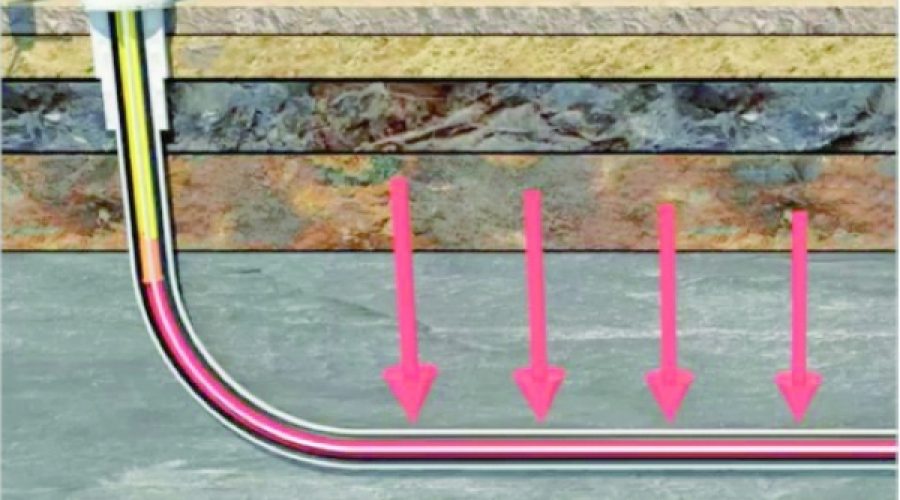
Salamander’s heater cable technology is designed to surpass the limits of conventional thermal methods, delivering up to 3 MW of power over a continuous heated length of up to three kilometers when installed in wells. These cables are engineered to operate at full power and maximum temperature under harsh downhole conditions for more than ten years.
For Westlawn, this marks their entry into Oman’s upstream energy sector. Founded in 2021, the company invests in operated and non-operated production, development, and exploration assets, as well as technologies aimed at enhancing hydrocarbon recovery. Its investment reach spans the United States, Latin America, the Caribbean, and the Middle East.
Special Analysis by Omanet | Navigate Oman’s Market
The deployment of advanced electric heating technology in Oman’s Block 71 offers a transformative opportunity to unlock its vast ultra-heavy oil reserves, potentially revitalizing a previously challenging asset. For businesses, this signals new avenues for collaboration and investment in cutting-edge energy tech, while investors should closely monitor the feasibility study outcomes, as success could lead to long-term concessions and significant value creation in Oman’s upstream sector. Smart entrepreneurs might consider positioning themselves in adjacent services and technologies that support such high-complexity hydrocarbon recovery projects.